Issue · Immigration

Immigration (Enforcement)

Every immigration bill, vote, and legislator stance in United States, automatically classified by Maddy, our AI policy reader.

Total bills
437
119th Congress
Top supporter
Alan Armstrong
86% support rate
Top opponent
Catherine Cortez Masto
11% support rate
Ranked legislators
10
5 support · 5 oppose
Key legislators

Who's moving enforcement in United States

Legislators moving enforcement in United States
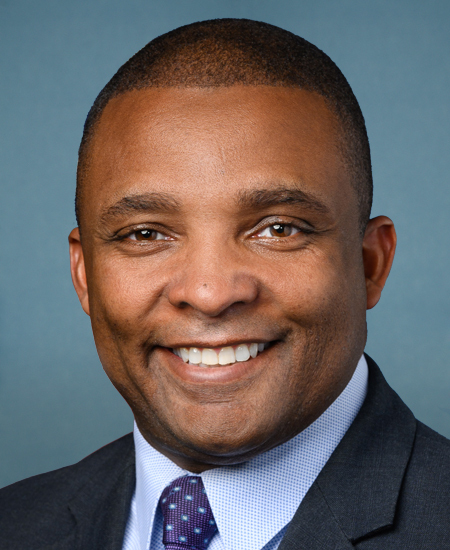
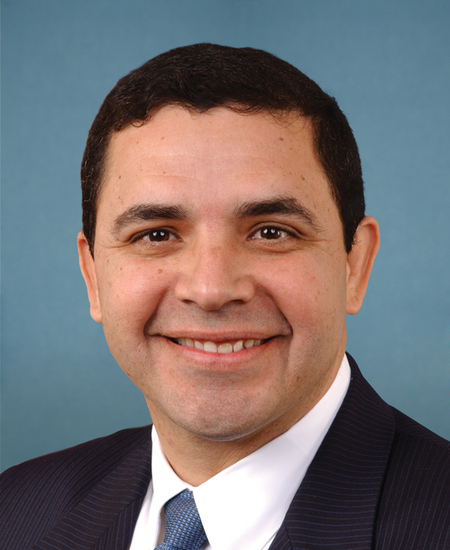
Legislator Party Stance Support rate Decisive votes
AA
Alan Armstrong Senate
R
Strong +
86% 29
Seth Moulton
Seth Moulton House · District 6
D
Strong +
83% 12
Mitch McConnell
Mitch McConnell Senate
R
Strong +
82% 33
Joyce Beatty
Joyce Beatty House · District 3
D
Strong +
82% 11
Brad Sherman
Brad Sherman House · District 32
D
Strong +
80% 15
Catherine Cortez Masto
Catherine Cortez Masto Senate
D
Strong −
11% 35
Margaret Wood Hassan
Margaret Wood Hassan Senate
D
Strong −
11% 35
Donald G. Davis
Donald G. Davis House · District 1
D
Strong −
12% 17
Henry Cuellar
Henry Cuellar House · District 28
D
Strong −
12% 17
Laura Gillen
Laura Gillen House · District 4
D
Strong −
12% 17
Showing 61–70 of 437 bills

All immigration bills

in committee · United States · House May 14, 2026

HR 8836: Know Your American Customer Act

This bill, known as the Know Your American Customer Act, requires banks and credit unions to verify that all new and existing individual account holders are legally present in the United States. To open an account, individuals must present specific documents proving citizenship or lawful status, such as a passport, driver's license, or permanent resident card, with stricter rules applying to those with temporary visas. The law mandates that institutions freeze or close accounts for individuals who lose their legal status, though it provides a temporary grace period to allow for incoming deposits before restricting withdrawals. Additionally, the bill introduces criminal penalties, including fines and imprisonment, for individuals who illegally open or maintain accounts, while explicitly exempting those who have recently lost status or are seeking asylum.
in committee · United States · House Jul 7, 2026

HR 9070: OPEN Act

The OPEN Act establishes stricter rules for immigration enforcement by granting Members of Congress unrestricted access to detention facilities and requiring the Department of Homeland Security to publicly report incidents involving excessive force or misconduct. It mandates that detained individuals receive timely access to legal counsel, family members, and medical care, while also setting new standards for transporting detainees safely and ensuring they are informed of facility transfers. Additionally, the bill prohibits the use of administrative warrants to enter private homes without consent and requires judicial warrants for arrests, while also imposing penalties on facilities that fail to meet safety standards.
in committee · United States · House Mar 17, 2026

HR 7958: Expatriate Terrorists Act of 2026

The Expatriate Terrorists Act of 2026 expands immigration and citizenship laws to target individuals who support terrorism or join designated foreign terrorist organizations. It mandates that people convicted of terrorism-related crimes be held in mandatory detention and gives courts priority in processing their removal cases. The bill also creates new grounds for revoking U.S. citizenship and stripping nationality from those who provide material support to terrorist groups or serve in their ranks. Additionally, it shifts some deportation authority from the Attorney General to the Secretary of Homeland Security and allows removal proceedings to begin alongside citizenship revocation cases.
in committee · United States · House May 26, 2026

HR 9030: No Immigration Without Assimilation Act of 2026

This bill would require the Department of Homeland Security to screen all immigration applicants to determine if they are likely to assimilate into American culture and hold views compatible with U.S. principles. Under the new rules, anyone deemed unlikely to assimilate or holding specific beliefs - such as the need for religious law to supersede American laws, the justification of violence, or the rejection of English language learning - would be denied entry or face deportation. The legislation defines "incompatible views" in detail, explicitly listing beliefs that challenge the U.S. Constitution, democracy, or cultural cohesion as grounds for inadmissibility. Consequently, the bill directly affects prospective immigrants and current residents by making their ability to remain in the country contingent upon passing these ideological and cultural assessments.
Sub-Topics Enforcement
in committee · United States · House Jun 3, 2026

HR 9124: Know Your Rights Act

The Know Your Rights Act directs the Attorney General to create a new Office of Legal Access Programs within the immigration review system to educate detained noncitizens about their legal rights and immigration procedures. This office would develop orientation programs that provide information in English and the five most common languages spoken by detainees, aiming to help individuals make informed decisions while reducing costs and delays in immigration proceedings. The law requires these educational services to be offered within five days of a person entering custody and mandates that the government consider vulnerable groups, such as unaccompanied children and those with serious mental disabilities, for special attention. Importantly, the bill explicitly states that providing this information does not create any new legal rights or benefits that can be enforced in court.
in committee · United States · House May 20, 2026

HR 8920: Restoring the American Homebuyers Dream Act

This bill, titled the Restoring the American Homebuyers Dream Act, aims to share taxpayer information with immigration authorities to help enforce U.S. immigration laws. It modifies the Internal Revenue Code to allow the Department of Homeland Security to request specific details from individuals who use Individual Taxpayer Identification Numbers (ITINs). The information that can be shared includes the person's name, address, ITIN, filing status, and details about their dependents or spouse. The bill states that this data will only be used for immigration enforcement purposes and must be protected under the same rules as other taxpayer information.
in committee · United States · House Jun 2, 2026

HR 9096: Deport the Terrorists Act of 2026

This bill, titled the Deport the Terrorists Act of 2026, aims to remove from the United States any naturalized citizen convicted of specific terrorism-related crimes. It directly affects individuals who have already become U.S. citizens by automatically revoking their citizenship and declaring their naturalization certificates void upon conviction of offenses such as using weapons of mass destruction or providing material support to terrorists. The law also designates these individuals as deportable aliens and requires the Department of Homeland Security to prioritize their removal from the country. By amending existing immigration laws, the bill ensures that courts have the authority to cancel citizenship immediately following a conviction for these designated offenses.
in committee · United States · House May 22, 2026

HR 8984: Respect Our Communities Act

The Respect Our Communities Act restricts the Department of Homeland Security from building or operating new immigration detention centers without first obtaining written permission from local elected officials and state governors. Before any construction begins, federal agencies must publish a detailed public notice inviting at least 30 days of community feedback and submit a report to Congress that includes an economic impact analysis and an engineering review of resource usage. This legislation directly affects the federal agencies responsible for immigration enforcement and the local governments where new facilities might be located by mandating a collaborative approval process.
in committee · United States · Senate Jun 16, 2026

SJRES 190: A joint resolution providing for congressional disapproval under chapter 8 of title 5, United States Code, of the rule submitted by the Executive Office for Immigration Review relating to "Appellate Procedures for the Board of Immigration Appeals".

This joint resolution seeks to officially reject a specific rule issued by the Executive Office for Immigration Review that governs appellate procedures at the Board of Immigration Appeals. By invoking a statutory mechanism known as a "congressional disapproval resolution," the bill aims to prevent the new rule from taking effect or having any legal force. If passed, it would directly impact immigration judges and attorneys who rely on the Board's appellate processes by nullifying the Executive Office's proposed changes. The measure represents a legislative check on executive agency authority rather than creating new immigration policies itself.
in committee · United States · House Apr 28, 2026

HR 8557: Short-Term Holding Facility Standards Restoration Act.

This bill requires U.S. Immigration and Customs Enforcement to limit the use of short-term holding facilities to a maximum of 12 hours for detainees, unless specific exceptional circumstances like medical emergencies or natural disasters occur. To enforce this rule, the Department of Homeland Security must ensure facilities remain safe and provide meals every six hours, along with constant access to water and appropriate food for vulnerable individuals such as minors and pregnant women. The legislation also mandates that officials document any instances where a detainee is held longer than 12 hours and submit annual reports to Congress detailing the number of such cases, their duration, and the reasons given for the extended custody. Additionally, the Department's Inspector General will conduct periodic audits to verify compliance with these new standards.
Showing 61 to 70 of 437 bills
Previous 1 … 6 7 8 … 44 Next