Issue · Environment

Environment (Wildlife)

Every environment bill, vote, and legislator stance in United States, automatically classified by Maddy, our AI policy reader.

Total bills
194
119th Congress
Top supporter
Greg Casar
83% support rate
Top opponent
Susan M. Collins
0% support rate
Ranked legislators
10
5 support · 5 oppose
Key legislators

Who's moving wildlife in United States

Legislators moving wildlife in United States
Legislator Party Stance Support rate Votes
Greg Casar
Greg Casar House · District 35
D
Strong +
83% 12
Judy Chu
Judy Chu House · District 28
D
Strong +
81% 16
Bill Foster
Bill Foster House · District 11
D
Strong +
80% 15
Chellie Pingree
Chellie Pingree House · District 1
D
Strong +
80% 15
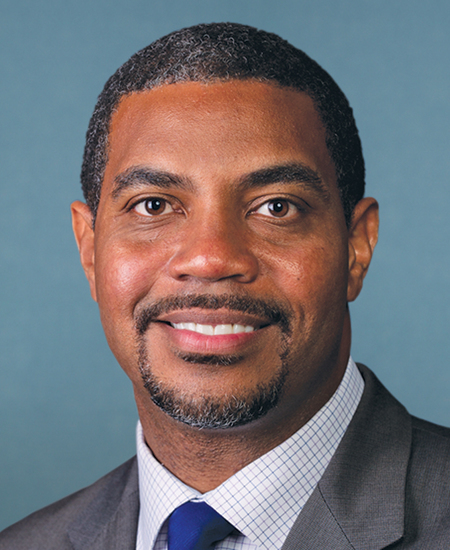
Steven Horsford
Steven Horsford House · District 4
D
Strong +
80% 15
Susan M. Collins
Susan M. Collins Senate
R
Strong −
0% 5
Aaron Bean
Aaron Bean House · District 4
R
Strong −
19% 16
Clay Fuller
Clay Fuller House · District 14
R
Strong −
20% 5
John Fetterman
John Fetterman Senate
D
Strong −
20% 5
Andrew Ogles
Andrew Ogles House · District 5
R
Oppose
21% 14
Showing 71–80 of 194 bills

All environment bills

in committee · United States · House Jan 23, 2025

HR 704: To provide for the issuance of a Manatee Semipostal Stamp.

HR 704 would direct the U.S. Postal Service to issue a special "Manatee Semipostal Stamp" for public sale. All extra money collected from selling this stamp (above the standard postage rate) would be sent to the U.S. Fish and Wildlife Service to fund manatee conservation and habitat protection in the U.S. The stamp would be available for at least two years starting within a year of the bill's passage.
Sub-Topics Conservation Wildlife
passed · United States · House Mar 19, 2026

HR 556: Protecting Access for Hunters and Anglers Act

HR 556, the Protecting Access for Hunters and Anglers Act, prevents federal agencies from banning lead ammunition or tackle on public lands and waters managed for hunting or fishing. It directly affects hunters and anglers using federal lands (like national wildlife refuges, public forests, and BLM lands) by blocking nationwide restrictions on lead products. The bill allows limited exceptions only for specific locations where wildlife decline is directly linked to lead use, and the restriction must align with state law or get approval from the state wildlife agency. This changes how federal land managers can regulate lead, requiring state coordination for any local restrictions.
in committee · United States · Senate Jul 31, 2025

S 2586: MARA Act of 2025

The MARA Act of 2025 establishes a framework for developing sustainable offshore aquaculture in U.S. waters by creating an Office of Aquaculture within NOAA. It authorizes commercial-scale demonstration projects that must meet strict environmental requirements to minimize impacts on wildlife, habitats, and existing ocean users, while requiring regular data reporting on environmental and socioeconomic impacts. The bill includes provisions for workforce development through Aquaculture Centers of Excellence at minority-serving institutions and mandates studies on offshore aquaculture viability and regulatory processes. These provisions directly affect offshore aquaculture developers, coastal communities, seafood industry workers, and environmental stakeholders. The bill aims to support the growth of a domestic aquaculture industry while ensuring environmental protection and community benefits.
in committee · United States · House Mar 25, 2026

HR 1555: Bureau of Land Management Mineral Spacing Act

This bill changes federal permitting rules for oil and gas drilling on land where the federal government owns less than half the mineral rights beneath non-federal surface land. It requires operators to use a state permit instead of a federal drilling permit, removes federal environmental review requirements under NEPA and the Endangered Species Act, and allows operations to start 30 days after submitting the state permit. It does not affect royalty payments to the federal government or apply to Indian lands. The policy directly affects oil and gas operators working on non-federal surface estates with partial federal mineral ownership.
in committee · United States · House Oct 3, 2025

HR 2462: Black Vulture Relief Act

The Black Vulture Relief Act authorizes livestock producers and their employees to remove or kill black vultures (Coragyps atratus) that are causing or likely to cause harm to livestock, bypassing standard protections under the Migratory Bird Treaty Act. It prohibits using poison for this purpose and requires annual reports to the U.S. Fish and Wildlife Service about such actions, using a simplified form. The law specifically targets vultures threatening livestock as defined in existing federal agriculture law, with reporting deadlines starting after a form is developed by the Fish and Wildlife Service.
Sub-Topics Wildlife
passed · United States · House Jul 23, 2025

HR 1917: Great Lakes Mass Marking Program Act of 2025

HR 1917, the Great Lakes Mass Marking Program Act of 2025, establishes a federal program within the U.S. Fish and Wildlife Service to mass-tag hatchery-reared fish in the Great Lakes. The program directly affects federal, state, and tribal fisheries agencies by providing data on hatchery fish versus wild fish populations through automated tagging. Key provisions authorize $5 million annually (2026-2030) to purchase tagging equipment, hire staff, and share collected data with partner agencies to inform management decisions about fish stocking, habitat restoration, and balancing predator-prey relationships. This data supports the economic stability of the Great Lakes fisheries sector, which contributes over $7 billion annually to the regional economy.
Sub-Topics Wildlife
in committee · United States · House Jun 26, 2025

HR 4180: Canyon’s Law

HR 4180, "Canyon’s Law," prohibits the use of M-44 devices - predator control tools containing highly toxic sodium cyanide - on public lands managed by federal agencies like the National Park Service, Fish and Wildlife Service, and Forest Service. The bill requires all federal, state, and county agencies to remove existing M-44 devices from public lands within 30 days of enactment. It directly affects agencies and land managers who previously deployed these devices, which have caused human poisonings (including incidents involving children), killed over 50 family dogs, and harmed endangered species. The law aims to eliminate the risk of accidental exposure and non-target wildlife deaths by banning the devices' use on public lands.
in committee · United States · House Apr 24, 2025

HR 3003: Restore M–44 Act

This bill rescinds a 2023 wildlife damage management agreement between the Interior and Agriculture Departments, restoring the use of M-44 devices (sodium cyanide ejectors) and compound 1080 for wildlife control. It directly affects the U.S. Department of Agriculture (USDA), allowing the Secretary to purchase, deploy, and train third parties on these devices without congressional reporting requirements. The key provision removes a prior prohibition and eliminates the need to submit implementation updates to congressional committees. This changes USDA policy by enabling the routine use of these tools in wildlife management programs.
Sub-Topics Wildlife
in committee · United States · House Apr 9, 2025

HR 2783: Infrastructure Project Acceleration Act

HR 2783, the Infrastructure Project Acceleration Act, fast-tracks large-scale manufacturing projects in the U.S. by waiving certain federal environmental reviews. It applies to projects costing $1 billion or more that require federal approvals, directly affecting major manufacturers seeking to build or expand facilities. Key provisions exclude projects from needing permits under the Clean Water Act (Section 404) and the Endangered Species Act (Sections 7, 9, 10), modify National Environmental Policy Act (NEPA) reviews to accept equivalent state/Tribal environmental processes, and limit court challenges by barring judicial review of approvals for these projects. The bill aims to speed up manufacturing projects in critical sectors like defense and healthcare while reducing reliance on foreign manufacturing.
passed · United States · House Jul 15, 2026

HR 5587: HEATS Act

The HEATS Act eliminates the need for federal drilling permits for geothermal exploration and production on non-Federal surface land under specific conditions. It applies to operators who hold a state permit and where the U.S. owns less than 50% of the underlying geothermal rights. Key provisions include: no requirement for federal environmental reviews (NEPA), exemptions from the Endangered Species Act, and a 30-day start period after submitting the state permit. The bill maintains existing royalty payments for geothermal electricity production and explicitly excludes activities on Indian lands. It does not alter federal royalty rates or require additional federal oversight beyond state permitting.
Showing 71 to 80 of 194 bills
Previous 1 7 8 9 20 Next