Issue · Environment

Environment (Public Lands)

Every environment bill, vote, and legislator stance in United States, automatically classified by Maddy, our AI policy reader.

Total bills
272
119th Congress
Top supporter
Adam B. Schiff
92% support rate
Top opponent
Alan Armstrong
0% support rate
Ranked legislators
10
5 support · 5 oppose
Key legislators

Who's moving public lands in United States

Legislators moving public lands in United States
Legislator Party Stance Support rate Votes
Adam B. Schiff
Adam B. Schiff Senate
D
Strong +
92% 12
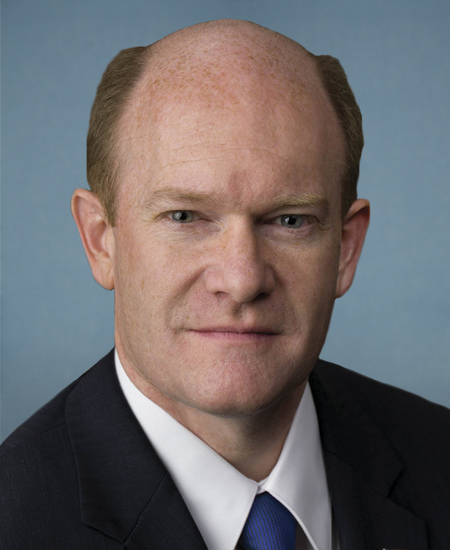
Christopher A. Coons
Christopher A. Coons Senate
D
Strong +
92% 12
Christopher Murphy
Christopher Murphy Senate
D
Strong +
92% 12
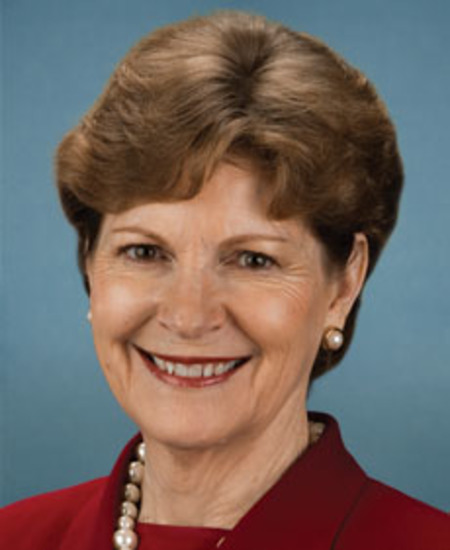
Jeanne Shaheen
Jeanne Shaheen Senate
D
Strong +
92% 12
Alex Padilla
Alex Padilla Senate
D
Strong +
85% 13
AA
Alan Armstrong Senate
R
Strong −
0% 3
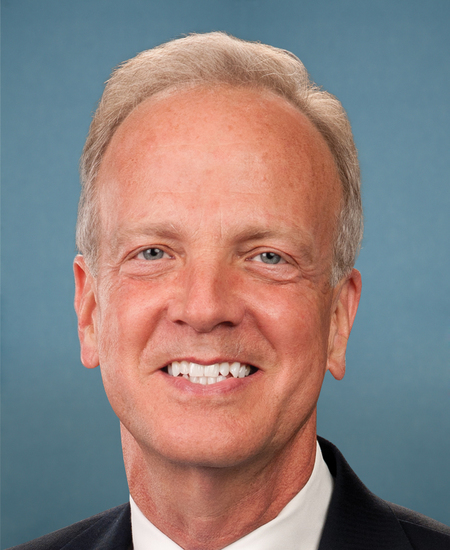
Jerry Moran
Jerry Moran Senate
R
Strong −
8% 12
Marsha Blackburn
Marsha Blackburn Senate
R
Strong −
8% 12
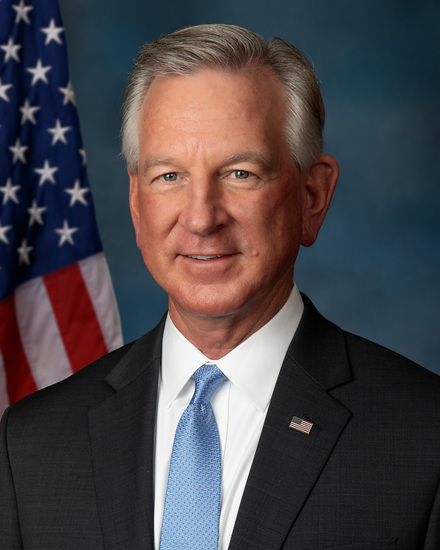
Tommy Tuberville
Tommy Tuberville Senate
R
Strong −
8% 12
Eric Schmitt
Eric Schmitt Senate
R
Strong −
9% 11
Showing 51–60 of 272 bills

All environment bills

in committee · United States · Senate Feb 20, 2025

S 647: Regional Leadership in Wildland Fire Research Act of 2025

The Regional Leadership in Wildland Fire Research Act of 2025 establishes seven regional research centers at colleges and universities across specific U.S. regions (Alaska, California, Northern Rockies, Pacific Northwest, Pacific Islands, Southeast, and Southwest) to advance wildland fire research. These centers will coordinate with federal fire management agencies, develop predictive tools for fire behavior and smoke impact, and create open data-sharing protocols following FAIR principles (findability, accessibility, interoperability, reusability). The law authorizes $60 million to $64 million annually for the centers from 2026-2030, plus $1 million yearly for a National Center Coordination Board that oversees research priorities and avoids duplication. It requires annual reports to Congress on research progress and establishes advisory boards with representation from tribal organizations, state agencies, and fire management professionals. This law directly affects land-grant universities, federal fire management agencies, Tribal organizations, and state wildfire management entities.
Sub-Topics Forestry Public Lands
in committee · United States · House Jan 14, 2026

HR 7074: Keeping Public Lands Out of Adversarial Hands Act

HR 7074 requires the Secretary of the Interior to join the Committee on Foreign Investment in the United States (CFIUS) when reviewing transactions involving land or resources near federal lands managed by agencies like the Bureau of Land Management, National Park Service, or Bureau of Indian Affairs. It specifically targets acquisitions by foreign entities from China, North Korea, Russia, or Iran, mandating CFIUS to assess whether such transactions - reported by the Interior Secretary - constitute a "covered transaction" requiring review. The bill creates a new process for evaluating these land deals, with the review ending for a specific country once it’s removed from the U.S. list of "foreign adversaries." This directly affects foreign buyers from those four nations seeking to acquire land adjacent to federally protected areas.
in committee · United States · House Dec 2, 2025

HR 6094: Fire Innovation Unit Act

The Fire Innovation Unit Act establishes a 7-year federal pilot program to test and deploy new wildfire prevention, detection, and response technologies. It connects private companies, nonprofits, and universities (covered entities) with government agencies like FEMA, tribal fire departments, and land management agencies (covered agencies) to jointly test technologies in real-world scenarios. Key provisions include identifying priority technology areas - such as remote sensing, safety equipment, community resilience tools, and autonomous systems - and requiring annual reports to Congress on costs, effectiveness, and procurement barriers. The program aims to accelerate the adoption of proven, cost-effective technologies through public-private partnerships, with the pilot ending seven years after enactment.
Sub-Topics Forestry Public Lands Tags Emergency Management
passed · United States · House May 20, 2026

HR 2388: Lower Elwha Klallam Tribe Project Lands Restoration Act

HR 2388 transfers approximately 1,082 acres of federal land (within Olympic National Park) into trust for the Lower Elwha Klallam Tribe, adding it to their reservation in Washington State. The land will be managed under existing river protections, and the bill explicitly states this land cannot be used for tribal gaming under federal law. This act directly affects the tribe by expanding their reservation and clarifying land management rules, without altering treaty rights.
passed · United States · House Jul 29, 2026

HR 5631: Geothermal Energy Advancement Act

HR 5631 establishes a Geothermal Ombudsman within the Bureau of Land Management (BLM) to streamline permitting for geothermal energy projects on public lands. The ombudsman, appointed within 60 days of enactment, acts as a liaison between BLM offices and project applicants, resolves disputes, monitors permit timelines, and develops best practices for the permitting process. The bill also creates a Geothermal Permitting Task Force led by the ombudsman, which can assign cross-office personnel (with retention allowances up to 25% of pay) to support geothermal authorizations without altering BLM's jurisdiction. The ombudsman must submit annual reports to Congress on the task force's effectiveness and permit processing outcomes. This directly affects geothermal project applicants and BLM field offices handling geothermal permits.
Sub-Topics Public Lands
signed · United States · Senate Dec 5, 2025

SJRES 80: A joint resolution providing for congressional disapproval under chapter 8 of title 5, United States Code, of the rule submitted by the Bureau of Land Management relating to "National Petroleum Reserve in Alaska Integrated Activity Plan Record of Decision".

This bill (SJRES 80) is a joint resolution disapproving a specific rule issued by the Bureau of Land Management (BLM) concerning oil and gas activities in the National Petroleum Reserve in Alaska. It directly affects the BLM's management of the reserve by nullifying its 2022 "Integrated Activity Plan Record of Decision," which outlined drilling and leasing plans. The resolution invokes the Congressional Review Act (chapter 8 of title 5 U.S. Code) to formally block the rule, stating it "shall have no force or effect." This procedural action was passed by Congress and signed into law on December 5, 2025, reversing the BLM's regulatory framework for the Alaska reserve.
in committee · United States · Senate Feb 4, 2026

S 90: Historic Roadways Protection Act

The Historic Roadways Protection Act (S 90) prohibits the use of federal funds to finalize or implement specific travel management plans for certain public lands in Utah. It directly affects the Bureau of Land Management (BLM), blocking funding for plans in 10 designated areas (like the San Rafael Swell and Nine Mile Canyon) and four specific plans (including Indian Creek and San Rafael Swell). The restriction applies only during the time federal courts resolve 22 ongoing lawsuits (R.S. 2477 cases) about historical road access rights. Funding cannot be used for new plans or implementation of the listed plans until the Secretary of the Interior certifies all cases are resolved. This is a procedural funding restriction, not a change to land management policies.
in committee · United States · Senate Jul 23, 2026

S 1981: Strategic Grazing to Reduce Risk of Wildfire Act

This bill requires the Secretaries of Agriculture and Interior to develop a strategy within 18 months for using livestock grazing to reduce wildfire risks on federal lands. The strategy must include targeted grazing in high-risk areas (like the wildland-urban interface), controlling invasive grasses such as cheatgrass, and using technologies like virtual fencing to adjust grazing placement. It affects federal land managers, ranchers with grazing permits, and communities in fire-prone regions by integrating grazing into wildfire management plans. The bill does not change existing grazing programs but adds specific provisions for risk reduction during droughts, wildfires, or post-fire recovery. It mandates consultation with states, tribes, firefighting agencies, and local stakeholders to coordinate this approach.
Sub-Topics Forestry Public Lands
in committee · United States · House Sep 3, 2025

HR 280: COAL Act of 2025

This bill requires the Bureau of Land Management (BLM) to complete pending coal lease applications under the Mineral Leasing Act. It mandates the BLM to finalize environmental reviews, set fair market value, and approve qualified applications within a "reasonable timeframe," directly affecting coal companies with existing applications awaiting approval. The bill also overrides a 2016 Department of the Interior policy that paused coal leasing, ensuring current leasing processes proceed without further delay. Key provisions include streamlining administrative steps for existing applications and removing barriers to mining activity approvals. The law does not change environmental standards but accelerates the leasing process for applications already in review.
Sub-Topics Coal Public Lands
in committee · United States · Senate Feb 11, 2026

S 544: Mining Regulatory Clarity Act

Mining Regulatory Clarity Act This bill allows mining operators to use federal lands for activities ancillary to mining, such as waste disposal, regardless of whether those lands contain mineral deposits valuable enough to be mined (mineral validity). It also establishes the Abandoned Hardrock Mine Fund. The bill addresses a 2022 decision in the U.S. Court of Appeals for the Ninth Circuit related to the Rosemont Copper Mine in Arizona (commonly known as the Rosemont decision , described further in CRS Report R48166 ). The court held that mining claims are only allowed where mineral validity has been established and that mill site claims are more appropriate means for establishing a mining waste disposal site under the Mining Act. The bill allows a mining operator to (1) locate and include within its plan of operations as many mill site claims (e.g., areas for waste rock disposal) as are reasonably necessary for its operations, and (2) use or occupy public land in accordance with an approved plan of operations. Additionally, the bill requires any revenue generated from fees for such mill site claims to be deposited into the Abandoned Hardrock Mine Fund. The Department of the Interior must use the fund for certain abandoned hardrock mine reclamation activities.
Showing 51 to 60 of 272 bills
Previous 1 5 6 7 28 Next