Issue · Environment

Environment (Forestry)

Every environment bill, vote, and legislator stance in United States, automatically classified by Maddy, our AI policy reader.

Total bills
223
119th Congress
Top supporter
Adam B. Schiff
100% support rate
Top opponent
Alan Armstrong
0% support rate
Ranked legislators
10
5 support · 5 oppose
Key legislators

Who's moving forestry in United States

Legislators moving forestry in United States
Legislator Party Stance Support rate Votes
Adam B. Schiff
Adam B. Schiff Senate
D
Strong +
100% 3
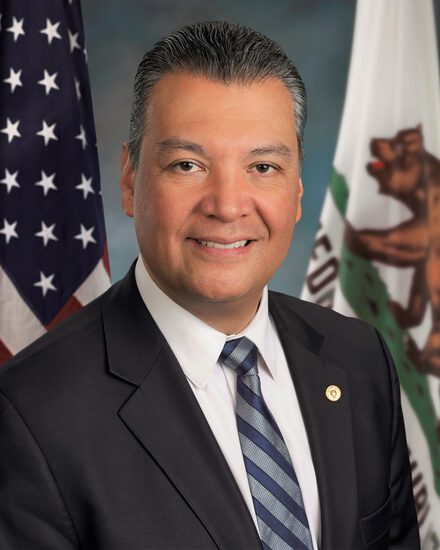
Alex Padilla
Alex Padilla Senate
D
Strong +
100% 3
Amy Klobuchar
Amy Klobuchar Senate
D
Strong +
100% 3
Andy Kim
Andy Kim Senate
D
Strong +
100% 3
Angela D. Alsobrooks
Angela D. Alsobrooks Senate
D
Strong +
100% 3
AA
Alan Armstrong Senate
R
Strong −
0% 3
Ashley Moody
Ashley Moody Senate
R
Strong −
0% 3
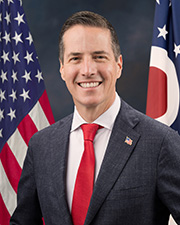
Bernie Moreno
Bernie Moreno Senate
R
Strong −
0% 3
Bill Cassidy
Bill Cassidy Senate
R
Strong −
0% 3
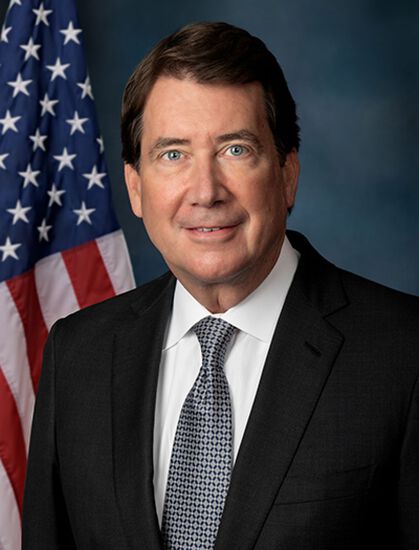
Bill Hagerty
Bill Hagerty Senate
R
Strong −
0% 3
Showing 31–40 of 223 bills

All environment bills

passed · United States · Senate Apr 30, 2026

SRES 719: A resolution celebrating the 154th anniversary of Arbor Day.

This Senate resolution formally recognizes April 24, 2026, as Arbor Day to celebrate the 154th anniversary of the event. The bill does not create new laws or change existing policies but serves as a symbolic statement acknowledging the importance of tree planting and forest stewardship. It encourages all people in the United States to participate in Arbor Day activities and supports the ideals of maintaining healthy forests and green communities.
Sub-Topics Forestry
in committee · United States · House Apr 28, 2026

HR 8538: Save America’s Family Forests Act of 2026

The Save America's Family Forests Act of 2026 provides tax incentives to encourage landowners to replant forests damaged by natural disasters. It increases the standard tax deduction for routine reforestation projects from $10,000 to $30,000 per property and adjusts these amounts annually for inflation. Additionally, the bill allows a special deduction of up to $1 million for expenses related to replanting trees destroyed by federally declared disasters, with specific rules to prevent double-dipping with other tax benefits. These financial benefits are designed to help taxpayers recover costs and promote forest regeneration without changing the underlying laws governing disaster relief or timber management.
in committee · United States · Senate Jul 15, 2026

S 4458: Caja del Rio Protection Act

The Caja del Rio Protection Act establishes two new protected areas in New Mexico: a Special Management Area within the Santa Fe National Forest and a National Conservation Area managed by the Bureau of Land Management. These designations restrict new road construction, limit motorized vehicle use to designated routes, and withdraw the lands from mining, leasing, and other entry operations to preserve cultural, ecological, and traditional values. The bill mandates the creation of management plans developed through consultation with local governments and specific Native American tribes, while also allowing for potential land swaps between the federal government and the state. Additionally, the legislation protects tribal rights to conduct religious and cultural activities, including the gathering of plants and minerals, and ensures that sacred site information remains confidential.
in committee · United States · House May 12, 2026

HR 8744: TREE Act

The TREE Act prohibits the import and sale in the U.S. of goods linked to deforestation, starting in 2029, and directly affects companies that trade or sell commodities like cattle, soy, palm oil, and wood. To enforce this ban, the bill requires importers to submit detailed due diligence statements proving their products are deforestation-free, while also mandating increased customs inspections for goods from countries categorized as high or moderate risk. The U.S. Trade Representative will annually assess and rank countries based on their deforestation rates and environmental laws, with higher-risk nations facing stricter scrutiny and potential trade restrictions. Additionally, the law establishes civil penalties for violations and directs half of the collected fines toward providing financial assistance to developing countries for forest management.
Sub-Topics Forestry
in committee · United States · House Feb 9, 2026

HR 7425: Colorado Wilderness Act of 2026

The Colorado Wilderness Act of 2026 designates approximately 400,000 acres of public land in Colorado as new wilderness areas and expands existing ones, primarily managed by the Bureau of Land Management and the U.S. Forest Service. These designations permanently protect the land from roads, motorized vehicles, and most commercial development, while allowing activities like hiking, fishing, and hunting. The bill also establishes specific rules for water rights, prohibiting new irrigation facilities in the new wilderness areas while maintaining access to existing water infrastructure, and clarifies that military helicopter overflights and certain running events may continue under specific conditions.
in committee · United States · House Aug 27, 2026

HR 8454: To provide for the transfer of administrative jurisdiction over certain Federal land in the State of California, and for other purposes.

This bill transfers administrative control of about 330 acres of federal land in Tuolumne County, California, between two agencies. Approximately 160 acres currently managed by the Forest Service will be moved to the National Park Service to become part of Yosemite National Park, while about 170 acres currently managed by the National Park Service will be transferred to the Forest Service to become part of Stanislaus National Forest. The legislation includes provisions for minor boundary adjustments, requires notification about any hazardous substances on the land, and ensures that cleanup responsibilities remain with the original agency that held jurisdiction before the transfer. Existing rights, permits, and authorizations on the land remain valid, though the new managing agency will be responsible for administering them going forward.
in committee · United States · House May 20, 2026

HRES 1308: Designating May 2026 as "National Wildfire Preparedness Month".

This resolution designates May 2026 as National Wildfire Preparedness Month to raise awareness about wildfire risks and promote safety measures. The bill directly affects communities across the United States, including federal, state, local, and Tribal governments, as well as nongovernmental organizations. It encourages educational initiatives and community programming focused on preventative actions like home hardening, vegetation management, evacuation planning, and reducing human-caused ignitions. The measure aims to increase knowledge of lifesaving practices and support resources that help residents prepare for wildfire hazards and mitigate their impact.
Sub-Topics Conservation Forestry Natural Disasters Tags Tribal Nations
in committee · United States · House May 14, 2026

HRES 1291: Expressing support for the recognition of May 3 through May 9, 2026, as Wildfire Preparedness Week, the national event educating the public on fire safety and preparedness, and supporting the goals of a Wildfire Preparedness Week.

H.Res. 1291 is a non-binding resolution that formally recognizes May 3 through May 9, 2026, as Wildfire Preparedness Week. The bill aims to raise public awareness about wildfire risks and promote educational initiatives regarding fire safety and evacuation planning. It highlights the dangers of smoke exposure for both the general public and firefighters while noting that human activity causes the majority of wildland fires. This measure does not change laws or allocate funding, but rather expresses the House of Representatives' support for these preparedness goals.
in committee · United States · House Apr 27, 2026

HR 8533: Farmer to Farmer Education Act of 2026

Farmer to Farmer Education Act of 2026 This bill expands the authority of the Department of Agriculture (USDA) to provide technical assistance for farmer-to-farmer networks. USDA must use annual appropriations provided for Natural Resources Conservation Service conservation operations to implement this program. A farmer-to-farmer network means any affiliation or association of farmers that share information, technical assistance, or any other type of mutually beneficial support. Under the bill, USDA may enter into cooperative agreements with eligible entities to (1) provide assistance to farmer-to-farmer networks to build network capacity, connect farmers with mentors or group learning opportunities, and support goal setting; (2) increase technical assistance for farmers, ranchers, and forest owners who use different farming models, practices, and scales; (3) establish and steward the networks; and (4) establish reporting requirements for these activities. Those eligible for the program include nonprofit entities, farmer-to-farmer networks, tribal entities, local governments, institutions of higher education, and states. USDA must prioritize agreements with entities that seek to meet the specific needs of certain farmers, ranchers, and forest owners who are historically underserved or operating in high-poverty areas. The bill also provides for subawards to plan and conduct events, as well as to identify and develop innovative activities, in order to increase farmer access to farmer-to-farmer assistance.
Sub-Topics Conservation Forestry Tags Agriculture
in committee · United States · House Apr 30, 2026

HR 8616: Caja del Rio Protection Act

The Caja del Rio Protection Act establishes two new protected areas in New Mexico: the Caja del Rio Special Management Area within the Santa Fe National Forest and the Caja del Rio National Conservation Area managed by the Bureau of Land Management. These areas cover approximately 85,000 acres total and aim to conserve cultural, spiritual, ecological, and historical values while enhancing opportunities for local Indigenous tribes to participate in management. The bill restricts new road construction and limits motorized vehicle use to designated routes, requires the decommissioning of unauthorized roads, and withdraws the land from mining and mineral leasing operations. Additionally, the legislation facilitates a potential land swap where the federal government would transfer certain Bureau of Land Management parcels to the state in exchange for state trust land within the conservation boundary. The act also mandates the development of comprehensive management plans that incorporate Indigenous knowledge and ensure tribal access for traditional cultural and religious practices.
Showing 31 to 40 of 223 bills
Previous 1 3 4 5 23 Next