Issue · Environment

Environment (Conservation)

Every environment bill, vote, and legislator stance in United States, automatically classified by Maddy, our AI policy reader.

Total bills
385
119th Congress
Top supporter
Adam B. Schiff
100% support rate
Top opponent
Ashley Moody
0% support rate
Ranked legislators
10
5 support · 5 oppose
Key legislators

Who's moving conservation in United States

Legislators moving conservation in United States
Legislator Party Stance Support rate Votes
Adam B. Schiff
Adam B. Schiff Senate
D
Strong +
100% 9
Alex Padilla
Alex Padilla Senate
D
Strong +
100% 9
Amy Klobuchar
Amy Klobuchar Senate
D
Strong +
100% 9
Andy Kim
Andy Kim Senate
D
Strong +
100% 9
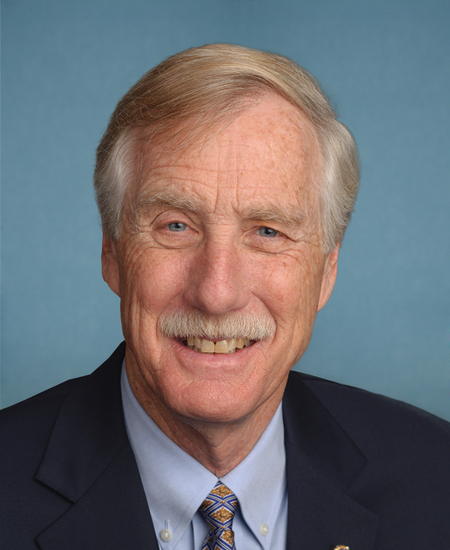
Angus S. King, Jr.
Angus S. King, Jr. Senate
I
Strong +
100% 9
Ashley Moody
Ashley Moody Senate
R
Strong −
0% 9
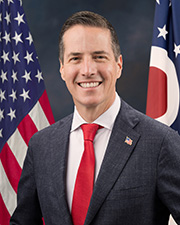
Bernie Moreno
Bernie Moreno Senate
R
Strong −
0% 9
Bill Cassidy
Bill Cassidy Senate
R
Strong −
0% 9
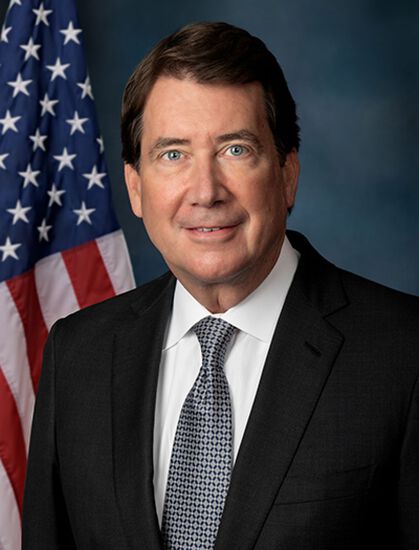
Bill Hagerty
Bill Hagerty Senate
R
Strong −
0% 9
Chuck Grassley
Chuck Grassley Senate
R
Strong −
0% 9
Showing 351–360 of 385 bills

All environment bills

in committee · United States · Senate Dec 11, 2025

S 3463: Protect Greenbury Point Conservation Area Act of 2025

S 3463, the Protect Greenbury Point Conservation Area Act of 2025, prohibits the development of a golf course at the Greenbury Point Conservation Area within the Naval Support Activity Annapolis in Maryland. It amends Section 2855 of the 2024 Military Construction Authorization Act to explicitly ban constructing a golf course there, while maintaining existing restrictions on modifying public access or environmental restoration. The bill directly affects the Naval Support Activity Annapolis by preventing future golf course development on this conservation land. Key provisions add specific language to the existing law, ensuring environmental restoration efforts remain consistent with current regulations. This is a concrete policy change restricting land use, not a procedural measure.
Sub-Topics Conservation
in committee · United States · House Jan 8, 2026

HJRES 138: Expressing support for the designation of the second Saturday of January as "National Desert Day".

This joint resolution (HJRES 138) is a symbolic congressional expression of support for designating the second Saturday of January as "National Desert Day." It requests the President issue a proclamation encouraging public observance through programs and activities focused on desert conservation. The resolution highlights the ecological importance of U.S. deserts (Mojave, Sonoran, Chihuahuan, and Great Basin), their biodiversity, and the need for sustainable practices. It does not create new laws or affect specific groups; it solely promotes awareness of desert ecosystems.
Sub-Topics Conservation
passed · United States · House Mar 4, 2025

HRES 177: Providing for consideration of the joint resolution (H.J. Res. 42) providing for congressional disapproval under chapter 8 of title 5, United States Code, of the rule submitted by the Department of Energy relating to "Energy Conservation Program for Appliance Standards: Certification Requirements, Labeling Requirements, and Enforcement Provisions for Certain Consumer Products and Commercial Equipment"; providing for consideration of the joint resolution (H.J. Res. 61) providing for congressional disapproval under chapter 8 of title 5, United States Code, of the rule submitted by the Environmental Protection Agency relating to "National Emission Standards for Hazardous Air Pollutants: Rubber Tire Manufacturing"; and providing for consideration of the joint resolution (S.J. Res. 11) providing for congressional disapproval under chapter 8 of title 5, United States Code, of the rule submitted by the Bureau of Ocean Energy Management relating to "Protection of Marine Archaeological Resources".

HRES 177 is a procedural resolution that sets the rules for the House to consider three separate disapproval resolutions. It enables debate and voting on H.J. Res. 42 (to disapprove a Department of Energy appliance energy efficiency rule), H.J. Res. 61 (to disapprove an EPA rule on tire manufacturing emissions), and S.J. Res. 11 (to disapprove a Bureau of Ocean Energy Management rule protecting marine archaeological resources). The resolution waives most procedural objections and limits debate to one hour per disapproval measure. It does not change any regulations itself but provides the process for Congress to potentially reject them.
passed · United States · House Feb 25, 2025

HRES 161: Providing for consideration of the joint resolution (H.J. Res. 20) providing for congressional disapproval under chapter 8 of title 5, United States Code, of the rule submitted by the Department of Energy relating to ‘‘Energy Conservation Program: Energy Conservation Standards for Consumer Gas-fired Instantaneous Water Heaters’’; providing for consideration of the joint resolution (H.J. Res. 35) providing for congressional disapproval under chapter 8 of title 5, United States Code, of the rule submitted by the Environmental Protection Agency relating to ‘‘Waste Emissions Charge for Petroleum and Natural Gas Systems: Procedures for Facilitating Compliance, Including Netting and Exemptions’’; and providing for consideration of the concurrent resolution (H. Con. Res. 14) establishing the congressional budget for the United States Government for fiscal year 2025 and setting forth the appropriate budgetary levels for fiscal years 2026 through 2034.

HRES 161 is a procedural resolution that establishes rules for the House of Representatives to consider three specific measures: (1) a joint resolution disapproving an Energy Department rule on water heater efficiency standards, (2) a joint resolution disapproving an EPA rule on emissions charges for gas systems, and (3) a concurrent resolution setting the federal budget for fiscal year 2025 and future years. It waives procedural objections, sets time limits for debate (one hour each for the first two), and outlines the voting process for these items. This resolution itself does not change policy but enables Congress to vote on the underlying disapproval measures and budget resolution. It affects House members and the legislative process, not direct policy outcomes for the public or industries.
in committee · United States · House Apr 21, 2025

HR 2977: MRRRI Act

The MRRRI Act establishes a federal initiative to protect and restore the ecological health of the Mississippi River and its floodplain by creating a Mississippi River National Program Office within the Environmental Protection Agency. The program focuses on five key areas: improving water quality, enhancing community resilience to floods, protecting fish and wildlife habitat, preventing invasive species spread, and improving scientific monitoring. It will fund projects through grants to states, tribes, local governments, and organizations that address these focus areas, with specific requirements for Tribal involvement and environmental monitoring. The initiative requires the development of actionable goals, an action plan, and a science plan, and mandates regular reporting to Congress on progress.
in committee · United States · House Feb 26, 2025

HR 1594: Sustainable Aviation Fuel Act

The Sustainable Aviation Fuel Act establishes national goals for reducing aviation greenhouse gas emissions, aiming for a 35% reduction by 2035 and net zero by 2050 compared to 2005 levels. It creates a low-carbon fuel standard requiring a 20% reduction in carbon intensity by 2030 and 50% by 2050, with a credit system allowing producers of sustainable aviation fuel to generate credits for sale to those who don't meet the standard. The bill requires the Department of Defense to purchase at least 10% sustainable aviation fuel for military aircraft by 2025 if cost-competitive and produced domestically. It also provides funding for research through the FAA and Department of Energy, and extends tax credits for sustainable aviation fuel production through 2032.
passed · United States · House Mar 25, 2025

HRES 242: Providing for consideration of the joint resolution (H.J. Res. 24) providing for congressional disapproval under chapter 8 of title 5, United States Code, of the rule submitted by the Department of Energy relating to "Energy Conservation Program: Energy Conservation Standards for Walk-In Coolers and Walk-In Freezers"; providing for consideration of the joint resolution (H.J. Res. 75) providing for congressional disapproval under chapter 8 of title 5, United States Code, of the rule submitted by the Office of Energy Efficiency and Renewable Energy, Department of Energy relating to "Energy Conservation Program: Energy Conservation Standards for Commercial Refrigerators, Freezers, and Refrigerator-Freezers"; and providing for consideration of the bill (H.R. 1048) to amend the Higher Education Act of 1965 to strengthen disclosure requirements relating to foreign gifts and contracts, to prohibit contracts between institutions of higher education and certain foreign entities and countries of concern, and for other purposes.

HRES 242 is a procedural resolution that sets the rules for the House to consider three specific legislative items: two resolutions (H.J. Res. 24 and H.J. Res. 75) seeking to block Department of Energy energy efficiency rules for commercial refrigeration equipment (walk-in coolers/freezers and commercial refrigerators/freezers), and a bill (H.R. 1048) to amend the Higher Education Act regarding foreign gifts and contracts. It establishes one hour of debate for each measure, waives objections to their consideration, and specifies voting procedures. The resolution itself does not change policy but enables the House to vote on these underlying bills. This procedural step affects only the legislative process, not the final outcome of the bills.
in committee · United States · House Feb 13, 2025

HR 1332: Aquatic Biodiversity Preservation Act of 2025

The Aquatic Biodiversity Preservation Act of 2025 directs the Secretary of Commerce to establish a program mapping the genetic code (genome) of priority aquatic species, including endangered fish, species linked to harmful algal blooms, and culturally significant species identified by tribes or Native Hawaiian organizations. Covered entities like federal agencies, states, tribes, universities, and nonprofits will collect samples, sequence genomes to high standards, and catalog data. All sequenced genomes must be made publicly available within 360 days (except for tribal-led projects, which retain control over data sharing), with $2 million annually allocated for 2025-2031 to fund this effort. The law aims to support conservation, management, and enforcement by creating a shared genetic database for scientists and policymakers.
Sub-Topics Conservation Wildlife
in committee · United States · Senate Apr 28, 2025

SJRES 50: A joint resolution providing for congressional disapproval under chapter 8 of title 5, United States Code, of the rule submitted by the Department of Energy relating to "Energy Conservation Program for Appliance Standards: Certification Requirements, Labeling Requirements, and Enforcement Provisions for Certain Consumer Products and Commercial Equipment".

This joint resolution seeks congressional disapproval of a Department of Energy rule that established energy efficiency standards for certain appliances. The rule required manufacturers to meet specific certification, labeling, and enforcement standards for products like refrigerators and washing machines. Under the resolution, if approved, the rule would be voided, preventing it from taking effect as a federal regulation. This action directly affects appliance manufacturers and retailers who would have had to comply with the new standards. The process follows the Congressional Review Act (Chapter 8 of Title 5 U.S. Code) to block regulations without new legislation.
in committee · United States · House Jan 9, 2025

HJRES 15: Providing for congressional disapproval under chapter 8 of title 5, United States Code, of the rule submitted by the Department of Energy relating to "Energy Conservation Program: Energy Conservation Standards for Commercial Water Heating Equipment".

This joint resolution nullifies the final rule titled Energy Conservation Program: Energy Conservation Standards for Commercial Water Heating Equipment , which was submitted by the Department of Energy on October 6, 2023. The rule adopts more stringent energy conservation standards for commercial water heating equipment under the Energy Policy and Conservation Act in order to achieve more energy savings.
Showing 351 to 360 of 385 bills
Previous 1 35 36 37 39 Next