Issue · Environment

Environment (Conservation)

Every environment bill, vote, and legislator stance in United States, automatically classified by Maddy, our AI policy reader.

Total bills
385
119th Congress
Top supporter
Adam B. Schiff
100% support rate
Top opponent
Ashley Moody
0% support rate
Ranked legislators
10
5 support · 5 oppose
Key legislators

Who's moving conservation in United States

Legislators moving conservation in United States
Legislator Party Stance Support rate Votes
Adam B. Schiff
Adam B. Schiff Senate
D
Strong +
100% 9
Alex Padilla
Alex Padilla Senate
D
Strong +
100% 9
Amy Klobuchar
Amy Klobuchar Senate
D
Strong +
100% 9
Andy Kim
Andy Kim Senate
D
Strong +
100% 9
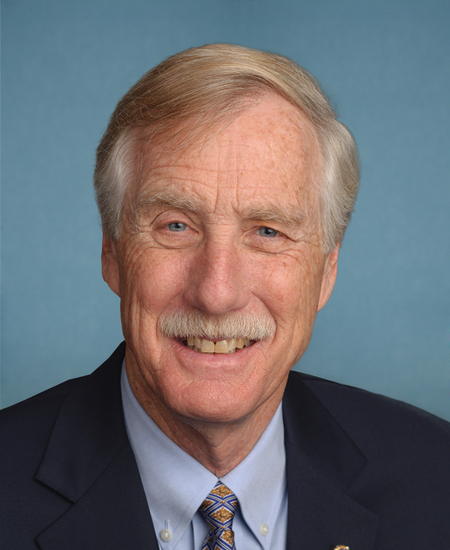
Angus S. King, Jr.
Angus S. King, Jr. Senate
I
Strong +
100% 9
Ashley Moody
Ashley Moody Senate
R
Strong −
0% 9
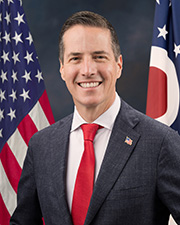
Bernie Moreno
Bernie Moreno Senate
R
Strong −
0% 9
Bill Cassidy
Bill Cassidy Senate
R
Strong −
0% 9
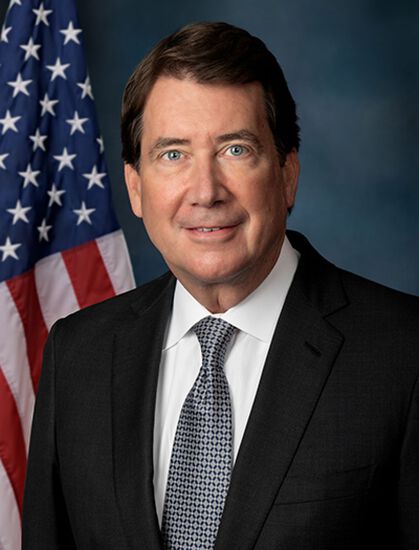
Bill Hagerty
Bill Hagerty Senate
R
Strong −
0% 9
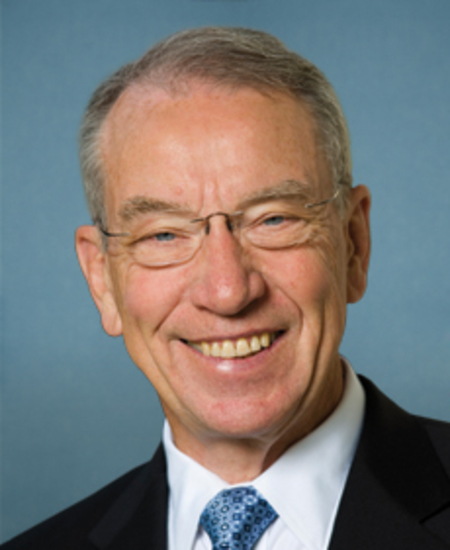
Chuck Grassley
Chuck Grassley Senate
R
Strong −
0% 9
Showing 151–160 of 385 bills

All environment bills

in committee · United States · House Sep 4, 2025

HR 5134: Appalachian Trail Centennial Act

The Appalachian Trail Centennial Act designates the Appalachian Trail Conservancy as the official "Designated Operational Partner" for the Appalachian National Scenic Trail, establishing a formal framework for federal-volunteer partnerships in trail management. It creates processes for developing "land and resource protection priority lists" to guide federal funding decisions for trail conservation, while ensuring volunteer organizations can continue their crucial role in trail maintenance and stewardship. The bill also requires regular economic impact assessments for communities near the trail ("gateway communities") and sets protocols for determining visitor capacity on specific trail segments. This legislation codifies and enhances the longstanding partnership model that has successfully maintained the Appalachian Trail for over a century, with potential application to other national scenic and historic trails.
in committee · United States · House Nov 19, 2025

HR 1514: Mississippi River Basin Fishery Commission Act of 2025

HR 1514 establishes the Mississippi River Basin Fishery Commission within the Department of the Interior to coordinate management of interjurisdictional fisheries across 31 U.S. states, two Canadian provinces, federal agencies, and tribal nations. The Commission oversees six sub-basin management plans, develops strategies to control invasive carp (like bighead and silver carp), and administers grant programs for conservation projects. It provides $30 million annually (2027-2029) and $50 million annually (2030-2032) to fund collaborative efforts, with grants prioritizing projects aligned with the existing MICRA Joint Strategic Plan. The Commission’s authority is nonbinding, requiring consensus among member entities but not overriding state or federal management laws.
Sub-Topics Conservation
in committee · United States · House May 13, 2025

HR 3361: Collaborative Forest Landscape Restoration Program Reauthorization Act of 2025

HR 3361 reauthorizes the Collaborative Forest Landscape Restoration Program through 2034, doubling its annual funding cap from $4 million to $8 million. It directly affects collaborative groups working on forest restoration across federal, state, tribal, and private lands. Key changes include expanding eligible projects to address wildfire risk reduction across multiple land ownerships, enhance watershed health, and improve monitoring standards. The bill also requires federal staffing plans for supporting these collaboratives and adds new mechanisms like conservation finance agreements for implementation.
passed · United States · House Apr 27, 2026

HR 4690: Reliable Federal Infrastructure Act

HR 4690, the Reliable Federal Infrastructure Act, repeals specific energy efficiency standards for federal buildings. It directly affects federal agencies and buildings subject to the repealed standards under Section 305(a)(3)(D) of the Energy Conservation and Production Act (42 U.S.C. 6834(a)(3)(D)). The bill removes these standards from federal law, stating they "shall have no force or effect," and updates related provisions in the Energy Independence and Security Act of 2007 to eliminate references to the repealed standards. This is a procedural repeal focused solely on removing existing requirements, not creating new infrastructure or policy.
in committee · United States · House Dec 17, 2025

HR 6777: Oregon Owyhee Wilderness and Community Protection Act

This bill designates approximately 924,440 acres of federal land in Malheur County, Oregon as wilderness areas and creates two special management areas that allow for grazing, fire management, and invasive species control. It establishes the Malheur County Grazing Management Program to provide operational flexibility for livestock grazing permittees, including seasonal adjustments and water source modifications. The bill creates the Malheur C.E.O. Group, consisting of representatives from grazing permittees, businesses, conservation organizations, and tribes, to propose and manage projects related to ecological restoration, range improvements, and invasive species management. Additionally, it transfers specific land parcels to the Burns Paiute Tribe in trust while protecting ongoing livestock grazing and fire suppression activities on designated lands.
in committee · United States · House Apr 8, 2025

HR 2727: Pecos Watershed Protection Act

HR 2727, the Pecos Watershed Protection Act, designates approximately 11,599 acres in New Mexico's Pecos Watershed as the Thompson Peak Wilderness Area and withdraws that federal land from new mining and mineral leasing. It directly affects federal land management in the Pecos Watershed by blocking new mining claims, mineral leasing, and mineral development on the designated wilderness area. The bill incorporates the area into the National Wilderness Preservation System under the Wilderness Act, maintaining existing grazing rights and state authority over fish and wildlife management. It also clarifies that nonwilderness activities outside the area (like logging or recreation) can continue without restriction based on proximity to the wilderness boundary.
in committee · United States · Senate Jul 23, 2026

S 1787: Dolores River National Conservation Area and Special Management Area Act

This bill establishes the Dolores River National Conservation Area (approximately 52,872 acres) and Dolores River Special Management Area (approximately 15,452 acres) in Colorado to protect natural, cultural, and recreational resources along the Dolores River. It requires the development of management plans for both areas, creates an advisory council with specific representation from agricultural interests, conservation groups, recreation stakeholders, local governments, and tribal nations, and ensures protections for existing water rights and tribal treaty rights. The bill prohibits new road construction and motorized vehicle use in sensitive areas while allowing reasonable access to private property adjacent to the conservation areas. These designations will be managed by the Bureau of Land Management and Forest Service to conserve the river's ecological and recreational values.
passed · United States · House Jul 15, 2026

HR 5587: HEATS Act

The HEATS Act eliminates the need for federal drilling permits for geothermal exploration and production on non-Federal surface land under specific conditions. It applies to operators who hold a state permit and where the U.S. owns less than 50% of the underlying geothermal rights. Key provisions include: no requirement for federal environmental reviews (NEPA), exemptions from the Endangered Species Act, and a 30-day start period after submitting the state permit. The bill maintains existing royalty payments for geothermal electricity production and explicitly excludes activities on Indian lands. It does not alter federal royalty rates or require additional federal oversight beyond state permitting.
in committee · United States · House Dec 17, 2025

HR 6783: San Gabriel Mountains, Foothills, and Rivers Protection Act of 2025

The San Gabriel Mountains, Foothills, and Rivers Protection Act of 2025 designates specific wilderness areas in California's Angeles National Forest, including Condor Peak (8,207 acres), additions to San Gabriel Wilderness (2,032 acres), additions to Sheep Mountain Wilderness (11,938 acres), and Yerba Buena Wilderness (6,694 acres). It also designates segments of Little Rock Creek and its tributaries as wild, scenic, or recreational rivers under the Wild and Scenic Rivers Act and requires a three-year study of additional San Gabriel River segments. The bill includes provisions for fire management activities, ensures tribal access for cultural and religious practices, and permits continued operation of certain water facilities in designated wilderness areas. These designations protect natural areas from development while maintaining opportunities for recreation, conservation, and tribal cultural activities.
Sub-Topics Conservation Forestry
in committee · United States · House Apr 9, 2025

HR 2758: Conservation Reserve Enhancement Program Improvement Act of 2025

This bill amends the Conservation Reserve Enhancement Program (CREP) to improve payment structures for participating farmers. It allows landowners to choose how annual payments are allocated across their contract term and creates special rules for agreements involving water rights retirement (paying irrigated rates) or dryland farming (paying the difference between irrigated and dryland rates). Existing agreements using these practices will receive retroactive payment adjustments if they were previously paid at lower rates. The changes directly affect farmers enrolled in CREP who retire water rights or use dryland agricultural methods on their land.
Sub-Topics Conservation Public Lands Tags Agriculture
Showing 151 to 160 of 385 bills
Previous 1 15 16 17 39 Next