Issue · Environment

Environment (Public Lands)

Every environment bill, vote, and legislator stance in United States, automatically classified by Maddy, our AI policy reader.

Total bills
272
119th Congress
Top supporter
Adam B. Schiff
92% support rate
Top opponent
Alan Armstrong
0% support rate
Ranked legislators
10
5 support · 5 oppose
Key legislators

Who's moving public lands in United States

Legislators moving public lands in United States
Legislator Party Stance Support rate Votes
Adam B. Schiff
Adam B. Schiff Senate
D
Strong +
92% 12
Christopher A. Coons
Christopher A. Coons Senate
D
Strong +
92% 12
Christopher Murphy
Christopher Murphy Senate
D
Strong +
92% 12
Jeanne Shaheen
Jeanne Shaheen Senate
D
Strong +
92% 12
Alex Padilla
Alex Padilla Senate
D
Strong +
85% 13
AA
Alan Armstrong Senate
R
Strong −
0% 3
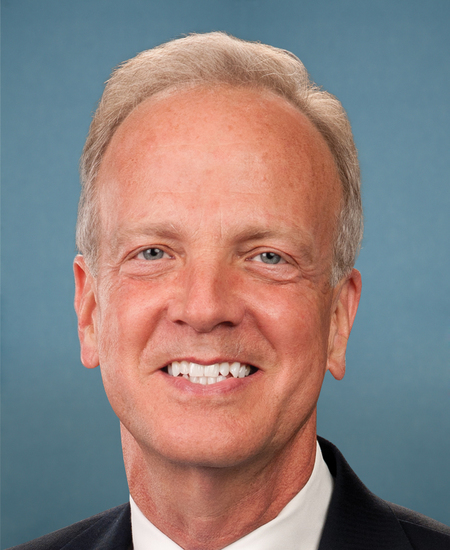
Jerry Moran
Jerry Moran Senate
R
Strong −
8% 12
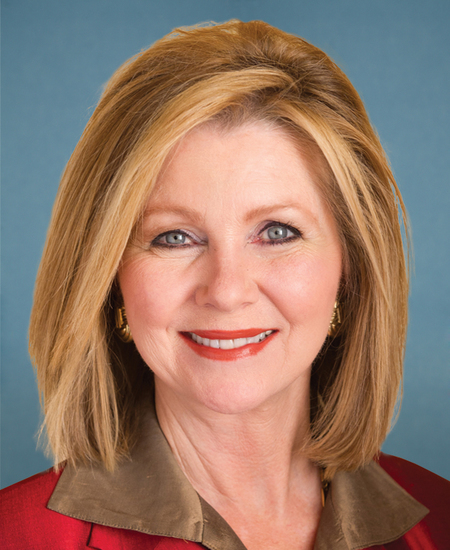
Marsha Blackburn
Marsha Blackburn Senate
R
Strong −
8% 12
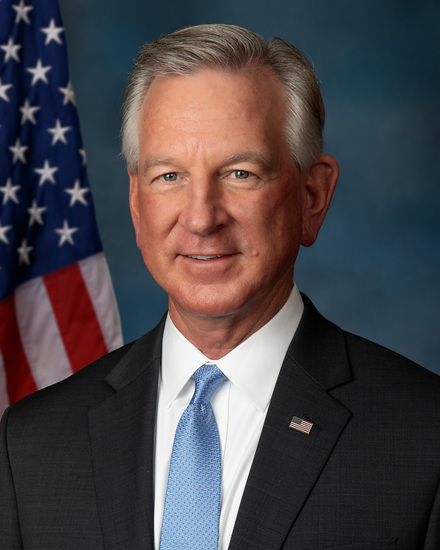
Tommy Tuberville
Tommy Tuberville Senate
R
Strong −
8% 12
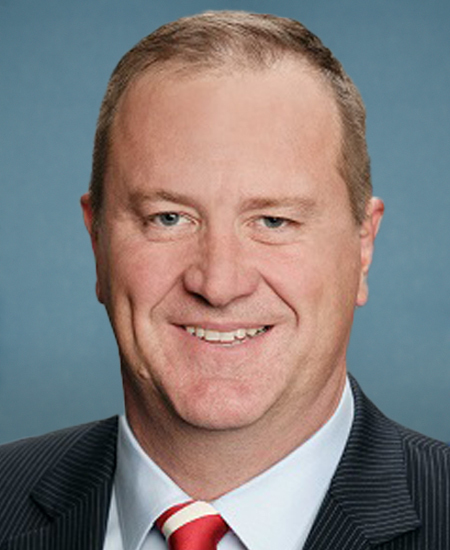
Eric Schmitt
Eric Schmitt Senate
R
Strong −
9% 11
Showing 141–150 of 272 bills

All environment bills

passed · United States · House Mar 17, 2026

HR 528: Post-Disaster Reforestation and Restoration Act

Post-Disaster Reforestation and Restoration Act of 2025 This bill directs the Department of the Interior to carry out a program for post-disaster reforestation and restoration.  Interior must identify covered lands requiring reforestation and restoration following unplanned disturbances that are unlikely to experience natural regeneration without assistance. Covered land means (1) any federal land or interest in land administered by the National Park Service, the U.S. Fish and Wildlife Service, the Bureau of Land Management, the Bureau of Reclamation, the Forest Service, or the Bureau of Indian Affairs; and (2) any Indian Forest Land or Rangeland. Interior must propose a list that prioritizes projects for reforestation and restoration for each fiscal year. Interior may (1) carry out priority projects through grants, contracts, or cooperative agreements; and (2) support any grant contract or cooperative agreement that may be necessary to ensure adequate and appropriate seed and seedling availability to further the objectives of priority projects.
in committee · United States · Senate Feb 4, 2025

S 392: Sloan Canyon Conservation and Lateral Pipeline Act

S 392 expands the Sloan Canyon National Conservation Area boundary from 48,438 to 57,728 acres. It grants the Southern Nevada Water Authority a right-of-way (without fees) to build a water pipeline outside the Conservation Area, including provisions for excavating materials and disposing of excess earth. The bill requires the pipeline to avoid wilderness areas and not permanently harm conservation resources, while preserving existing utility corridors and rights-of-way. This directly affects the Southern Nevada Water Authority’s infrastructure plans and the management of the Conservation Area under federal land laws.
passed · United States · House Mar 19, 2026

HR 556: Protecting Access for Hunters and Anglers Act

HR 556, the Protecting Access for Hunters and Anglers Act, prevents federal agencies from banning lead ammunition or tackle on public lands and waters managed for hunting or fishing. It directly affects hunters and anglers using federal lands (like national wildlife refuges, public forests, and BLM lands) by blocking nationwide restrictions on lead products. The bill allows limited exceptions only for specific locations where wildlife decline is directly linked to lead use, and the restriction must align with state law or get approval from the state wildlife agency. This changes how federal land managers can regulate lead, requiring state coordination for any local restrictions.
in committee · United States · House Mar 25, 2026

HR 1555: Bureau of Land Management Mineral Spacing Act

This bill changes federal permitting rules for oil and gas drilling on land where the federal government owns less than half the mineral rights beneath non-federal surface land. It requires operators to use a state permit instead of a federal drilling permit, removes federal environmental review requirements under NEPA and the Endangered Species Act, and allows operations to start 30 days after submitting the state permit. It does not affect royalty payments to the federal government or apply to Indian lands. The policy directly affects oil and gas operators working on non-federal surface estates with partial federal mineral ownership.
in committee · United States · House Jun 10, 2025

HR 3889: National Prescribed Fire Act of 2025

The National Prescribed Fire Act of 2025 aims to increase the use of prescribed fire (intentionally set, controlled burns) on federal lands to reduce wildfire risk and improve forest health. The bill allows federal land management agencies to use up to 15% of their hazardous fuels management funds for prescribed fire projects, requires a 10% annual increase in acres treated with prescribed fire, and establishes a Collaborative Prescribed Fire Program to fund large-scale, landscape-level projects. It streamlines environmental reviews through landscape-scale planning, addresses liability protections for fire managers, and mandates annual reporting on prescribed fire activities. The bill directly affects federal land management agencies (Interior and Agriculture), states, tribes, and local entities working on fire management.
in committee · United States · House Jan 21, 2025

HR 588: Boundary Waters Wilderness Protection and Pollution Prevention Act

Boundary Waters Wilderness Protection and Pollution Prevention Act This bill protects and preserves approximately 225,504 acres of federal land and waters in a specified area in the Rainy River Watershed of Superior National Forest in Minnesota from certain mining, such as sulfide-ore copper mining. (The area is upstream from the Boundary Waters Canoe Area Wilderness.) Specifically, the bill withdraws those acres from  entry, appropriation, and disposal under the public land laws; location, entry, and patent under the mining laws; and operation of the mineral leasing, mineral materials, and geothermal leasing laws. However, the Forest Service is authorized to permit the removal of sand, granite, iron ore, and taconite from national forest system lands within such area if the removal is not detrimental to the water quality, air quality, and health of forest habitat within the Rainy River Watershed. Land or interest in land within such area that is acquired by the United States must be immediately withdrawn in accordance with this bill.
in committee · United States · House Feb 11, 2025

HR 1217: Orphan Well Grant Flexibility Act of 2025

HR 1217, the Orphan Well Grant Flexibility Act of 2025, amends federal grant rules for cleaning up orphaned oil and gas wells by removing the requirement for states to measure methane emissions as a condition for receiving funding. It allows states to use estimated data from well plugging projects (without needing to collect new monitoring data) for reporting purposes. The bill also mandates a National Academies study to analyze how well-plugging activities affect local economies, housing, and water quality in communities where many wells are cleaned up, requiring input from all U.S. regions and agencies like HUD. This study must be completed within 18 months after the final grant is awarded, using existing federal funding.
in committee · United States · House Jan 8, 2026

HR 1110: Grazing for Wildfire Risk Reduction Act

HR 1110, the Grazing for Wildfire Risk Reduction Act, directs the USDA Forest Service to develop strategies using livestock grazing to reduce wildfire risks on federal lands. It specifically requires expanding grazing opportunities during droughts or disasters on vacant permits, promoting targeted grazing, issuing temporary permits for fuels reduction, and using grazing for postfire recovery. The bill affects livestock permit holders and federal land managers by modifying how existing grazing authorities are applied for wildfire risk mitigation. It focuses on concrete policy changes to utilize current grazing programs as a proactive fire prevention tool, without altering permanent grazing rules.
Sub-Topics Forestry Public Lands
in committee · United States · Senate Dec 9, 2025

S 1777: Joshua Tree National Park Expansion Act

This bill expands Joshua Tree National Park by adding approximately 20,149 acres of land to its boundary, as shown on a specific map dated June 2024. It transfers management of this newly added land from the Bureau of Land Management to the National Park Service and allows the Secretary of the Interior to acquire the land through donation, purchase, exchange, or transfer (with state-owned land requiring donation or exchange only). The bill also renames the Cottonwood Visitor Center at the park as the Dianne Feinstein Visitor Center, updating all official references to reflect this change. These provisions directly affect park management, land ownership, and visitor facilities within the expanded area.
in committee · United States · House Jan 22, 2025

HR 606: Energy Opportunities for All Act

HR 606, the "Energy Opportunities for All Act," formally nullifies Public Land Order No. 7923. This order had withdrawn public lands surrounding Chaco Culture National Historical Park in San Juan County, New Mexico, from mineral development. The bill reverses that withdrawal, making those lands available for potential energy development. It directly affects land management decisions in that specific New Mexico area and the federal process for mineral leasing. The bill is procedural, focusing solely on repealing the prior land withdrawal order.
Showing 141 to 150 of 272 bills
Previous 1 14 15 16 28 Next