Issue · Environment

Environment (Conservation)

Every environment bill, vote, and legislator stance in United States, automatically classified by Maddy, our AI policy reader.

Total bills
304
119th Congress
Top supporter
Adam B. Schiff
100% support rate
Top opponent
Ashley Moody
0% support rate
Ranked legislators
10
5 support · 5 oppose
Key legislators

Who's moving conservation in United States

Legislators moving conservation in United States
Legislator Party Stance Support rate Votes
Adam B. Schiff
Adam B. Schiff Senate
D
Strong +
100% 9
Alex Padilla
Alex Padilla Senate
D
Strong +
100% 9
Amy Klobuchar
Amy Klobuchar Senate
D
Strong +
100% 9
Andy Kim
Andy Kim Senate
D
Strong +
100% 9
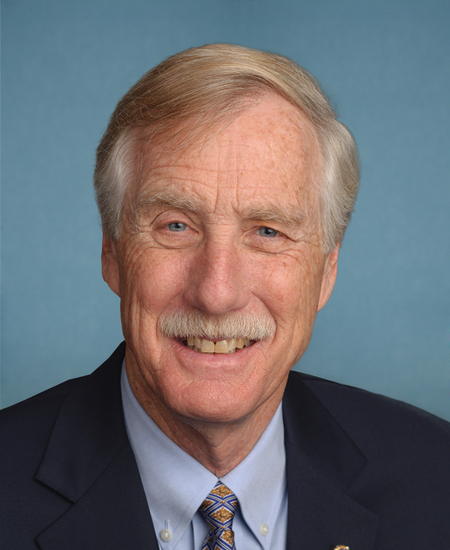
Angus S. King, Jr.
Angus S. King, Jr. Senate
I
Strong +
100% 9
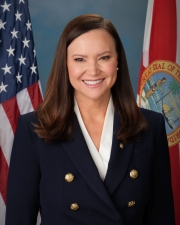
Ashley Moody
Ashley Moody Senate
R
Strong −
0% 9
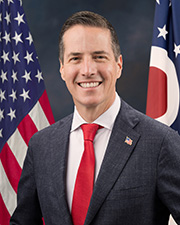
Bernie Moreno
Bernie Moreno Senate
R
Strong −
0% 9
Bill Cassidy
Bill Cassidy Senate
R
Strong −
0% 9
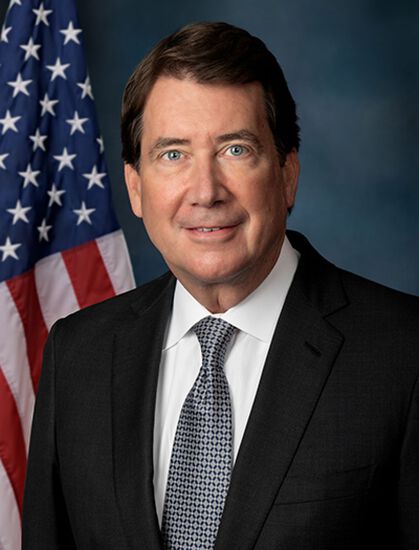
Bill Hagerty
Bill Hagerty Senate
R
Strong −
0% 9
Chuck Grassley
Chuck Grassley Senate
R
Strong −
0% 9
Showing 141–150 of 304 bills

All environment bills

in committee · United States · Senate Feb 20, 2025

S 670: Protect the West Act of 2025

The Protect the West Act of 2025 establishes a $60 billion Outdoor and Watershed Restoration Fund to support ecological restoration projects across western U.S. landscapes. It creates two main programs: a $20 billion grant program to help eligible entities like state governments, tribes, and nonprofits plan and coordinate restoration projects, and a $40 billion partnership program focused on carrying out projects on Federal and non-Federal lands with high wildfire risk. The bill requires projects to improve forest conditions, watersheds, wildlife habitat, and reduce wildfire risks while creating jobs in outdoor industries, with special priority for projects in the wildland-urban interface and underserved communities. Projects must be coordinated with existing conservation programs and follow scientific best practices, with annual reporting requirements to track environmental benefits and job creation.
in committee · United States · House Dec 11, 2025

HR 6628: Protect Greenbury Point Conservation Area Act

This bill prohibits the development of a golf course at the Greenbury Point Conservation Area within Naval Support Activity Annapolis in Maryland. It amends Section 2855 of the Military Construction Act for Fiscal Year 2024 to explicitly ban constructing a golf course there, replacing prior language about modifying public access. The key mechanism adds this specific prohibition to the military construction law, directly affecting development plans for the conservation area. The bill also maintains existing environmental restoration requirements for the area under current law.
Sub-Topics Conservation
in committee · United States · House May 13, 2025

HR 3369: Wild Olympics Wilderness and Wild and Scenic Rivers Act

This bill designates 14 new wilderness areas totaling approximately 126,554 acres in Washington's Olympic National Forest as part of the National Wilderness Preservation System. It also designates 22 river segments across western Washington as "wild," "scenic," or "recreational" rivers under the Wild and Scenic Rivers Act, protecting them from development. The wilderness areas will be managed by the Forest Service under the Wilderness Act, while rivers will be managed by the Department of Agriculture or Interior depending on location. The bill preserves these natural areas for public enjoyment while respecting existing rights and treaty obligations, with management plans required to be updated within 3-5 years of enactment.
Sub-Topics Conservation Forestry
in committee · United States · House Jan 23, 2025

HR 717: Wildlife Movement Through Partnerships Act of 2025

HR 717 establishes a grant program to fund projects improving habitat connectivity for migratory wildlife, primarily benefiting big game species like deer, elk, and pronghorn. The bill provides federal funding (with up to 90% federal share) for states, tribes, nonprofits, and landowners to implement habitat improvements such as fence modifications, wildlife crossings, and habitat restoration in identified movement areas. Projects must include support from state or tribal wildlife agencies, and at least 50% of funding must target big game movement areas. The program coordinates with existing initiatives like the Migratory Big Game Initiative and requires annual reporting on conservation outcomes.
in committee · United States · House Mar 14, 2025

HR 2134: Southern Nevada Economic Development and Conservation Act

HR 2134, the Southern Nevada Economic Development and Conservation Act, transfers approximately 48,106 acres of federal land to the Moapa Band of Paiutes and Las Vegas Paiute Tribes to be held in trust for tribal use. The bill establishes 9 special management areas totaling over 290,000 acres in Clark County for conservation and habitat protection, while adding wilderness areas to the National Wilderness Preservation System. It conveys federal land to local governments for public safety facilities, water infrastructure, and recreation areas, with specific provisions for affordable housing and flood control. The legislation aims to balance economic development with environmental conservation in Southern Nevada through specific land management changes.
in committee · United States · House May 13, 2025

HR 3329: Wildlife Corridors and USDA Conservation Programs Act of 2025

This bill establishes a program to identify and protect "American wildlife corridors" - connected habitats that allow wildlife to move freely across landscapes. The Secretary of Agriculture, working with wildlife agencies, must identify these areas within one year, create maps, and submit reports to Congress. Landowners enrolled in USDA conservation programs can receive priority enrollment or contract modifications if they help maintain these corridors through practices like habitat restoration and wildlife monitoring. The law directly affects farmers and ranchers participating in USDA conservation programs by offering new incentives to support wildlife movement and habitat connectivity.
Sub-Topics Conservation Wildlife
in committee · United States · House Jul 22, 2025

HR 180: Endangered Species Transparency and Reasonableness Act of 2025

The Endangered Species Transparency and Reasonableness Act of 2025 requires federal agencies to publish online the scientific data used to list species as endangered or threatened, with limited exceptions for state privacy laws or classified defense information. It also mandates a monthly updated, searchable database of federal spending on lawsuits related to the Endangered Species Act, including case details, involved agencies, and funds expended. This bill directly affects agencies like the Department of the Interior, Environmental Protection Agency, and National Marine Fisheries Service, as well as states, tribes, and local governments that provide data or are involved in litigation. The law aims to increase transparency in species listing decisions and federal spending on legal disputes under the Endangered Species Act.
Sub-Topics Conservation Wildlife Tags Government Transparency
in committee · United States · Senate Jul 24, 2025

S 2431: Department of the Interior, Environment, and Related Agencies Appropriations Act, 2026

# Summary of the Department of the Interior, Environment, and Related Agencies Appropriations Act, 2026 This comprehensive appropriations bill allocates funding for the Department of the Interior, Environmental Protection Agency, and related agencies for fiscal year 2026. Key provisions include: 1. **Major Funding Allocations**: - Significant funding for the Indian Health Service, National Park System, and environmental programs - Specific allocations for National Endowment for the Arts and Humanities - Funding for the Smithsonian Institution, National Gallery of Art, and other cultural institutions 2. **Key Restrictions and Prohibitions**: - Ban on using funds for activities promoting public support/opposition to pending legislation - Prohibition on using funds for certain types of mineral leasing within National Monuments - Restrictions on using funds for certain environmental regulations (e.g., greenhouse gas reporting from manure management) - Ban on using funds for certain types of ammunition regulation 3. **Program Extensions**: - Extension of various programs through 2026 (e.g., Forest Service Facility Realignment, Tribal Leases, Alaska Native Regional Health Entities) - Extension of the Alaska Native Vietnam Era Veterans Land Allotment Program 4. **Administrative Provisions**: - Requirements for quarterly reporting on fund balances - Restrictions on reprogramming funds without committee approval - Requirements for posting reports on agency websites - Specific guidelines for grant awards and cancellations 5. **Rescissions and Repurposing**: - Permanent rescission of $41 million from Environmental Protection Agency Buildings and Facilities - Permanent rescission of $50 million from John F. Kennedy Center Capital Repair - Repurposing of $764.5 million from unobligated balances for wildland fire management The bill contains numerous specific provisions governing how funds may be used across various programs, with particular attention to environmental protection, cultural institutions, Native American health and land management, and forest management. It includes numerous restrictions on fund usage and specific requirements for reporting and transparency.
in committee · United States · House Mar 11, 2025

HR 2091: Chesapeake Bay Conservation Acceleration Act of 2025

This bill establishes the Chesapeake Bay States Partnership Initiative to help agricultural producers in the Chesapeake Bay watershed (covering parts of Delaware, Maryland, New York, Pennsylvania, Virginia, West Virginia, and D.C.) implement conservation practices that improve water quality, restore soil resources, and increase climate resilience. It provides targeted funding for erosion control, nutrient reduction, and habitat restoration on agricultural land, with special consideration for practices that reduce nitrogen and sediment. The bill creates a "turnkey pilot program" allowing technical service providers to establish and manage conservation practices on farmland without requiring landowners to pay costs or submit additional paperwork. Additionally, it updates conservation programs, enhances agricultural education funding, and adjusts regulatory oversight for certain catfish species in the Chesapeake Bay ecosystem.
in committee · United States · House Sep 2, 2025

HR 5102: Greater Yellowstone Recreation Enhancement And Tourism Act

This bill designates five specific river segments in Montana - including the Madison River (42 miles), Gallatin River (39.5 miles), and Hyalite Creek (4.6 miles) - as protected under the Wild and Scenic Rivers program. It directly affects recreational users, local tourism economies, and existing water rights holders by preserving public access, private property rights, and current infrastructure like the Hebgen and Madison Dams. Key provisions include designating segments as "recreational" or "scenic" rivers under USDA Forest Service management, explicitly preserving existing hydropower operations (including FERC licenses for the Hebgen and Madison Dams), and prohibiting dam expansion into protected areas. The bill also confirms that existing water rights, including Tribal and state compacts, remain fully intact.
Showing 141 to 150 of 304 bills
Previous 1 14 15 16 31 Next