Issue · Environment

Environment

Every environment bill, vote, and legislator stance in United States, automatically classified by Maddy, our AI policy reader.

Total bills
1,479
119th Congress
Top supporter
Martin Heinrich
84% support rate
Top opponent
Marsha Blackburn
11% support rate
Ranked legislators
10
5 support · 5 oppose
Key legislators

Who's moving environment in United States

Legislators moving environment in United States
Legislator Party Stance Support rate Votes
Martin Heinrich
Martin Heinrich Senate
D
Strong +
84% 215
Adam B. Schiff
Adam B. Schiff Senate
D
Support
79% 231
Christopher A. Coons
Christopher A. Coons Senate
D
Support
79% 229
Jeanne Shaheen
Jeanne Shaheen Senate
D
Support
78% 232
Alex Padilla
Alex Padilla Senate
D
Support
78% 232
Marsha Blackburn
Marsha Blackburn Senate
R
Strong −
11% 211
Ted Budd
Ted Budd Senate
R
Strong −
20% 220
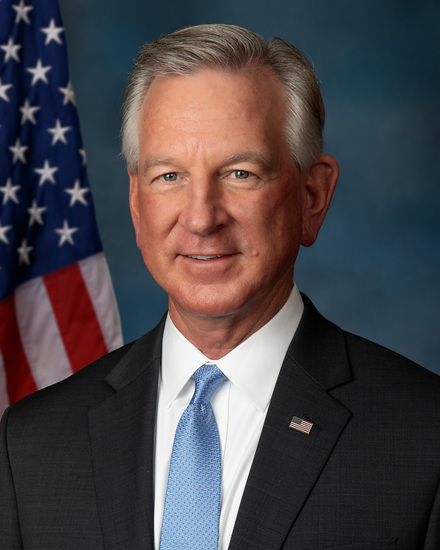
Tommy Tuberville
Tommy Tuberville Senate
R
Oppose
21% 229
Bill Cassidy
Bill Cassidy Senate
R
Oppose
22% 221
Jerry Moran
Jerry Moran Senate
R
Oppose
23% 228
Showing 1,361–1,370 of 1,479 bills

All environment bills

in committee · United States · House Mar 28, 2025

HR 1854: Climate Agricultural Conservation Practices Act

Climate Agricultural Conservation Practices Act This bill requires the Natural Resources Conservation Service (NRCS) to consider climate benefits in reviews or revisions of its conservation practice standards. Climate benefits include a reduction in agricultural greenhouse gas emissions, an increase in carbon sequestration, or mitigation against (or adaptation to) increased weather volatility. As background, NRCS administers most of the Department of Agriculture conservation programs, which assist producers and landowners who wish to practice conservation on agricultural lands. The NRCS conservation practice standards provide guidance and set out minimum quality criteria for implementing federally funded conservation practices.
Sub-Topics Climate Change Conservation Tags Agriculture
in committee · United States · Senate May 21, 2025

S 1842: Wildfire Reduction and Carbon Removal Act of 2025

This bill creates a tax credit for businesses that capture and store carbon from forest residues used in wildfire hazard reduction activities. The credit provides $36 per metric ton for carbon stored in secure geological storage and $12 per metric ton for carbon stored through long-duration utilization. To qualify, businesses must meet sustainability standards for sourcing forest residues (from thinning trees no greater than 8 inches in diameter) and undergo verification through lifecycle analysis and monitoring. The credit is designed to incentivize carbon removal while promoting sustainable forest management practices. It will apply to taxable years beginning after December 31, 2025.
Sub-Topics Tax Credits Forestry
passed · United States · Senate May 8, 2025

SRES 211: A resolution designating May 10, 2025, as "World Migratory Bird Day".

This Senate resolution (SRES 211) symbolically designates May 10, 2025, as "World Migratory Bird Day" to raise public awareness about migratory birds. It highlights the ecological and economic importance of migratory birds - such as their role in pest control, pollination, and contributing $279 billion annually to the U.S. economy through birdwatching. The resolution encourages Americans to support bird conservation through education and community engagement, aligning with the 2025 theme of creating "bird-friendly cities and communities." As a non-binding resolution, it does not create new laws but formally recognizes an annual global observance.
Sub-Topics Conservation
passed · United States · Senate Nov 20, 2025

S 2741: Legacy Mine Cleanup Act of 2025

The Legacy Mine Cleanup Act of 2025 establishes a new Office of Mountains, Deserts, and Plains within the EPA to coordinate cleanup efforts at abandoned hardrock mine sites across federal, tribal, state, and private lands. It requires the EPA to annually prioritize mine sites for cleanup, develop interagency plans for Navajo Nation uranium mine sites by 2028 (including funding targets and agency roles), and coordinate with Tribal governments on government-to-government consultations. The bill mandates sharing best practices for cleanup technologies, waste solutions, and small business contracting opportunities, while ensuring coordination with agencies like the Department of Energy and Interior. It uses existing EPA authorities without creating new regulations or standards, focusing on improving coordination rather than altering cleanup requirements.
Sub-Topics Hazardous Materials Tags Tribal Nations
in committee · United States · House May 20, 2026

HR 6969: Rural Investment for Producers and the Environment (RIPE) Act of 2026

The RIPE Act of 2026 establishes a demonstration program to pay farmers and ranchers for adopting environmental practices on eligible agricultural watersheds. It provides direct payments covering costs of implementation, lost income during transition, and environmental benefits like improved water quality, carbon sequestration, and habitat restoration. The program targets up to 30 watersheds nationwide (max 2 per state), with 15% higher payments for limited-resource or socially disadvantaged producers. The Secretary must review payments annually and report annually on enrolled acres, environmental outcomes, and participant demographics. Funding includes $150 million annually from 2027-2029 for program operations.
Sub-Topics Water Quality Tags Agriculture Rural Communities
in committee · United States · House Dec 17, 2025

HR 6815: Environmental Justice Screening Tool Act of 2025

HR 6815 creates a publicly available EPA tool to identify communities facing environmental burdens, such as poor air quality, climate risks, health issues, poverty, and racial disparities. The tool uses geospatial mapping to flag neighborhoods meeting specific thresholds across six categories of factors (e.g., asthma rates, proximity to pollution sources, unemployment). Federal agencies must adopt this tool within a year to prioritize funding and resources for affected communities. The EPA will update the tool annually based on public feedback and new data, with annual reports to Congress on changes in identified communities.
in committee · United States · Senate Jul 10, 2025

S 2243: International Maritime Pollution Accountability Act of 2025

This bill imposes fees on carbon dioxide-equivalent emissions and criteria air pollutants from international maritime shipping. It requires operators of large cargo vessels (5,000+ gross tons) to report emissions data and pay fees based on fuel consumption and emissions. The fees collected will fund programs to modernize U.S. shipping fleets with zero-emission technology, develop low-carbon fuels, train workers for clean shipping technologies, and improve air quality monitoring in port communities. The bill affects international shipping operators and U.S. port communities, with reporting requirements starting in 2027 and funding programs beginning in 2029.
in committee · United States · Senate Nov 6, 2025

S 3140: Flood Protection and Infrastructure Resilience Act of 2025

This bill amends existing laws to increase federal support for flood protection and watershed restoration projects. It allows the Secretary to fund measures that exceed immediate needs if they benefit long-term watershed health and prevent repeated damage. Local organizations managing flood control infrastructure can now receive up to 90% federal funding for rehabilitation projects in "limited resource areas" (compared to 65% generally), while still covering permit and resource rights costs themselves. The bill directly affects local governments and watershed groups undertaking flood prevention work by expanding eligible projects under conservation programs to specifically include flood/drought mitigation.
in committee · United States · House Jul 23, 2025

HR 4636: SOIL Act

The SOIL Act increases payments for farmers participating in USDA conservation programs who implement practices that simultaneously improve soil health and wildlife habitat. It raises reimbursement rates to 90% of costs for specific activities like planting cover crops, restoring wetlands, creating riparian buffers, and establishing wildlife habitat plantings - listed in the bill as 26 distinct practices. The bill modifies program rules to prioritize applications and contract offers that address both soil and wildlife resource concerns. These changes directly affect farmers enrolled in the Environmental Quality Incentives Program (EQIP) and Conservation Stewardship Program (CSP) who adopt dual-benefit conservation practices. The policy shifts focus toward integrated land management by financially incentivizing practices that deliver multiple ecological outcomes.
in committee · United States · House Mar 28, 2025

HR 1853: CALL Act

The CALL Act (HR 1853) requires the U.S. Department of Agriculture to conduct a comprehensive study on barriers to conservation practice adoption on leased agricultural land. It examines factors like lease agreements, landowner awareness, and regional differences affecting farmers (who operate leased land but don’t own it) and landowners. The study will analyze existing data, including the TOTAL Survey, and assess how lease structures influence conservation efforts, with special focus on Black, Indigenous, and beginning farmers. The USDA must submit a final report by December 2026 with recommendations for improving conservation participation on leased land. This is a research-focused bill with no immediate policy changes, aiming to inform future USDA actions.
Showing 1,361 to 1,370 of 1,479 bills