Issue · Environment

Environment

Every environment bill, vote, and legislator stance in United States, automatically classified by Maddy, our AI policy reader.

Total bills
1,479
119th Congress
Top supporter
Martin Heinrich
84% support rate
Top opponent
Marsha Blackburn
11% support rate
Ranked legislators
10
5 support · 5 oppose
Key legislators

Who's moving environment in United States

Legislators moving environment in United States
Legislator Party Stance Support rate Votes
Martin Heinrich
Martin Heinrich Senate
D
Strong +
84% 215
Adam B. Schiff
Adam B. Schiff Senate
D
Support
79% 231
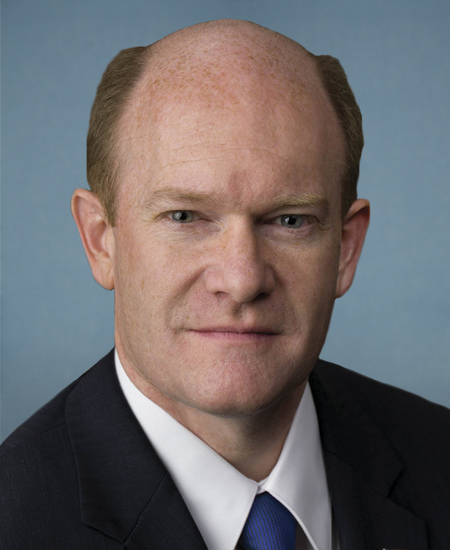
Christopher A. Coons
Christopher A. Coons Senate
D
Support
79% 229
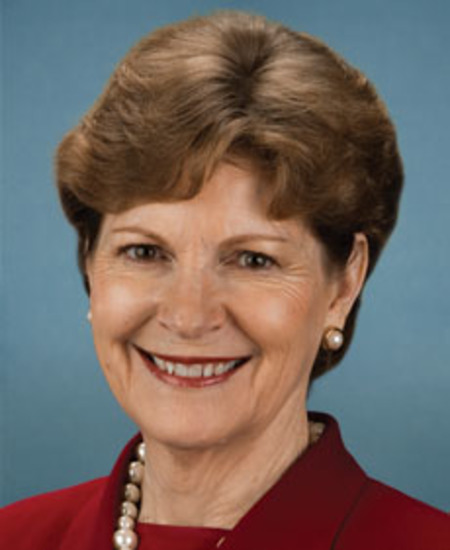
Jeanne Shaheen
Jeanne Shaheen Senate
D
Support
78% 232
Alex Padilla
Alex Padilla Senate
D
Support
78% 232
Marsha Blackburn
Marsha Blackburn Senate
R
Strong −
11% 211
Ted Budd
Ted Budd Senate
R
Strong −
20% 220
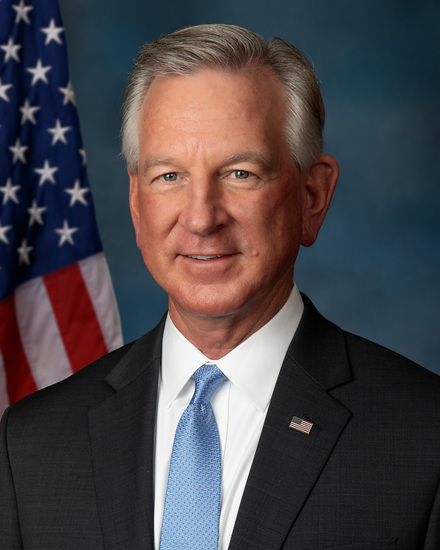
Tommy Tuberville
Tommy Tuberville Senate
R
Oppose
21% 229
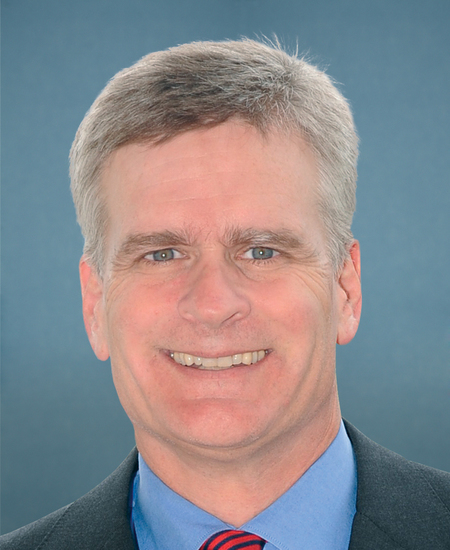
Bill Cassidy
Bill Cassidy Senate
R
Oppose
22% 221
Jerry Moran
Jerry Moran Senate
R
Oppose
23% 228
Showing 1,311–1,320 of 1,479 bills

All environment bills

in committee · United States · Senate Feb 27, 2025

S 781: Long Island Sound Restoration and Stewardship Reauthorization Act of 2025

This bill reauthorizes existing federal grant programs focused on restoring and stewarding the Long Island Sound through 2029. It extends the funding period for two key programs: the Long Island Sound Grants (under the Federal Water Pollution Control Act) and the Long Island Sound Stewardship Grants (under the 2006 Stewardship Act), changing their authorization from 2019-2023 to 2025-2029. These grants directly support states (Connecticut and New York), local governments, and non-profits working on water quality, habitat restoration, and public education projects in the Sound. The bill makes no new policy changes but continues current funding mechanisms for these established environmental programs.
Sub-Topics Water Quality
in committee · United States · Senate Jul 23, 2026

S 2881: A bill to provide for the transfer of administrative jurisdiction over certain Federal land in the State of California, and for other purposes.

This bill transfers specific federal lands between agencies to better align management with nearby protected areas. It moves approximately 160 acres of National Forest System land (in Tuolumne County) to the Secretary of the Interior for inclusion in Yosemite National Park, and about 170 acres of National Park System land to the Secretary of Agriculture for management as part of Stanislaus National Forest. The bill ensures existing rights, permits, and hazardous substance cleanup responsibilities remain with the original agencies until the transfer date. Minor land adjustments can be made with mutual agreement, and all transfers follow the map titled "Ackerson Meadow Land Interchange" dated February 24, 2022.
in committee · United States · Senate Sep 3, 2025

S 2695: Synthetic Biology Advancement Act of 2025

The Synthetic Biology Advancement Act of 2025 establishes a National Synthetic Biology Center within the U.S. Department of Agriculture to award competitive grants to eligible land-grant universities (1862, 1890, and 1994 institutions). The center funds research focused on synthetic biology applications in agriculture, including gene editing, microbiomes, AI-driven modeling, and sustainable food production systems. Grants require partnerships with entities like National Laboratories or nonprofits and must address specific priorities like climate-resilient crops or new protein sources. The bill authorizes $5 million annually for grants and $1 million annually for center operations from 2026-2030, with mandatory progress reports to Congress.
in committee · United States · House Jul 16, 2025

HCONRES 44: Recognizing a health and safety emergency disproportionately affecting the fundamental rights of children due to the Trump administration's directives that unleash fossil fuels and greenhouse gas emissions that contribute to climate change, while suppressing climate change science.

HCONRES 44 is a symbolic resolution recognizing a health and safety emergency for children linked to the Trump administration's climate policies. It claims these policies - unleashing fossil fuel production, blocking renewable energy, and suppressing climate science - disproportionately harm children through increased air pollution, extreme weather, and denied access to climate data. The resolution calls for reversing these policies, restoring the EPA's mission, and ensuring climate action aligns with protecting children's rights. It does not enact new laws or change policy, but serves as a formal congressional statement of concern.
Sub-Topics Renewable Energy Air Quality Climate Change Natural Disasters Tags Children Emergency Management
in committee · United States · House Dec 17, 2025

HR 6782: Public Health Air Quality Act of 2025

The Public Health Air Quality Act of 2025 requires the Environmental Protection Agency to establish a national network for monitoring hazardous air pollutants near communities, focusing on facilities emitting specific chemicals linked to health risks like cancer and respiratory issues. The bill mandates fenceline monitoring at 100 high-priority facilities that emit chemicals such as benzene, formaldehyde, ethylene oxide, and other hazardous air pollutants, with public reporting of data within 7 days of collection. It also requires deployment of 1,000 low-cost air quality monitoring systems in communities disproportionately impacted by pollution, with data made accessible in multiple languages and formats. The Act authorizes $146 million for implementation during fiscal years 2026-2027 to support these monitoring requirements and public transparency efforts.
signed · United States · House Dec 11, 2025

HJRES 131: Providing for congressional disapproval under chapter 8 of title 5, United States Code, of the rule submitted by the Bureau of Land Management relating to Coastal Plain Oil and Gas Leasing Program Record of Decision.

HJRES 131 blocks a Bureau of Land Management (BLM) rule that would have allowed oil and gas leasing in Alaska's Arctic National Wildlife Refuge Coastal Plain. The bill uses the Congressional Review Act to formally disapprove this specific rule, making it legally void. It directly affects the BLM's ability to advance the leasing program and companies seeking permits for oil and gas development in that area. The resolution became law after passing both chambers of Congress in late 2025.
in committee · United States · Senate Aug 1, 2025

S 2654: Biomanufacturing and Jobs Act of 2025

The Biomanufacturing and Jobs Act of 2025 aims to strengthen the U.S. biobased products industry by increasing federal procurement of products made from renewable agricultural resources like corn and soybeans. The bill establishes clear definitions for terms such as "biobased product" and "bio-attributed plastic," requires federal agencies to annually increase their purchase of biobased products, and creates a USDA task force to coordinate programs and make recommendations for improvement. It also sets labeling standards to prevent misleading claims about bioproducts and mandates training for federal procurement staff on biobased product purchasing. This legislation directly affects the Department of Agriculture, federal procurement agencies, and manufacturers of biobased products, with the goal of supporting rural economies and reducing reliance on petroleum-based products.
Tags Agriculture
passed · United States · Senate Sep 11, 2025

S 93: Harmful Algal Bloom and Hypoxia Research and Control Amendments Act of 2025

This bill amends the Harmful Algal Bloom and Hypoxia Research and Control Act of 1998 to strengthen federal efforts addressing harmful algal blooms (HABs) and hypoxia across marine, estuarine, and freshwater systems. It establishes a new Task Force required to develop a comprehensive Action Strategy every five years, examining causes, ecological impacts, and economic consequences of HABs in diverse environments including the Great Lakes, coastal waters, and freshwater systems. The bill authorizes $19.5 million annually for NOAA and $8 million annually for the EPA (fiscal years 2026-2030) to implement these provisions, creates a national monitoring network for HABs, and establishes an incubator program to develop innovative prevention strategies. It mandates consultation with states, tribes, local governments, and affected industries like fisheries and agriculture to address HABs impacts on public health, ecosystems, and communities.
in committee · United States · House Feb 4, 2026

HR 7348: Transparency in Federal Land Acquisitions Act

This bill requires the U.S. Fish and Wildlife Service to publish proposed land protection plans in the Federal Register at least 60 days before finalizing them, giving the public a formal opportunity to submit comments. It applies to all land protection plans for National Wildlife Refuge System units, except for small expansions under 50 acres or 15% of a refuge’s total acreage. The law establishes a standardized process for public input on federal land management decisions, directly affecting how the agency engages with communities and stakeholders during planning.
in committee · United States · Senate Jul 24, 2025

S 2435: Fighting Fibers Act of 2025

The Fighting Fibers Act of 2025 requires all new washing machines sold in the U.S. (both residential and commercial) to include a built-in or included microfiber filtration system that captures fibers smaller than 100 micrometers, starting January 1, 2030, and display a visible consumer label about filter maintenance. It mandates a one-year EPA study on microfibers' environmental presence, health effects, and potential inequitable impacts on environmental justice communities. Manufacturers violating the filtration, labeling, or future EPA standards face civil penalties of up to $30,000 per violation. This law directly affects washing machine manufacturers, retailers, and consumers by setting new product standards and requiring transparency about microfiber reduction.
Showing 1,311 to 1,320 of 1,479 bills