Issue · Environment

Environment

Every environment bill, vote, and legislator stance in United States, automatically classified by Maddy, our AI policy reader.

Total bills
1,490
119th Congress
Top supporter
Aisha Wahab
100% support rate
Top opponent
Marsha Blackburn
11% support rate
Ranked legislators
10
5 support · 5 oppose
Key legislators

Who's moving environment in United States

Legislators moving environment in United States
Legislator Party Stance Support rate Decisive votes
Aisha Wahab
Aisha Wahab House · District 14
D
Strong +
100% 7
Everton Blair Jr.
Everton Blair Jr. House · District 13
D
Strong +
89% 9
Martin Heinrich
Martin Heinrich Senate
D
Strong +
84% 37
Adam B. Schiff
Adam B. Schiff Senate
D
Support
79% 53
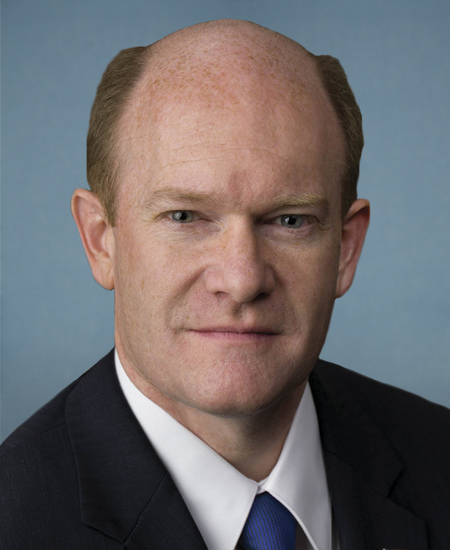
Christopher A. Coons
Christopher A. Coons Senate
D
Support
79% 52
Marsha Blackburn
Marsha Blackburn Senate
R
Strong −
11% 36
Ted Budd
Ted Budd Senate
R
Strong −
20% 40
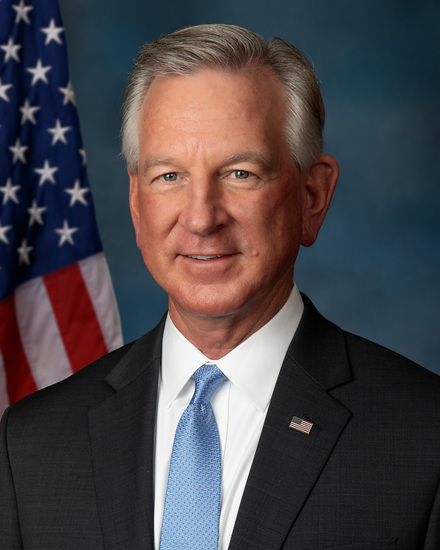
Tommy Tuberville
Tommy Tuberville Senate
R
Oppose
21% 53
Bill Cassidy
Bill Cassidy Senate
R
Oppose
22% 54
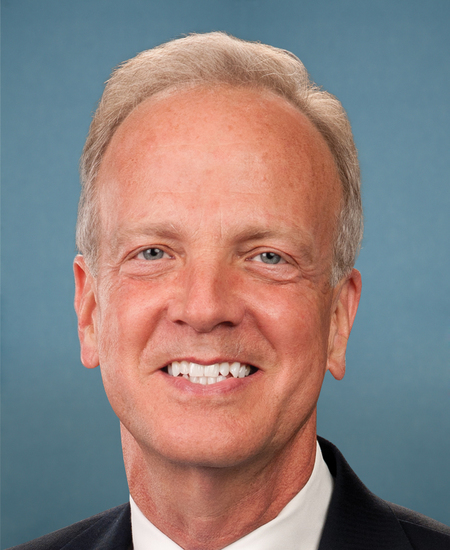
Jerry Moran
Jerry Moran Senate
R
Oppose
23% 53
Showing 1,071–1,080 of 1,490 bills

All environment bills

in committee · United States · House Jun 26, 2025

HR 4212: SHADE Act

HR 4212, the SHADE Act, establishes a federal grant program to plant trees in historically underserved urban areas. It directly affects cities and communities in "redlined areas" (low-income neighborhoods historically denied loans) or "intra-urban heat islands" (city zones with high temperatures and low tree cover). The bill authorizes $50 million annually (2026-2036) for grants to states, local governments, tribes, or qualifying nonprofits to fund tree planting, maintenance for 5 years, and community engagement plans. Grants prioritize projects that avoid displacing residents and require planting non-invasive tree species suited to the local environment.
Sub-Topics Forestry
in committee · United States · House Mar 28, 2025

HR 1994: Public Land Renewable Energy Development Act of 2025

The Public Land Renewable Energy Development Act of 2025 establishes rules for solar and wind energy projects on federal public lands and National Forest System lands. It requires project owners to pay current rents and fees (with a limited exception for projects that applied for permits by December 2016) and directs 25% of revenue from these projects to the state, 25% to the county (based on land area), 25% to speed up renewable energy permit processing, and 25% to a new conservation fund. The fund finances habitat restoration, wildlife corridor protection, wetland conservation, and improved public access to federal lands affected by renewable energy development. This bill directly affects renewable energy developers, states, counties, and federal agencies managing public lands.
in committee · United States · Senate Nov 6, 2025

S 3123: Sustainable International Financial Institutions Act of 2025

S 3123, the Sustainable International Financial Institutions Act of 2025, requires U.S. representatives at major international financial institutions (like the World Bank, IMF, and regional development banks) to use their voting power to oppose new fossil fuel projects and advance clean energy funding. The bill mandates that the U.S. reduce its financial contributions to any institution funding new fossil fuel capacity (including expansion of existing projects), with the withheld funds held in an escrow account until the institution stops such funding. It directly affects countries and entities receiving loans or assistance from these institutions, as well as the institutions themselves, by blocking new fossil fuel investments and requiring them to phase out support for fossil fuels by 2027. Key provisions include a defined scope of "fossil fuel activity" (covering coal, oil, gas, and unconventional sources like oil sands) and annual reporting requirements to Congress.
passed · United States · Senate Dec 15, 2025

S 719: Tribal Forest Protection Act Amendments Act of 2025

This bill amends the 2004 Tribal Forest Protection Act to expand protections for tribal lands and clarify restoration goals. It broadens the definition of "Indian forest land or rangeland" to include areas with historical forest cover capable of restoration and explicitly adds "restore" to the Act’s purpose (previously only "protect"). The changes directly affect federally recognized tribes, Alaska Native Corporations under the Alaska Native Claims Settlement Act, and federal agencies managing land. It also authorizes $15 million annually for fiscal years 2026-2031 to implement these provisions.
Sub-Topics Forestry Public Lands Tags Tribal Nations
in committee · United States · Senate Apr 29, 2025

S 1507: Agriculture Resilience Act of 2025

# Summary of the Agriculture Resilience Act of 2025 This proposed legislation contains comprehensive provisions to enhance agricultural resilience, reduce food waste, and promote sustainable farming practices. Key components include: 1. **Conservation Programs**: - Enhanced conservation reserve program with new "Grassland 30" contracts for long-term grassland protection - Private grazing land conservation assistance focusing on soil health, climate resilience, and advanced grazing management - Support for producers transitioning from confinement systems to managed grazing 2. **Food Waste Reduction**: - Standardized "quality date" (BEST If Used By) and "discard date" (USE By) labeling requirements - Mandatory food donation clauses for Federal contracts over $10,000 - School food waste reduction grant program for local educational agencies - National media campaigns to decrease food waste incidence 3. **Sustainable Agriculture Practices**: - Establishment of agrivoltaic systems (combining solar energy with agriculture) - Alternative manure management program to reduce methane emissions - Composting recognized as a conservation practice - Support for anaerobic digestion systems to reduce methane emissions 4. **Renewable Energy**: - Enhanced Rural Energy for America Program with carbon accounting requirements - New provisions for agrivoltaic systems research and demonstration - AgSTAR program transition to USDA for anaerobic digestion support 5. **Food Donation and Recovery**: - Amendments to the Federal Food Donation Act requiring donation of excess food - Grants for large-scale composting and anaerobic digestion food waste-to-energy projects - Food Waste Research Program to coordinate nationwide efforts The Act includes significant funding allocations for these programs (e.g., $50 million annually for grazing land conservation, $1.5 billion for alternative manure management, $100 million annually for composting/anaerobic digestion projects) with a focus on supporting beginning farmers, socially disadvantaged producers, and underserved communities.
in committee · United States · Senate Dec 2, 2025

S 902: Wildfire Response and Preparedness Act of 2025

S 902, the Wildfire Response and Preparedness Act of 2025, requires federal agencies managing public lands (like the Forest Service and Bureau of Land Management) to establish response time standards for wildfires on federal land within 90 days of enactment. It mandates that initial fire evaluation occur within 30 minutes and suppression assets deployed within 3 hours where practicable. The bill also requires annual reports to Congress detailing unified budget requests, performance metrics, fleet composition, and needed changes to improve dispatch systems and contract processes for firefighting resources. This legislation directly affects federal land management agencies and their wildfire response operations.
passed · United States · House Sep 16, 2026

HR 2140: Diesel Emissions Reduction Act of 2025

HR 2140, the Diesel Emissions Reduction Act of 2025, extends the expiration date of the existing Diesel Emissions Reduction Act program. It amends Section 797(a) of the Energy Policy Act of 2005 by changing the end date from 2024 to 2029. This bill does not create new programs or funding; it simply prolongs the current program's authorization period. The change affects the continuation of the existing federal program that supports state and local efforts to reduce diesel emissions from older vehicles.
Sub-Topics Climate Change
in committee · United States · House Mar 3, 2025

HR 1786: Harmful Algal Bloom Disaster Relief Act

HR 1786 amends the Robert T. Stafford Disaster Relief Act to explicitly include "algal blooms" as a qualifying event for federal disaster declarations. This change expands eligibility for federal disaster assistance to communities affected by harmful algal blooms, which can contaminate water and harm ecosystems. The bill modifies Section 102(2) of the Stafford Act (42 U.S.C. 5122) by adding "algal blooms" to the list of recognized disasters alongside drought. It is a procedural adjustment to the law's definition, not a new funding or program.
Sub-Topics Hazardous Materials Natural Disasters Water Quality Tags Emergency Management
in committee · United States · House Aug 5, 2025

HR 4875: Coal Ash for American Infrastructure Act

This bill creates a new pathway for coal ash storage facilities to transition from waste storage to beneficial use. Owners of coal ash units (like landfills or impoundments) can apply to be designated as "beneficial use staging units" if they meet environmental standards, submit a removal plan, and commit to removing at least 25% of stored ash for reuse (e.g., in construction materials) within 5-12 years, depending on facility size. Once designated, facilities cannot accept new ash and must comply with groundwater monitoring, but cannot be forced to close by states for failing to meet removal deadlines. The EPA will track progress through annual reports, and states cannot override these federal provisions. It directly affects coal ash facility operators seeking to repurpose stored ash instead of maintaining long-term storage.
in committee · United States · Senate Jun 5, 2025

S 1964: Solid American Hardwood Tax Credit Act

This bill adds a tax credit for homeowners who install U.S.-grown hardwood flooring, paneling, cabinetry, or window frames in their principal residence. It defines "natural carbon sink expenditures" to include these specific U.S. hardwood products, which absorb carbon dioxide. The credit applies to purchases made after the bill's enactment, extending the existing energy-efficient home improvement credit through 2035. It directly affects homeowners purchasing qualifying U.S. hardwood materials for home renovations.
Showing 1,071 to 1,080 of 1,490 bills