Issue · Environment

Environment (Forestry)

Every environment bill, vote, and legislator stance in United States, automatically classified by Maddy, our AI policy reader.

Total bills
254
119th Congress
Top supporter
Adam B. Schiff
100% support rate
Top opponent
Alan Armstrong
0% support rate
Ranked legislators
10
5 support · 5 oppose
Key legislators

Who's moving forestry in United States

Legislators moving forestry in United States
Legislator Party Stance Support rate Votes
Adam B. Schiff
Adam B. Schiff Senate
D
Strong +
100% 3
Alex Padilla
Alex Padilla Senate
D
Strong +
100% 3
Amy Klobuchar
Amy Klobuchar Senate
D
Strong +
100% 3
Andy Kim
Andy Kim Senate
D
Strong +
100% 3
Angela D. Alsobrooks
Angela D. Alsobrooks Senate
D
Strong +
100% 3
AA
Alan Armstrong Senate
R
Strong −
0% 3
Ashley Moody
Ashley Moody Senate
R
Strong −
0% 3
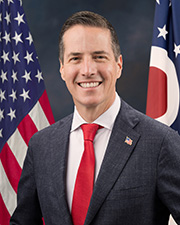
Bernie Moreno
Bernie Moreno Senate
R
Strong −
0% 3
Bill Cassidy
Bill Cassidy Senate
R
Strong −
0% 3
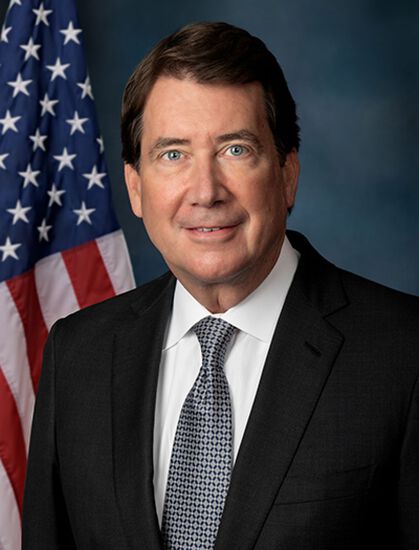
Bill Hagerty
Bill Hagerty Senate
R
Strong −
0% 3
Showing 1–10 of 254 bills

All environment bills

in committee · United States · House Aug 6, 2026

HR 10061: Wildfire Response and Readiness Act

The Wildfire Response and Readiness Act establishes a national prescribed fire program that requires federal agencies to increase the acreage of controlled burns on public lands by 10 percent annually for a decade. It creates a ten-year national wildfire plan to coordinate landscape-scale forest restoration, reforestation, and watershed protection efforts across federal, state, tribal, and private boundaries. The bill also authorizes new funding for community resilience, including grants for home hardening, satellite monitoring technology, and a joint office dedicated to fire environment data and prediction. Additionally, it modernizes the firefighting workforce by establishing training academies, expanding civilian conservation centers, and providing liability protections for non-federal partners conducting prescribed fires.
in committee · United States · Senate Aug 6, 2026

S 5290: Emergency Mountain Pine Beetle Response and Coordination Act

The Emergency Mountain Pine Beetle Response and Coordination Act establishes a competitive grant program administered by the Secretary of Agriculture to fund forest restoration projects on National Forest System lands affected by mountain pine beetle outbreaks. Eligible sponsors, including state and local governments, Indian Tribes, and public utilities, can receive funding for activities such as removing hazard trees, reducing wildfire fuels, reforestation, and watershed stabilization. The bill prioritizes grants for projects that protect municipal water supplies, critical infrastructure, and communities in the wildland-urban interface. Additionally, it authorizes cooperative agreements between federal agencies and local entities to facilitate coordinated monitoring, data sharing, and technical assistance for detecting and mitigating beetle infestations.
Sub-Topics Forestry Water Quality
in committee · United States · House Aug 6, 2026

HR 10069: Military Readiness Through Resilient Lands Act

The Military Readiness Through Resilient Lands Act amends the Sikes Act to require the Department of Defense to develop standardized metrics for assessing natural resources on military installations, with a focus on mission readiness, climate resilience, and community safety. The bill mandates the use of advanced technologies, such as remote sensing and artificial intelligence, to collect data on biodiversity, water quality, wildfire risk, and other ecosystem services. Military leaders must use this data to set measurable goals for maintaining or improving environmental conditions and to regularly update their integrated natural resources management plans. Additionally, the Secretary of Defense is required to submit reports to Congress every five years detailing progress in implementing these metrics and how they streamline environmental permitting processes.
Sub-Topics Forestry Water Quality
in committee · United States · Senate Aug 6, 2026

S 5293: PREPARE Act

The PREPARE Act directs the Secretaries of Agriculture and Interior to establish a pilot program for prepositioning aerial wildfire suppression resources in Nebraska, Colorado, Kansas, South Dakota, and Wyoming. This initiative specifically targets early-season fires involving fine fuels and must be implemented in consultation with state agreements and the Rocky Mountain Area Coordination Center. The bill requires these actions to be carried out using existing funds available for wildland fire management, explicitly prohibiting any new appropriations for this purpose.
in committee · United States · Senate Jul 28, 2026

S 5145: Wildfire Air Quality Sensor Expansion Act of 2026

The Wildfire Air Quality Sensor Expansion Act of 2026 directs the Environmental Protection Agency to provide grants and loans to help local air pollution control agencies purchase and operate portable air sensors in rural and remote areas. These low-cost devices are intended to measure smoke pollutants like PM2.5 and ozone in locations where traditional monitoring equipment is scarce, thereby improving the accuracy of air quality data for communities affected by wildfires. To ensure success, the bill also authorizes funding for technical assistance to help agencies install and maintain these sensors, while requiring that the data collected be shared with the EPA to update public air quality maps. The legislation authorizes $10 million annually through 2032 for grants and provides additional unspecified funding for loan programs and technical support, with a specific focus on expanding coverage to Indian tribes and areas lacking existing monitoring infrastructure.
Sub-Topics Air Quality Forestry
in committee · United States · Senate Aug 3, 2026

S 5222: DRIVE Across America Act of 2026

The DRIVE Across America Act of 2026 establishes the Cleaner TRAILS Initiative to promote zero-emission vehicles and fueling infrastructure on National Forest and National Park lands. This program requires the Forest Service and National Park Service to develop a strategy for installing charging stations, purchasing electric vehicles for their fleets, and offering shuttle services that run on clean energy. The bill also directs the Department of Energy and the Department of Transportation to expand electric vehicle charging access near airports and tourist destinations, while authorizing $1 billion in federal funding between 2027 and 2031 to support these efforts. Additionally, the legislation mandates that agreements for transportation services on federal lands give priority to providers using zero-emission vehicles and requires regular reporting to Congress on progress and spending.
in committee · United States · Senate Jul 23, 2026

S 5106: Wildfire Insurance Affordability Act

The Wildfire Insurance Affordability Act establishes two main programs to help homeowners in high-risk areas reduce fire danger and lower insurance costs. First, it creates a grant program for states and local agencies to fund home hardening projects, such as upgrading roofs and installing fire-resistant materials, with funding distributed based on population, fire risk, and the needs of low-income or rural communities. Second, it launches a five-year pilot program that provides vouchers to low-income households in high-risk zones to help pay their wildfire insurance premiums, but only after they have completed specific safety improvements. The bill also ensures that money received from these new programs is not counted as taxable income for individuals.
Sub-Topics Forestry
in committee · United States · House Jul 22, 2026

HR 9827: Wildfire Reduction Market Expansion Act of 2026

The Wildfire Reduction Market Expansion Act of 2026 updates the Clean Air Act to broaden the definition of renewable biomass eligible for carbon credits. It specifically allows materials from forest management, such as slash, storm debris, and wood residuals, to be counted as renewable fuel if they come from sustainably managed lands or public forests designated for fuel reduction. The bill also includes vegetation cleared from defensible space around buildings and from wildfire risk reduction projects in the wildland-urban interface. By clarifying these categories and establishing certification requirements, the legislation aims to increase the supply of biomass available for generating renewable energy credits.
in committee · United States · Senate Jul 14, 2026

S 4970: Wildfire Prevention and Recovery Act

The Wildfire Prevention and Recovery Act authorizes the Secretary of the Army to conduct periodic wildfire risk assessments for federally authorized dams and reservoirs in Arizona. These evaluations aim to identify threats to infrastructure functions like flood control and water supply, as well as potential dangers to nearby communities if a structure fails. The bill requires the Army to consider factors such as sediment buildup, debris flows, and existing data when planning mitigation strategies to improve preparedness and response capabilities.
in committee · United States · House Sep 10, 2026

HR 9999: Mountain Pine Beetle Coordination Act

The Mountain Pine Beetle Coordination Act authorizes the U.S. Forest Service to enter into cooperative agreements with state and local leaders to address mountain pine beetle infestations. These partnerships enable joint efforts for monitoring, data sharing, and processing beetle-killed trees to reduce wildfire risks. Additionally, the bill allows the Animal and Plant Health Inspection Service to provide technical assistance on detection and management strategies upon request. The law defines covered entities as state and local chief executives, as well as federally recognized Indian Tribes, ensuring broad collaboration across jurisdictions.
Sub-Topics Forestry
Showing 1 to 10 of 254 bills
1 2 3 26 Next