Issue · Environment

Environment

Every environment bill, vote, and legislator stance in United States, automatically classified by Maddy, our AI policy reader.

Total bills
40
119th Congress
Top supporter
Aisha Wahab
100% support rate
Top opponent
Marsha Blackburn
11% support rate
Ranked legislators
10
5 support · 5 oppose
Key legislators

Who's moving environment in United States

Legislators moving environment in United States
Legislator Party Stance Support rate Decisive votes
Aisha Wahab
Aisha Wahab House · District 14
D
Strong +
100% 7
Everton Blair Jr.
Everton Blair Jr. House · District 13
D
Strong +
89% 9
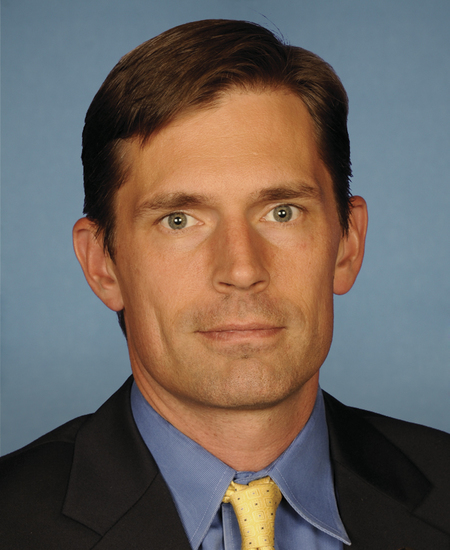
Martin Heinrich
Martin Heinrich Senate
D
Strong +
84% 37
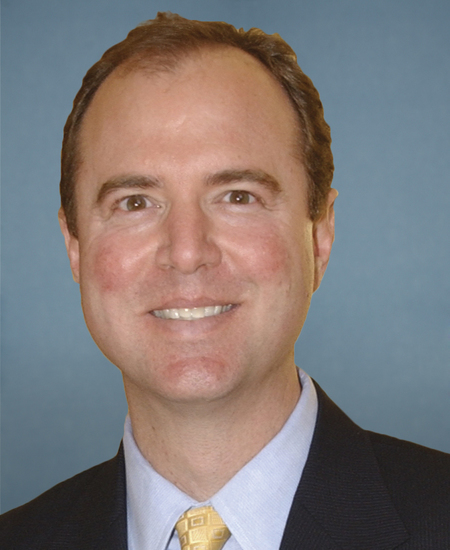
Adam B. Schiff
Adam B. Schiff Senate
D
Support
79% 53
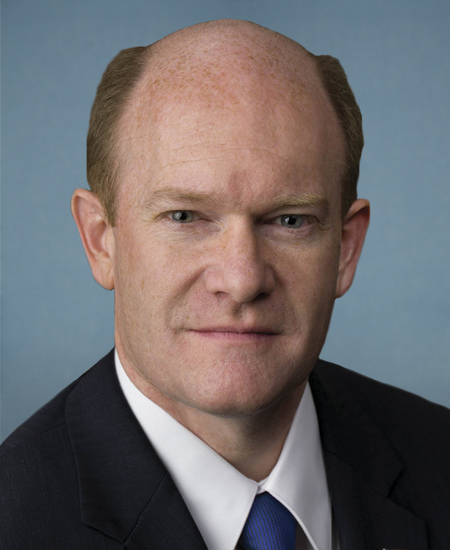
Christopher A. Coons
Christopher A. Coons Senate
D
Support
79% 52
Marsha Blackburn
Marsha Blackburn Senate
R
Strong −
11% 36
Ted Budd
Ted Budd Senate
R
Strong −
20% 40
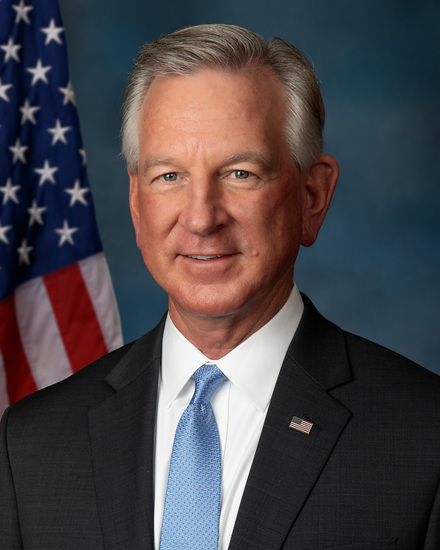
Tommy Tuberville
Tommy Tuberville Senate
R
Oppose
21% 53
Bill Cassidy
Bill Cassidy Senate
R
Oppose
22% 54
Jerry Moran
Jerry Moran Senate
R
Oppose
23% 53
Showing 21–30 of 40 bills

All environment bills

signed · United States · House Dec 11, 2025

HJRES 130: Providing for congressional disapproval under chapter 8 of title 5, United States Code, of the rule submitted by the Bureau of Land Management relating to Buffalo Field Office Record of Decision and Approved Resource Management Plan Amendment.

HJRES 130 is a congressional disapproval resolution that blocks a specific rule issued by the Bureau of Land Management (BLM) for its Buffalo Field Office. The resolution, enacted December 11, 2025, prevents the "Buffalo Field Office Record of Decision and Approved Resource Management Plan Amendment" from taking effect under federal law. This action directly affects the BLM's management of public lands in the Buffalo area by invalidating the resource management plan amendment. The resolution follows the Congressional Review Act process, which allows Congress to reject agency rules within a specified timeframe.
signed · United States · House Dec 11, 2025

HJRES 106: Providing for congressional disapproval under chapter 8 of title 5, United States Code, of the rule submitted by the Bureau of Land Management relating to "Central Yukon Record of Decision and Approved Resource Management Plan".

This joint resolution nullifies the rule submitted by the Bureau of Land Management (BLM) relating to the Record of Decision and Approved Resource Management Plan (RMP) for Alaska’s Central Yukon planning area and issued on November 12, 2024.  By way of background, an RMP guides the management of lands administered by the BLM. This Central Yukon RMP modified the prior RMP for the area, including by designating 21 areas of critical environmental concern or research natural areas, encompassing approximately 3,611,000 acres.
signed · United States · House Dec 11, 2025

HJRES 105: Providing for congressional disapproval under chapter 8 of title 5, United States Code, of the rule submitted by the Bureau of Land Management relating to "North Dakota Field Office Record of Decision and Approved Resource Management Plan".

HJRES 105 is a procedural resolution that blocks a Bureau of Land Management (BLM) rule concerning North Dakota's resource management plan. It directs Congress to disapprove the BLM's "North Dakota Field Office Record of Decision and Approved Resource Management Plan" (issued January 2025), which the Government Accountability Office determined qualified as a "rule" under the Congressional Review Act. The resolution states this BLM rule will have no legal effect once enacted. This action directly affects the implementation of the BLM's resource management plan for North Dakota's public lands.
passed · United States · House Dec 10, 2025

HR 1676: Make SWAPs Efficient Act of 2025

HR 1676, the "Make SWAPs Efficient Act of 2025," requires the federal government to approve or deny state wildlife conservation plans within 180 days of receiving them. This directly affects states that submit comprehensive wildlife conservation plans under the Pittman-Robertson Wildlife Restoration Act. If the Secretary fails to act within that timeframe, the state's plan is automatically approved as of the 180th day. The bill streamlines the approval process to prevent federal delays from blocking state conservation funding.
passed · United States · House Nov 18, 2025

HRES 879: Providing for consideration of the joint resolution (S.J. Res. 80) providing for congressional disapproval under chapter 8 of title 5, United States Code, of the rule submitted by the Bureau of Land Management relating to National Petroleum Reserve in Alaska Integrated Activity Plan Record of Decision; providing for consideration of the joint resolution (H.J. Res. 130) providing for congressional disapproval under chapter 8 of title 5, United States Code, of the rule submitted by the Bureau of Land Management relating to Buffalo Field Office Record of Decision and Approved Resource Management Plan Amendment; providing for consideration of the joint resolution (H.J. Res. 131) providing for congressional disapproval under chapter 8 of title 5, United States Code, of the rule submitted by the Bureau of Land Management relating to Coastal Plain Oil and Gas Leasing Program Record of Decision; providing for consideration of the concurrent resolution (H. Con. Res. 58) denouncing the horrors of socialism; providing for consideration of the bill (H.R. 1949) to repeal restrictions on the export and import of natural gas; providing for consideration of the bill (H.R. 3109) to require the Secretary of Energy to direct the National Petroleum Council to issue a report with respect to petrochemical refineries in the United States, and for other purposes; providing for consideration of the bill (H.R. 5107) to repeal the Comprehensive Policing and Justice Reform Amendment Act of 2022 enacted by the District of Columbia Council; providing for consideration of the bill (H.R. 5214) to require mandatory pretrial and post conviction detention for crimes of violence and dangerous crimes and require mandatory cash bail for certain offenses that pose a threat to public safety or order in the District of Columbia, and for other purposes; and for other purposes.

HRES 879 is a procedural resolution that would allow the House to debate and vote on multiple specific legislative items. It enables consideration of three joint resolutions seeking to block Bureau of Land Management rules about oil and gas activities in Alaska (National Petroleum Reserve, Buffalo Field Office, and Coastal Plain areas), a concurrent resolution denouncing socialism, and three bills: one to remove natural gas export/import restrictions, one requiring an energy report on refineries, and two related to criminal justice reforms in Washington, D.C. The resolution waives debate rules and points of order to streamline votes on these items. It does not change policy itself but facilitates the House's review of the referenced bills and resolutions.
passed · United States · House Sep 16, 2025

HRES 354: Providing for consideration of the joint resolution (H.J. Res. 60) providing for congressional disapproval under chapter 8 of title 5, United States Code, of the rule submitted by the National Park Service relating to "Glen Canyon National Recreation Area: Motor Vehicles"; providing for consideration of the joint resolution (H.J. Res. 78) providing for congressional disapproval under chapter 8 of title 5, United States Code, of the rule submitted by the United States Fish and Wildlife Service relating to "Endangered and Threatened Wildlife and Plants; Endangered Species Status for the San Francisco Bay-Delta Distinct Population Segment of the Longfin Smelt"; providing for consideration of the joint resolution (H.J. Res. 87) providing congressional disapproval under chapter 8 of title 5, United States Code, of the rule submitted by the Environmental Protection Agency relating to "California State Motor Vehicle and Engine Pollution Control Standards; Heavy-Duty Vehicle and Engine Emission Warranty and Maintenance Provisions; Advanced Clean Trucks; Zero Emission Airport Shuttle; Zero-Emission Power Train Certification; Waiver of Preemption; Notice of Decision"; providing for consideration of the joint resolution (H.J. Res. 88) providing congressional disapproval under chapter 8 of title 5, United States Code, of the rule submitted by the Environmental Protection Agency relating to "California State Motor Vehicle and Engine Pollution Control Standards; Advanced Clean Cars II; Waiver of Preemption; Notice of Decision"; providing for consideration of the joint resolution (H.J. Res. 89) providing congressional disapproval under chapter 8 of title 5, United States Code, of the rule submitted by the Environmental Protection Agency relating to "California State Motor Vehicle and Engine and Nonroad Engine Pollution Control Standards; The "Omnibus" Low NOX Regulation; Waiver of Preemption; Notice of Decision"; and for other purposes.

HRES 354 is a procedural resolution that sets rules for the House to vote on five separate disapproval resolutions (H.J. Res. 60, 78, 87-89). These disapproval resolutions aim to block specific federal agency rules: one from the National Park Service regarding motor vehicles in Glen Canyon, another from Fish & Wildlife on endangered smelt protections, and three from the EPA targeting California's vehicle emissions standards. The resolution streamlines debate and voting on these disapproval measures, waiving most procedural objections to allow direct consideration. If passed, the disapproval resolutions would cancel the agency rules, directly affecting how California implements vehicle pollution controls and wildlife protections. The bill itself does not change policy but enables Congress to block these specific regulations.
passed · United States · House Jul 23, 2025

HR 1917: Great Lakes Mass Marking Program Act of 2025

HR 1917, the Great Lakes Mass Marking Program Act of 2025, establishes a federal program within the U.S. Fish and Wildlife Service to mass-tag hatchery-reared fish in the Great Lakes. The program directly affects federal, state, and tribal fisheries agencies by providing data on hatchery fish versus wild fish populations through automated tagging. Key provisions authorize $5 million annually (2026-2030) to purchase tagging equipment, hire staff, and share collected data with partner agencies to inform management decisions about fish stocking, habitat restoration, and balancing predator-prey relationships. This data supports the economic stability of the Great Lakes fisheries sector, which contributes over $7 billion annually to the regional economy.
signed · United States · Senate Jun 20, 2025

SJRES 31: A joint resolution providing for congressional disapproval under chapter 8 of title 5, United States Code, of the rule submitted by the Environmental Protection Agency relating to "Review of Final Rule Reclassification of Major Sources as Area Sources Under Section 112 of the Clean Air Act".

This joint resolution disapproves an Environmental Protection Agency (EPA) rule that would have reclassified certain industrial pollution sources under the Clean Air Act. Specifically, it blocks the EPA's September 2024 rule (89 Fed. Reg. 73293) which aimed to change how "major sources" of pollution could be reclassified as "area sources" under Section 112 of the Clean Air Act. If enacted, this resolution would prevent the rule from taking effect, maintaining the existing regulatory framework for industrial facilities currently classified as major sources. The resolution directly affects the EPA's regulatory authority and the compliance requirements for affected industrial facilities.
signed · United States · House May 23, 2025

HJRES 60: Providing for congressional disapproval under chapter 8 of title 5, United States Code, of the rule submitted by the National Park Service relating to "Glen Canyon National Recreation Area: Motor Vehicles".

This joint resolution allows off-road vehicles to be used in certain areas of the Glen Canyon National Recreation Area, which is in northern Arizona and southeastern Utah and contains Lake Powell. Specifically, the joint resolution nullifies the rule issued by the National Park Service (NPS) titled Glen Canyon National Recreation Area; Motor Vehicles  and published on January 13, 2025. Under the rule, the NPS limited the use of off-road vehicles, such as off-highway vehicles and all-terrain vehicles, in certain areas. For instance, the rule prohibited the use of off-road vehicles on an 8-mile segment of the Poison Spring Loop located on Route 633 proceeding north to Route 730 in the Orange Cliffs Special Management Unit. The rule also eliminated the authority of the NPS to open the upper portion of the Flint Trail in that unit to off-road vehicles. Additionally, the rule limited off-road vehicle use from certain roads to the shoreline of the lake.
passed · United States · House May 20, 2025

HRES 426: Providing for consideration of the joint resolution (S.J. Res. 13) providing for congressional disapproval under chapter 8 of title 5, United States Code, of the rule submitted by the Office of the Comptroller of the Currency of the Department of the Treasury relating to the review of applications under the Bank Merger Act; providing for consideration of the joint resolution (S.J. Res. 31) providing for congressional disapproval under chapter 8 of title 5, United States Code, of the rule submitted by the Environmental Protection Agency relating to "Review of Final Rule Reclassification of Major Sources as Area Sources Under Section 112 of the Clean Air Act"; and waiving a requirement of clause 6(a) of rule XIII with respect to consideration of certain resolutions reported from the Committee on Rules.

HRES 426 is a procedural resolution that allows the House to vote on two separate disapproval resolutions. It sets up consideration for S.J. Res. 13, which would reverse a Treasury rule affecting bank merger reviews, and S.J. Res. 31, which would reverse an EPA rule changing how pollution sources are regulated under the Clean Air Act. The resolution waives normal procedural hurdles to expedite these votes. It does not change policy but enables Congress to potentially block these specific federal rules. The affected parties would include financial institutions (for the bank rule) and industrial facilities subject to EPA regulations (for the Clean Air Act rule).
Showing 21 to 30 of 40 bills
Previous 1 … 2 3 4 Next