Issue · Energy

Energy

Every energy bill, vote, and legislator stance in United States, automatically classified by Maddy, our AI policy reader.

Total bills
603
119th Congress
Top supporter
Martin Heinrich
75% support rate
Top opponent
Marsha Blackburn
26% support rate
Ranked legislators
10
5 support · 5 oppose
Key legislators

Who's moving energy in United States

Legislators moving energy in United States
Legislator Party Stance Support rate Votes
Martin Heinrich
Martin Heinrich Senate
D
Support
75% 194
John W. Hickenlooper
John W. Hickenlooper Senate
D
Support
74% 212
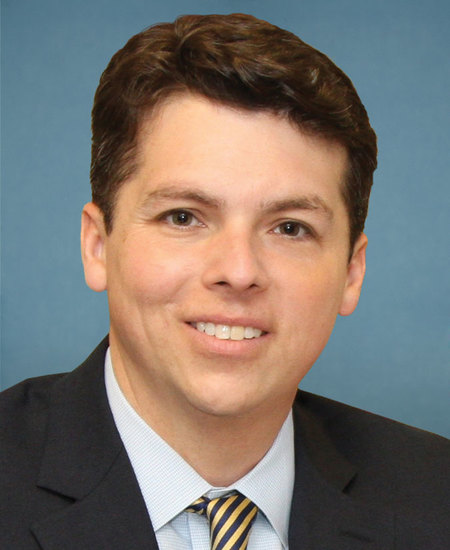
Brendan F. Boyle
Brendan F. Boyle House · District 2
D
Support
73% 253
Frederica S. Wilson
Frederica S. Wilson House · District 24
D
Support
73% 188
Jacky Rosen
Jacky Rosen Senate
D
Support
72% 213
Marsha Blackburn
Marsha Blackburn Senate
R
Oppose
26% 186
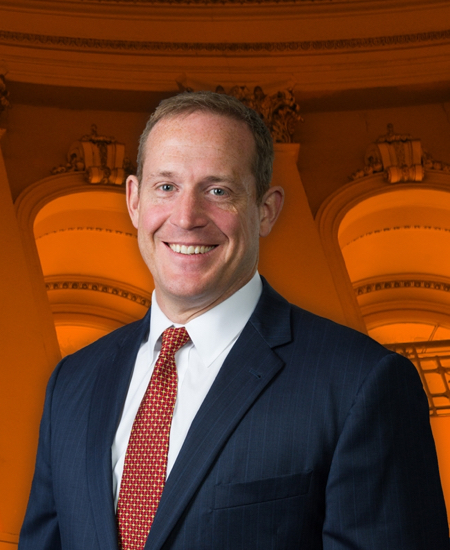
Ted Budd
Ted Budd Senate
R
Oppose
27% 198
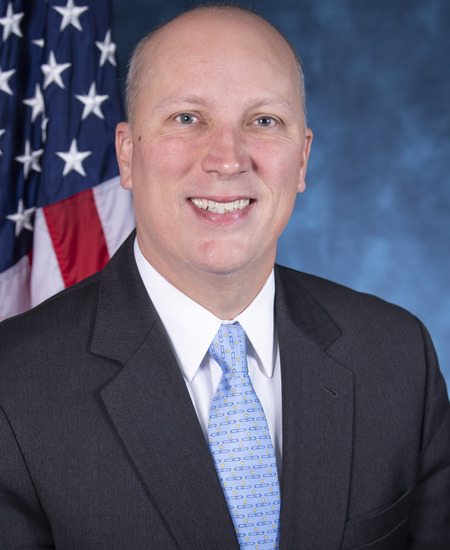
Chip Roy
Chip Roy House · District 21
R
Oppose
27% 251
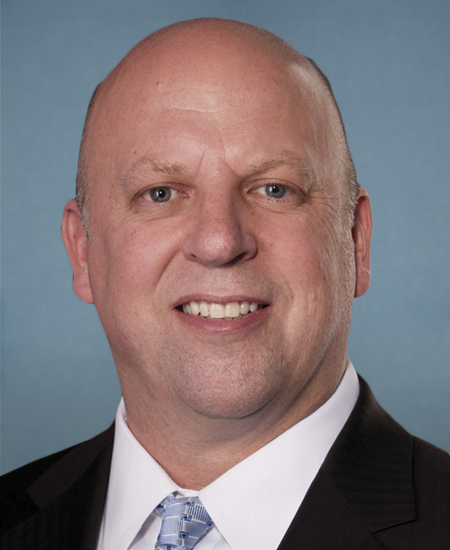
Scott DesJarlais
Scott DesJarlais House · District 4
R
Oppose
29% 256
Mike Johnson
Mike Johnson House · District 4
R
Oppose
29% 194
Showing 11–20 of 603 bills

All energy bills

in committee · United States · Senate Aug 5, 2026

S 5254: Civil Nuclear Export Act of 2026

The Civil Nuclear Export Act of 2026 amends the Export-Import Bank Act to allow federal financing for nuclear reprocessing facilities when authorized under existing atomic energy agreements. It expands the scope of the Program on China and Transformational Exports to explicitly include civil nuclear energy technologies, materials, services, and related infrastructure. Additionally, the bill raises the cap on excess lending authority by $50 billion for this specific program and increases the default rate threshold from 2 percent to 4 percent before mandatory monitoring actions are triggered.
Sub-Topics Nuclear
in committee · United States · Senate Aug 7, 2026

S 5360: Rural and Municipal Utility Cybersecurity Act

The Rural and Municipal Utility Cybersecurity Act establishes a federal program to provide grants and technical assistance to small electric utilities, including rural cooperatives, municipally owned systems, and smaller investor-owned companies. The program aims to help these entities deploy advanced cybersecurity technologies and participate in threat information sharing networks to better protect against cyberattacks. Funding is prioritized for utilities with limited security resources or those operating critical infrastructure that supports the national power grid. The bill authorizes $250 million in appropriations over five years, from fiscal year 2027 through 2031, and exempts shared cybersecurity information from public disclosure under freedom of information laws.
Sub-Topics Electric Grid Cybersecurity Tags Rural Communities
in committee · United States · Senate Aug 6, 2026

S 5313: Quantum-GUARD Act of 2026

The Quantum-GUARD Act of 2026 requires the Federal Energy Regulatory Commission to evaluate cybersecurity risks posed by quantum computers and the potential use of post-quantum cryptography when reviewing reliability standards for the bulk-power system. The bill directs the Department of Energy to establish a "PQC sandbox" within one year, bringing together grid operators, technology vendors, and government agencies to test and develop post-quantum security solutions for both information and operational technology systems. Additionally, the Secretary of Energy must conduct a study on the specific vulnerabilities of critical grid infrastructure to quantum threats and submit a report with recommendations to Congress within one year of enactment.
in committee · United States · Senate Aug 6, 2026

S 5284: Green New Deal for Public Housing Act

The Green New Deal for Public Housing Act directs federal funds to public housing agencies and tribal entities to rehabilitate, modernize, and electrify the nation's public housing stock into zero-carbon homes within ten years. The bill establishes grant programs that require recipients to conduct deep energy retrofits, install renewable energy systems, upgrade water quality infrastructure, and provide high-speed internet access to residents. In exchange for these funds, agencies must commit to maintaining their total number of housing units, ensuring displaced residents can return to their original projects, and adhering to strict labor standards that prioritize hiring low-income individuals and supporting resident-owned businesses. Additionally, the legislation strengthens tenant participation by mandating the formation of elected resident councils in larger developments and providing stipends for volunteer officers who help manage community operations.
in committee · United States · Senate Aug 5, 2026

S 5249: MORE American Fuel Act of 2026

The MORE American Fuel Act of 2026 amends the Atomic Energy Act to allow companies to begin constructing uranium enrichment facilities before the Nuclear Regulatory Commission issues an operating license, provided the application has been officially accepted and all federal laws are followed. This change shifts the licensing process from requiring approval before construction starts to a model where construction can proceed at the applicant's own financial risk while the regulatory review is still pending. To ensure local awareness, the bill mandates that applicants notify state governors, local government officials, and nearby tribal leaders at least 15 days before starting construction. The Nuclear Regulatory Commission is required to update its regulations within 180 days of the act's passage to reflect these new procedures, while retaining full authority to deny licenses if safety or operational standards are not met.
Sub-Topics Nuclear
in committee · United States · Senate Aug 6, 2026

S 5292: GREEN Hospitals Act

The GREEN Hospitals Act authorizes $100 billion in Hill-Burton grants for the construction or modernization of medical facilities, with priority given to projects that incorporate climate resilience features such as renewable energy systems, air quality improvements, and flood protection. The bill also establishes a separate $5 billion Planning and Evaluation Grant Program to help states, tribal governments, and nonprofits develop sustainability plans for hospitals and clinics. To receive funding, applicants must demonstrate that their facilities serve vulnerable populations or environmental justice communities and certify that they respect employee labor rights by maintaining collective bargaining agreements or non-interference policies. Additionally, the legislation requires that at least 50 percent of planning grant funds be allocated to projects located in environmental justice communities and prohibits the use of training repayment agreements for employees and apprentices.
in committee · United States · Senate Aug 6, 2026

S 5306: Affordable Electricity Rates Act of 2026

The Affordable Electricity Rates Act of 2026 amends the Federal Power Act to require the Federal Energy Regulatory Commission (FERC) to evaluate whether electricity rates are affordable for consumers when determining if they are "just and reasonable." The bill establishes a presumption that rates are unaffordable if they are likely to cause retail electricity prices to increase by 5 percent or more. If FERC determines that a rate is unaffordable under these criteria, it cannot be approved as just and reasonable. This legislation directly affects electric consumers by introducing affordability as a mandatory factor in federal rate-setting decisions for wholesale electricity markets.
in committee · United States · House Aug 10, 2026

HR 10074: Affordable Power for the Northern Marianas Act

The Affordable Power for the Northern Marianas Act directs that $15 million annually be allocated from existing federal capital improvement funds to support the Commonwealth of the Northern Mariana Islands starting in fiscal year 2027. Up to $3 million of this total is reserved for addressing immigration, labor, or law enforcement issues, while the remainder must be used for capital infrastructure projects that improve the affordability, reliability, and efficiency of the local electric energy system. The Secretary of the Interior is required to prioritize these power projects if they are expected to lower electricity rates or reduce fuel costs, and they must benefit the public utility serving the Commonwealth without requiring any local matching funds. This specific funding arrangement will remain in effect until a new multi-year funding agreement between the United States and the Northern Mariana Islands takes legal force.
in committee · United States · House Aug 10, 2026

HR 10081: No Utility Junk Fees Act

The No Utility Junk Fees Act requires states to prohibit regulated electric utilities from charging residential customers fees that exceed the actual cost of processing payments or are applied to free payment methods like mail and in-person services. To enforce these consumer protections, the bill withholds 10 percent of federal energy program funding from any state that fails to adopt laws banning such "spurious charges" and requiring clear disclosure of all billing fees. States must also ensure at least one fee-free payment option is available without internet access and ban fees on automatic recurring payments and electronic fund transfers. The Secretary of Energy will monitor state compliance through annual documentation submissions, with a 90-day cure period provided before financial penalties are applied.
Sub-Topics Utility Regulation
in committee · United States · Senate Aug 3, 2026

S 5220: Clean Transportation Jobs and Development Act of 2026

The Clean Transportation Jobs and Development Act of 2026 directs the Department of Energy to expand funding and oversight for battery manufacturing, critical mineral processing, and advanced vehicle technologies through 2031. A primary provision increases the authorized budget for battery processing grants to $6 billion for fiscal years 2027 through 2031, while also requiring applicants to include specific workforce safety and fire prevention plans. The bill establishes a new Office of Critical Minerals and Energy Innovation to coordinate supply chain resilience and manages multiple research programs focused on extreme-fast charging, vehicle safety, and heavy-duty commercial vehicle electrification. Additionally, the legislation authorizes over $3 billion in total funding for these research and development activities across five fiscal years to support domestic manufacturing and reduce reliance on foreign energy sources.
Showing 11 to 20 of 603 bills