Issue · Criminal Justice

Criminal Justice (Law Enforcement)

Every criminal justice bill, vote, and legislator stance in United States, automatically classified by Maddy, our AI policy reader.

Total bills
380
119th Congress
Top supporter
James Gallagher
100% support rate
Top opponent
Aisha Wahab
0% support rate
Ranked legislators
10
5 support · 5 oppose
Key legislators

Who's moving law enforcement in United States

Legislators moving law enforcement in United States
Legislator Party Stance Support rate Decisive votes
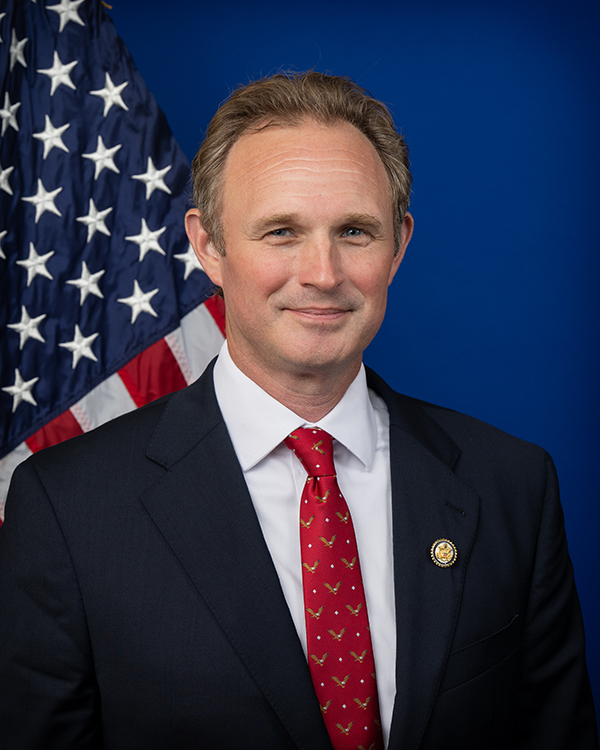
James Gallagher
James Gallagher House · District 1
R
Strong +
100% 3
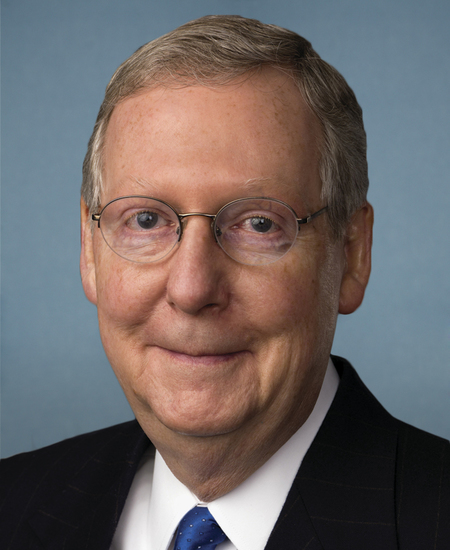
Mitch McConnell
Mitch McConnell Senate
R
Strong +
93% 28
AA
Alan Armstrong Senate
R
Strong +
86% 28
Bernie Moreno
Bernie Moreno Senate
R
Strong +
86% 28
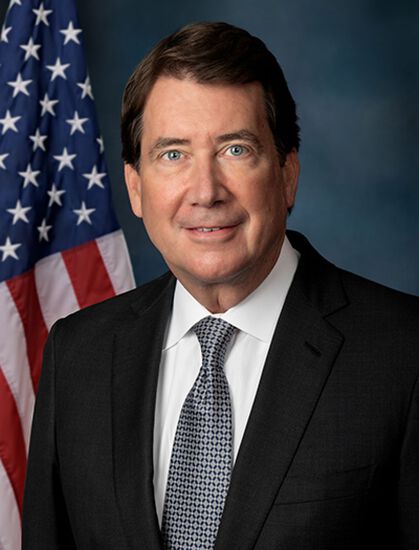
Bill Hagerty
Bill Hagerty Senate
R
Strong +
86% 28
Aisha Wahab
Aisha Wahab House · District 14
D
Strong −
0% 3
Everton Blair Jr.
Everton Blair Jr. House · District 13
D
Strong −
0% 3
Dave Min
Dave Min House · District 47
D
Strong −
13% 15
Marcy Kaptur
Marcy Kaptur House · District 9
D
Strong −
13% 15
Amy Klobuchar
Amy Klobuchar Senate
D
Strong −
14% 28
Showing 241–250 of 380 bills

All criminal justice bills

passed · United States · House Nov 20, 2025

HR 5107: Common-Sense Law Enforcement and Accountability Now in DC Act of 2025

HR 5107, the Common-Sense Law Enforcement and Accountability Now in DC Act (CLEAN DC Act), repeals D.C. Law 24-345 (the 2022 Comprehensive Policing and Justice Reform Amendment Act). This bill directly affects Washington, D.C.'s policing and justice systems by reversing all changes made under that 2022 law. The key mechanism is a straightforward repeal, restoring all prior District laws as if the 2022 reform had never been enacted. The bill does not introduce new provisions but undoes existing reforms to the District’s law enforcement framework.
in committee · United States · House Aug 29, 2025

HR 5070: Federal Police Camera and Accountability Act

This bill requires federal law enforcement officers to wear body cameras during most public interactions, with specific rules for activation (during calls for service and enforcement stops) and deactivation (only with consent from those being recorded). It mandates that body camera footage be retained for six months generally, or three years for incidents involving use of force or complaints, while establishing procedures for public access to footage with privacy protections. The bill prohibits the use of facial recognition technology with body cameras or in-car recording systems and requires patrol vehicles to have in-car video recording equipment that captures audio and video for at least 10 hours. It also includes detailed provisions for handling footage, redaction requirements, and specific rules for use of force investigations and public disclosure.
in committee · United States · House Apr 17, 2025

HR 2964: Fight Fentanyl Act

The Fight Fentanyl Act increases annual funding for fentanyl-related law enforcement efforts to $333 million from 2025 through 2030. It requires the Office of National Drug Control Policy to report annually on how HIDTA (High Intensity Drug Trafficking Area) funds target fentanyl trafficking, including seizure data and threat assessments. The bill also mandates the Attorney General to prioritize fentanyl prosecutions by temporarily reassigning U.S. attorneys to these cases. These provisions directly affect federal, state, local, and tribal law enforcement agencies working on fentanyl interdiction and prosecution.
in committee · United States · House Feb 12, 2025

HR 1240: National Statistics on Deadly Force Transparency Act of 2025

HR 1240 requires all federal, state, and local law enforcement agencies to collect standardized data on every use of deadly force by officers, including the target's demographics (race, gender, age, religion), location, circumstances, type of force used, and whether non-lethal options were attempted. Agencies must submit this data to the Department of Justice within 4 years of collection, with the Bureau of Justice Statistics publishing it publicly (excluding personal identifiers) for transparency. Failure to comply results in a 10% reduction to Byrne JAG grants the following fiscal year. The bill directly affects all law enforcement agencies receiving federal grants and aims to create a national dataset on officer-involved deadly force incidents.
Sub-Topics Firearms Law Enforcement Policing Tags Data Reporting
in committee · United States · Senate Sep 18, 2025

S 2863: RRLEF Act of 2025

The RRLEF Act of 2025 requires state and local law enforcement agencies applying for or receiving Edward Byrne Memorial Justice Assistance Grants to certify they do not purchase or transfer firearms with "covered licensed dealers" - defined as dealers with at least 25 firearms traced to their business in two of the past three years that were later used in crimes within three years of the last retail sale. It mandates the Bureau of Alcohol, Tobacco, Firearms, and Explosives (ATF) to publicly list these dealers on its website and notify law enforcement when firearms they transferred are used in criminal cases. This policy directly affects federal grant recipients and firearm dealers identified under the new criteria, aiming to limit gun transfers from dealers linked to rapid criminal use.
in committee · United States · Senate May 20, 2025

S 419: Reauthorizing Support and Treatment for Officers in Crisis Act of 2025

This bill reauthorizes funding for existing mental health support programs designed to assist law enforcement officers experiencing crisis. It extends the authorization period for these programs from 2020-2024 to 2025-2029 under Section 1001(a)(21) of the 1968 Omnibus Crime Control and Safe Streets Act. The bill directly affects law enforcement officers who access these crisis support services, ensuring continued availability of the established program. It does not create new programs but maintains current funding for existing mental health treatment and support resources for officers.
in committee · United States · House Nov 20, 2025

HR 6174: Ending Crime and Disorder on America’s Streets Act

This bill redirects federal funding toward mandatory treatment facilities for unhoused individuals with serious mental illness or addiction, while tying grant money to local enforcement of public drug use bans, camping restrictions, and sex offender registration. It prohibits federal support for "harm reduction" programs and safe consumption sites, requires states to prioritize treatment over "housing first" approaches, and mandates data sharing between health programs and law enforcement. The bill defines "unhoused individuals" as those posing public risks or unable to care for themselves for 3+ months. It applies to federal grant programs for homelessness services, mental health treatment, and housing assistance.
in committee · United States · House May 21, 2026

HR 1010: BADGES for Native Communities Act

Bridging Agency Data Gaps and Ensuring Safety for Native Communities Act or the BADGES for Native Communities Act This bill revises federal policies and procedures related to information sharing, reporting, and investigating cases of missing, unidentified, or murdered Indians. Among other elements, the bill requires the Department of Justice to (1) establish a grant program for specified entities (e.g., tribes) to implement changes to enhance their responses to missing person cases and death investigations of interest to tribes, and (2) work with the Department of Health and Human Services to ensure that federal training resources and culturally appropriate mental health and wellness programs are available to tribal and Bureau of Indian Affairs (BIA) law enforcement officers. The Department of the Interior must establish a five-year demonstration program for the purpose of conducting or adjudicating personnel background investigations for applicants for law enforcement positions in the BIA. The bill also requires the Government Accountability Office to conduct specified studies, including a study on the evidence collection, handling, response times, and processing procedures and practices of federal law enforcement agencies.
Sub-Topics Law Enforcement
in committee · United States · House Jun 26, 2025

HR 4177: COPS Act

HR 4177, the COPS Act, increases penalties for assaulting, resisting, or impeding federal law enforcement officers. It raises fines for such offenses from up to $200,000 to $500,000 and extends prison sentences from 8 to 10 years for basic assaults, and from 20 to 25 years for assaults involving explosive materials. This bill directly affects individuals who physically confront or obstruct federal officers, including police, border patrol, and other federal personnel. The changes apply to offenses under Title 18, United States Code, Section 111.
in committee · United States · Senate Jun 26, 2025

S 2198: Military in Law Enforcement Accountability Act

This bill requires the President to submit written justification to Congress before the military can assist civilian law enforcement during six specific emergencies: humanitarian crises, natural disasters, public health emergencies, critical infrastructure attacks, nuclear/military attacks, or major terrorist incidents. It limits military support to 14 days without congressional approval via a special joint resolution, which must include a description of the emergency's impact. The bill also prohibits military personnel from holding civilian law enforcement positions simultaneously (with limited reserve component exceptions) and removes references to "civil disturbances" from military support guidelines. These changes aim to establish clearer congressional oversight for military involvement in domestic law enforcement operations.
Sub-Topics Law Enforcement
Showing 241 to 250 of 380 bills
Previous 1 … 24 25 26 … 38 Next