Issue · Criminal Justice

Criminal Justice (Courts)

Every criminal justice bill, vote, and legislator stance in United States, automatically classified by Maddy, our AI policy reader.

Total bills
123
119th Congress
Top supporter
Adam B. Schiff
100% support rate
Top opponent
Amy Klobuchar
0% support rate
Ranked legislators
10
5 support · 5 oppose
Key legislators

Who's moving courts in United States

Legislators moving courts in United States
Legislator Party Stance Support rate Decisive votes
Adam B. Schiff
Adam B. Schiff Senate
D
Strong +
100% 3
Chris Van Hollen
Chris Van Hollen Senate
D
Strong +
100% 3
Christopher Murphy
Christopher Murphy Senate
D
Strong +
100% 3
Cory A. Booker
Cory A. Booker Senate
D
Strong +
100% 3
Edward J. Markey
Edward J. Markey Senate
D
Strong +
100% 3
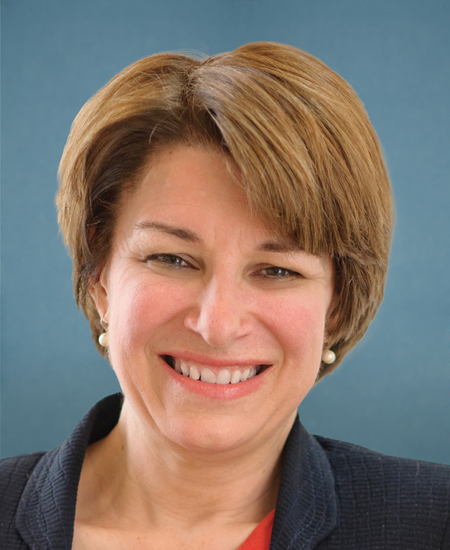
Amy Klobuchar
Amy Klobuchar Senate
D
Strong −
0% 3
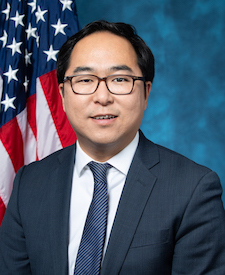
Andy Kim
Andy Kim Senate
D
Strong −
0% 3
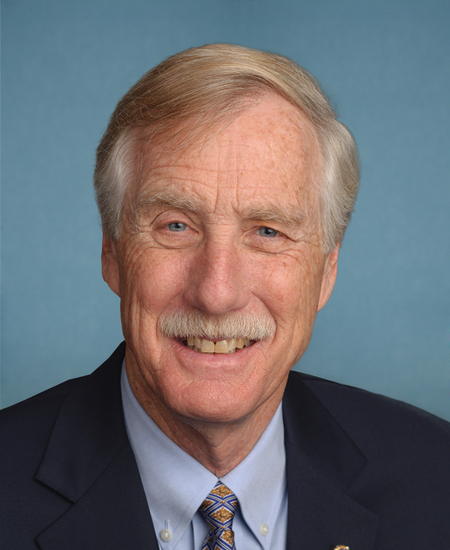
Angus S. King, Jr.
Angus S. King, Jr. Senate
I
Strong −
0% 3
Ashley Moody
Ashley Moody Senate
R
Strong −
0% 3
Ben Ray Luján
Ben Ray Luján Senate
D
Strong −
0% 3
Showing 101–110 of 123 bills

All criminal justice bills

in committee · United States · Senate Dec 9, 2025

S 3397: ECCHO Act

Ending Coercion of Children and Harm Online or the ECCHO Act This bill establishes a federal framework to combat the online coercion of minors to commit harm. The bill creates new criminal offenses, expands reporting of instances involving the online coercion of minors, facilitates the prosecution of offenders, and expands protections for minors who testify in court. Specifically, the bill makes it a crime to intentionally coerce a minor to commit suicide (or attempt to); kill someone (or attempt to); kill a pet, emotional support animal, service animal, or horse (or attempt to); physically harm an individual (including the minor), pet, emotional support animal, service animal, or horse; or commit (or attempt to commit) arson or certain other acts such as doxxing or swatting. A violation (or conspiracy or attempt to commit a violation) is subject to a fine, a prison term, or both. The bill requires electronic communication service providers and remote computing service providers to report instances of online coercion of minors to the National Center for Missing & Exploited Children via the CyberTipline. The bill facilitates the federal prosecution of offenses committed by (1) individuals as part of a child exploitation enterprise, and (2) minors in certain circumstances. The bill extends various protections for minors who testify in court (e.g., certain privacy protections) to those who are victims of or witnesses to crimes involving mental injury (i.e., psychological or intellectual harm to a child) or the negligent treatment of a child.
Sub-Topics Corrections Courts
in committee · United States · House Feb 26, 2026

HR 7738: Government Surveillance Transparency Act of 2026

The Government Surveillance Transparency Act of 2026 limits how long courts can keep surveillance orders, applications, and related documents sealed (maximally 180 days initially, with limited extensions), and requires courts to make key details about these surveillance cases publicly available through docket records. It mandates law enforcement to provide notice to individuals whose communications were surveilled, with limited exceptions for ongoing investigations, and establishes new reporting requirements for courts about surveillance orders. The bill also creates grants to help state and tribal courts implement these transparency requirements. This law directly affects federal, state, and tribal courts, law enforcement agencies, and individuals whose communications are subject to surveillance.
Sub-Topics Courts Law Enforcement Tags Government Transparency Privacy
in committee · United States · House Jan 3, 2025

HR 198: SERVE Our Communities Act

The SERVE Our Communities Act (HR 198) creates a federal grant program providing $10 million annually from 2026-2031 to states and local governments that meet specific crime prevention criteria. To qualify, jurisdictions must require courts to consider public safety risks when setting bail or pretrial release (Section 2(b)(1)) and must have implemented one of three actions in the prior year: enacted bail reform, increased law enforcement staffing, or run public safety education programs (Section 2(b)(2)). Grant funds can only be used for evidence-based reentry and violence prevention programs under the Second Chance Act (Section 2(c)). The bill directly affects state and local governments by tying federal funding to specific bail reform and community safety measures, aiming to reduce repeat violent offenses through systemic changes.
in committee · United States · Senate Jun 26, 2025

S 2186: Preventing Pretrial Gun Purchases Act

This bill amends federal gun law to prevent individuals under certain court-ordered pretrial restrictions from purchasing firearms. It adds a new definition of "pretrial release order" (a court order restricting release pending trial) and modifies Section 922(d) to explicitly prohibit firearm purchases or possession by anyone subject to such an order. The law directly affects arrested individuals awaiting trial who have a court order banning firearm possession, including those in federal, state, tribal, or local courts. The key change clarifies that firearm transfers to these individuals would violate federal law, strengthening background checks during the pretrial phase.
in committee · United States · Senate Feb 10, 2026

S 3815: Virginia's Law

S 3815, titled "Virginia's Law" (though it amends federal law), creates new civil lawsuits for victims of sexual abuse and trafficking crimes. It allows victims to sue perpetrators or those who financially benefit from the crimes in federal court, with key changes including a 10-year statute of limitations (extending to age 18 for minors) and eliminating time limits for certain trafficking offenses (sections 1589-1591). The bill also includes a one-year "look-back" period after enactment, permitting victims to file previously barred cases. This applies to federal crimes under titles 18 (sexual abuse) and 18 (trafficking), directly affecting victims seeking civil remedies.
in committee · United States · House Jun 6, 2025

HR 3815: True Justice Act of 2025

HR 3815, the True Justice Act of 2025, establishes a federal grant program to fund public defense services for individuals arrested in criminal cases. The bill authorizes the Attorney General to provide grants to states, local governments, and tribal organizations to cover legal representation at all post-arrest proceedings (including initial appearances) and to fund training for public defenders and court-appointed attorneys. It allocates $50 million annually from 2026-2030 for these grants, with funding amounts based on the size of the justice system and technology/training needs. The bill directly affects people facing criminal charges who require counsel and the public defender systems serving them.
Sub-Topics Courts
in committee · United States · House Mar 6, 2025

HR 1929: JUDGES Act of 2025

The JUDGES Act of 2025 authorizes the creation of 66 new district court judgeships across multiple federal judicial districts to address rising caseloads. It specifies phased additions of judges to districts in California, Florida, Texas, New York, and other states from 2029 through 2039, with the total number of new judges increasing over time. The bill also establishes temporary judgeships in Oklahoma, authorizes funding for these positions, and requires the Judicial Conference's judgeship recommendations to be made publicly available. The legislation directly affects federal courts in the specified districts by increasing judicial staffing to reduce case backlogs.
Sub-Topics Courts Judges
in committee · United States · House Jun 26, 2025

HR 4187: Stop Hate Crimes Act of 2025

HR 4187, the Stop Hate Crimes Act of 2025, amends federal hate crime law to clarify how bias motivation is proven. It changes the standard so that a protected characteristic (like race, religion, disability) only needs to be "a contributory motivating factor" for a crime, not the sole reason. This directly affects federal hate crime prosecutions by making it easier for prosecutors to prove bias was involved. The bill modifies Section 249(a) of Title 18, U.S. Code, to update the legal language defining hate crimes.
Sub-Topics Civil Rights Courts
in committee · United States · Senate Feb 4, 2026

S 3779: ICE Out of Our Faces Act

The ICE Out of Our Faces Act prohibits U.S. Immigration and Customs Enforcement (ICE) and U.S. Customs and Border Protection (CBP) officers from using facial recognition, voice recognition, or other biometric surveillance technology for immigration enforcement. It directly affects ICE, CBP, and 287(g) deputized officers by banning their acquisition, possession, or use of such technology in the U.S. The bill requires immediate deletion of all existing biometric data collected by these officers within 30 days and makes evidence obtained in violation inadmissible in court. Violations could lead to lawsuits by affected individuals or state attorneys general, with possible damages, penalties, or injunctive relief.
in committee · United States · Senate Nov 20, 2025

S 3239: JAIL Act

This bill allows victims (or their families if the victim is deceased) to sue judges or government entities in federal court if a repeat violent offender - someone with a prior conviction for a violent crime under federal law - is released on bail before trial and then harms another person. It removes judicial immunity, meaning judges cannot claim protection from such lawsuits. The law specifically targets cases involving defendants charged with violent crimes who have a history of violent offenses, focusing on accountability for pre-trial release decisions. It directly affects judges, prosecutors, and other officials involved in bail decisions, as well as victims of crimes committed by released offenders.
Showing 101 to 110 of 123 bills
Previous 1 … 10 11 12 … 13 Next