Issue · Budget & Taxes

Budget & Taxes (State Budget)

Every budget & taxes bill, vote, and legislator stance in United States, automatically classified by Maddy, our AI policy reader.

Total bills
55
119th Congress
Top supporter
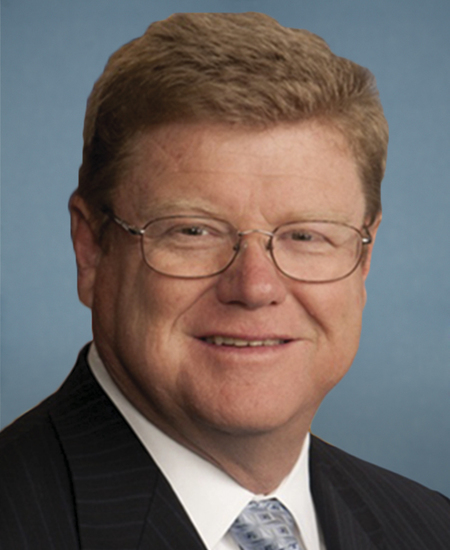
Anna Paulina Luna
100% support rate
Top opponent
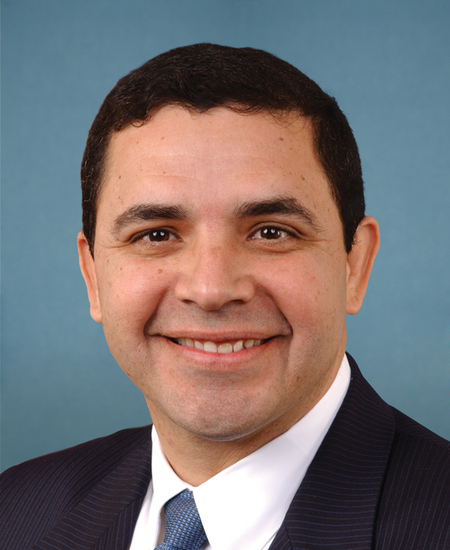
Henry Cuellar
0% support rate
Ranked legislators
10
5 support · 5 oppose
Key legislators

Who's moving state budget in United States

Legislators moving state budget in United States
Legislator Party Stance Support rate Votes
Anna Paulina Luna
Anna Paulina Luna House · District 13
R
Strong +
100% 3
Mark E. Amodei
Mark E. Amodei House · District 2
R
Strong +
100% 3
Mike Carey
Mike Carey House · District 15
R
Strong +
100% 3
Nancy Mace
Nancy Mace House · District 1
R
Strong +
100% 3
Pat Fallon
Pat Fallon House · District 4
R
Strong +
100% 3
Henry Cuellar
Henry Cuellar House · District 28
D
Strong −
0% 4
Thomas Massie
Thomas Massie House · District 4
R
Strong −
0% 4
Jake Auchincloss
Jake Auchincloss House · District 4
D
Strong −
0% 3
Kim Schrier
Kim Schrier House · District 8
D
Strong −
0% 3
Raja Krishnamoorthi
Raja Krishnamoorthi House · District 8
D
Strong −
0% 3
Showing 41–50 of 55 bills

All budget & taxes bills

introduced · United States · Senate Nov 8, 2025

S 3166: Returning Unspent COVID Funds Act

This bill rescinds unused funds from major 2020-2021 COVID relief laws, including the CARES Act, American Rescue Plan, and Paycheck Protection Program funding. It allows limited exceptions for national security programs if the President submits a waiver request within 60 days of enactment. The rescinded funds will remain in the Treasury's general fund specifically for reducing the federal deficit. The bill directly affects federal budget management by redirecting unspent pandemic relief resources.
Sub-Topics State Budget
in committee · United States · Senate Jan 22, 2025

S 181: A bill to require agencies submit zero-based budgets.

S 181 requires most federal agencies to submit zero-based budgets every six years, analyzing current operations, exploring alternatives, and ranking programs by importance. These budgets must cover the next fiscal year and the following four years, submitted to the Office of Management and Budget and congressional budget committees. Agencies (excluding Defense and the National Nuclear Security Administration) must also recommend specific program cuts totaling at least a 2% reduction in non-defense discretionary spending from the prior year. The bill directly affects how federal agencies plan and justify their funding, aiming to improve budget efficiency through systematic review.
in committee · United States · House Jan 3, 2025

HJRES 2: Proposing a balanced budget amendment to the Constitution of the United States.

This joint resolution proposes a constitutional amendment that prohibits total outlays for any fiscal year from exceeding total receipts for that fiscal year. The amendment also prohibits (1) increases to the federal debt limit, and (2) a bill that increases revenue from becoming law unless the bill has been approved by two-thirds of each chamber of Congress with a roll call vote.
Sub-Topics State Budget
in committee · United States · House Jun 11, 2025

HR 3912: Stop the Baseline Bloat Act of 2025

HR 3912, the Stop the Baseline Bloat Act of 2025, changes how the federal budget baseline is calculated by excluding emergency funding and supplemental appropriations. This affects the annual budget process by removing these funds from the baseline figure used to measure spending limits under the Budget Control Act. The key provision amends the Balanced Budget and Emergency Deficit Control Act to specify that emergency requirements and supplemental funding are not counted in the baseline calculation. As a result, future budget targets will reflect only regular appropriations, not additional emergency or supplemental spending.
passed both · United States · House May 20, 2025

HCONRES 14: Establishing the congressional budget for the United States Government for fiscal year 2025 and setting forth the appropriate budgetary levels for fiscal years 2026 through 2034.

This concurrent resolution establishes the federal budget framework for fiscal years 2025 through 2034, setting specific targets for revenues, spending, and deficits across the decade. It projects federal revenues to increase from $3.4 trillion in 2025 to $5.4 trillion in 2034, with deficits ranging from $2.08 trillion to $2.12 trillion over the period. The resolution includes specific deficit reduction requirements for 11 congressional committees, such as a $880 billion target for the Energy and Commerce Committee to reduce deficits over the 10-year period. It also contains policy statements supporting economic growth through reduced spending, deregulation, and tax cuts. This resolution serves as the budgetary blueprint that Congress will use to guide spending decisions for the next decade.
in committee · United States · House Jul 23, 2025

HJRES 110: Proposing a balanced budget amendment to the Constitution of the United States.

This joint resolution proposes a constitutional amendment that requires federal expenditures and receipts to be balanced, which may occur over more than one year. Under the amendment, expenditures include all federal expenditures except those for payment of debt. Receipts do not include receipts derived from borrowing. The amendment requires Congress to achieve balance within 10 years of the ratification of the amendment. In an emergency situation, two-thirds of the House of Representatives and the Senate may authorize additional expenditures that are not otherwise permitted by the amendment. The additional expenditures must be for a limited time, and debts incurred from the expenditures must be paid as soon as practicable.
in committee · United States · House Aug 15, 2025

HJRES 112: Proposing an amendment to the Constitution of the United States related to the public debt.

HJRES 112 proposes a constitutional amendment requiring the U.S. government to balance its budget in most circumstances, directly affecting Congress, the President, and state legislatures. It would set a debt limit at 105% of current debt, require state legislatures to approve any debt increase above that limit, and mandate the President to withhold funds if debt exceeds 98% of the limit. The amendment also requires a two-thirds vote in both House and Senate for new or increased income tax bills (excluding certain sales tax replacements). This is a procedural proposal, not an enacted law, and would only take effect if ratified by 38 states within seven years.
in committee · United States · House Jan 3, 2025

HJRES 6: Proposing an amendment to the Constitution of the United States to provide for balanced budgets for the Government.

This joint resolution proposes a constitutional amendment prohibiting total outlays for a fiscal year from exceeding total receipts for that fiscal year unless Congress authorizes the excess by a two-thirds roll call vote of each chamber. The amendment also requires the President to submit an annual budget in which total outlays for the fiscal year do not exceed total receipts. Congress may waive the requirements for any fiscal year in which (1) a declaration of war is in effect by a roll call vote, or (2) a declaration of a natural disaster or a national emergency is in effect that was declared by a joint resolution that became law after being adopted by a majority of each chamber of Congress.
in committee · United States · House Jan 3, 2025

HJRES 7: Proposing an amendment to the Constitution of the United States to prohibit Members of Congress from receiving compensation during a fiscal year unless both Houses of Congress have agreed to a concurrent resolution on the budget for that fiscal year prior to the beginning of that fiscal year.

This constitutional amendment would require Congress to approve a budget resolution before the start of each fiscal year for members to receive pay. It directly affects all 535 current and future members of Congress. The key provision prohibits compensation during any fiscal year unless both the House and Senate agree to an identical budget resolution prior to that year’s start date. If ratified, this would tie congressional pay to timely budget passage, requiring budget agreement before the fiscal year begins.
in committee · United States · Senate Nov 20, 2025

SJRES 97: A joint resolution proposing a balanced budget amendment to the Constitution of the United States.

This joint resolution proposes a constitutional amendment that requires federal expenditures and receipts to be balanced, which may occur over more than one year. Under the amendment, expenditures include all federal expenditures except those for payment of debt. Receipts do not include receipts derived from borrowing. The amendment requires Congress to achieve balance within 10 years of the ratification of the amendment. In an emergency situation, Congress may authorize additional expenditures that are not otherwise permitted by the amendment if two-thirds of the House of Representatives and the Senate agree to pass the bill. The additional expenditures must be for a limited time, and debts incurred from the expenditures must be paid as soon as practicable.
Sub-Topics State Budget
Showing 41 to 50 of 55 bills
Previous 1 4 5 6 Next