

Issue · Housing
Housing
Every housing bill, vote, and legislator stance in Tennessee, automatically classified by Maddy, our AI policy reader.
Total bills
93
114th Regular Session (2025-2026)
Top supporter
Ronnie Glynn
100% support rate
Top opponent
Raumesh Akbari
20% support rate
Ranked legislators
10
5 support · 5 oppose
Key legislators
Who's moving housing in Tennessee
| Legislator | Party | Stance | Support rate | Votes |
|---|---|---|---|---|

Ronnie Glynn
House · District 67
|
D |
Strong +
|
100% | 51 |

Larry Miller
House · District 88
|
D |
Strong +
|
88% | 58 |
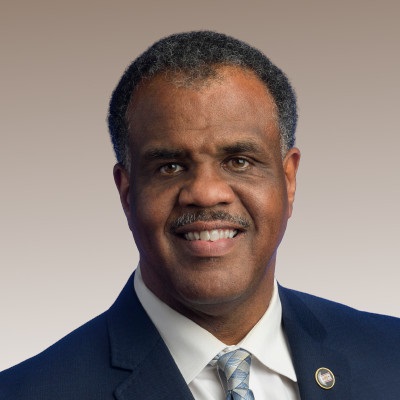
Sam McKenzie
House · District 15
|
D |
Strong +
|
83% | 39 |

Bob Freeman
House · District 56
|
D |
Strong +
|
80% | 47 |

Caleb Hemmer
House · District 59
|
D |
Strong +
|
80% | 47 |

Raumesh Akbari
Senate · District 29
|
D |
Strong −
|
20% | 21 |

Vincent Dixie
House · District 54
|
D |
Oppose
|
29% | 56 |

Karen Camper
House · District 87
|
D |
Oppose
|
33% | 52 |

Bo Mitchell
House · District 50
|
D |
Oppose
|
38% | 65 |

Ron Travis
House · District 31
|
R |
Oppose
|
40% | 54 |
Showing 31–40 of 93
bills
All housing bills
HB 2031: Housing - As introduced, provides for the regulation of accessory dwelling units. - Amends TCA Title 5; Title 6; Title 7; Title 13; Title 66 and Title 68.
SB 1935: Homestead Exemptions - As enacted, adds a child who is 18 or older and has a developmental or intellectual disability to whom the homestead exemption extends upon the death of the head of the household. - Amends TCA Title 26; Title 30; Title 33 and Title 52.
Topics
✓ Budget & TaxesSupports Budget & TaxesExtends property tax homestead exemption to adult disabled children, providing tax relief for qualifying families under existing fiscal framework.
✓ HousingSupports HousingExtends property tax homestead exemption to adult disabled children, preventing displacement and supporting housing stability for vulnerable residents through tax relief.
HB 2041: Landlord and Tenant - As enacted, prohibits certain persons from publishing, transmitting, or broadcasting any video of the service of civil process related to an eviction proceeding without the express written permission of the individual being served with civil process; specifies that an individual who is a victim of the publication, transmission, or broadcast of such a video without the individual's permission has a private right of action against the person violating the prohibition. - Amends TCA Title 13; Title 29 and Title 66.
HB 1940: Landlord and Tenant - As introduced, states that unlawful detainer actions are confidential and shielded from public inspection if the action was filed on or after July 1, 2026, the case was dismissed by the court or a party, an appeal is not pending in the case, and three years have passed since the date the action was filed or the parties have agreed in writing to shield the records from public disclosure. - Amends TCA Title 10, Chapter 7, Part 5; Title 29, Chapter 18 and Title 66.
HB 1671: Local Government, General - As enacted, prohibits local governmental entities from relocating homeless individuals unless the relocation meets certain criteria; authorizes the receiving jurisdiction to seek damages and injunctive relief for violations. - Amends TCA Title 5; Title 6; Title 7 and Title 71, Chapter 5.
Sub-Topics
Homelessness
SB 1798: Taxes, Ad Valorem - As introduced, changes the reimbursement amount for property tax relief for disabled veteran homeowners; increases the reimbursement amount from payment on the first $175,000 of the full market value of the home to payment on the first $200,000 of the full market value. - Amends TCA Title 67, Chapter 5, Part 7.
Topics
✓ Budget & TaxesSupports Budget & TaxesIncreases property tax relief for disabled veterans by raising reimbursement threshold from $175k to $200k, providing greater tax relief for eligible homeowners.
✓ HousingSupports HousingIncreases property tax relief for disabled veterans, reducing housing costs for a specific group by expanding reimbursement threshold from $175k to $200k of home value.
✓ VeteransSupports VeteransIncreases property tax relief threshold for disabled veterans from $175k to $200k, expanding financial benefits under Tennessee law.
SB 1993: Landlord and Tenant - As enacted, prohibits certain persons from publishing, transmitting, or broadcasting any video of the service of civil process related to an eviction proceeding without the express written permission of the individual being served with civil process; specifies that an individual who is a victim of the publication, transmission, or broadcast of such a video without the individual's permission has a private right of action against the person violating the prohibition. - Amends TCA Title 13; Title 29 and Title 66.
HB 1875: Real Property - As enacted, prohibits a unit owners' association or homeowners' association from prohibiting a lot owner from installing an electric vehicle charging station for the lot owner's personal use on property owned by the lot owners; makes other changes related to electric vehicle charging stations. - Amends TCA Title 48 and Title 66.
Topics
✓ EnergySupports EnergyRemoves barriers to EV charging infrastructure, promoting renewable energy adoption and reducing fossil fuel dependence through expanded access to clean energy infrastructure.
✓ HousingSupports HousingProtects property rights by allowing lot owners to install personal EV charging stations without HOA prohibition, directly supporting property rights within housing context.
✓ TransportationSupports TransportationProhibits HOAs from banning EV charging stations, enabling home EV infrastructure and promoting sustainable transportation adoption.
SB 775: Taxes, Ad Valorem - As introduced, requires 10 percent of the excess proceeds from a delinquent property tax sale to be used for tax relief for homeowners who are elderly low-income, disabled, or a disabled veteran or widow of a disabled veteran. - Amends TCA Title 67, Chapter 5.
Topics
✓ Budget & TaxesSupports Budget & TaxesDirects 10% of delinquent property tax sale proceeds to fund tax relief for elderly low-income/disabled veterans, advancing fiscal support for vulnerable populations via dedicated budget allocation.
✓ HousingSupports HousingRedirects 10% of tax sale proceeds to fund property tax relief for vulnerable homeowners (elderly low-income, disabled, veterans), preventing displacement and supporting housing affordability.
✓ VeteransSupports VeteransBill explicitly allocates 10% of property tax sale proceeds for tax relief for disabled veterans and widows of disabled veterans, directly funding veteran benefits.