Issue · Technology

Technology (Data Privacy)

Every technology bill, vote, and legislator stance in Pennsylvania, automatically classified by Maddy, our AI policy reader.

Total bills
29
2025-2026 Regular Session
Top supporter
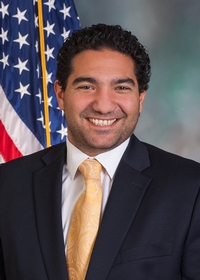
Ben Sanchez
100% support rate
Top opponent
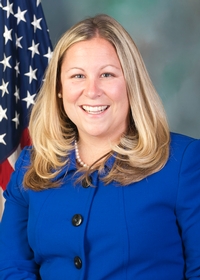
Josh Kail
0% support rate
Ranked legislators
10
5 support · 5 oppose
Key legislators

Who's moving data privacy in Pennsylvania

Legislators moving data privacy in Pennsylvania
Legislator Party Stance Support rate Votes
Ben Sanchez
Ben Sanchez House · District 153
D
Strong +
100% 9
Andre Carroll
Andre Carroll House · District 201
D
Strong +
100% 8
Chris Pielli
Chris Pielli House · District 156
D
Strong +
100% 8
Chris Rabb
Chris Rabb House · District 200
D
Strong +
100% 8
Emily Kinkead
Emily Kinkead House · District 20
D
Strong +
100% 8
Josh Kail
Josh Kail House · District 15
R
Strong −
0% 8
Joe Hamm
Joe Hamm House · District 84
R
Strong −
0% 7
Joe Kerwin
Joe Kerwin House · District 125
R
Strong −
0% 7
Kate Klunk
Kate Klunk House · District 169
R
Strong −
0% 7
Rob Kauffman
Rob Kauffman House · District 89
R
Strong −
0% 7
Showing 1–10 of 29 bills

All technology bills

in committee · Pennsylvania · Senate Jul 10, 2026

SB 1396: An Act amending Title 44 (Law and Justice) of the Pennsylvania Consolidated Statutes, in preliminary provisions, providing for public servant data privacy.

This bill establishes a new chapter in Pennsylvania law to protect the personal data of current, former, and retired state officials, including the Governor, Lieutenant Governor, legislators, and judges. It specifically restricts data brokers from selling or sharing protected information such as home addresses, phone numbers, and Social Security numbers for monetary gain. The legislation defines who qualifies as a covered person and clarifies that information is only protected if it is not already publicly available through official government records or media. Additionally, the bill outlines enforcement mechanisms and provides for legal action to be taken by the affected officials or their authorized agents.
in committee · Pennsylvania · Senate Jul 8, 2026

SB 1401: An Act amending the act of December 17, 1968 (P.L.1224, No.387), known as the Unfair Trade Practices and Consumer Protection Law, further providing for definitions, for unlawful acts or practices and exclusions, for civil penalties and for private actions.

This bill amends Pennsylvania's Unfair Trade Practices and Consumer Protection Law to explicitly ban "surveillance pricing," which is defined as setting customized prices for goods or services based on personal data gathered through technology like cameras, sensors, or third-party purchases. The legislation prohibits businesses from using such data to charge different prices to specific consumers unless they can prove the price difference is due to varying costs, public discounts available to broad groups like seniors or students, loyalty program rewards, or credit decisions based on standard credit reports. In addition to banning this practice, the bill increases civil penalties for violations to up to $3,000 per incident and allows individual consumers who suffer financial loss from these pricing tactics to file private lawsuits for damages.
Sub-Topics Data Privacy
in committee · Pennsylvania · House Jun 24, 2026

HB 2666: An Act providing for limitations on the use of user data in the creation of artificial intelligence simulations and for private right of action; and imposing penalties.

This bill, known as the Digital Afterlife Consent and AI Identity Protection Act, restricts digital platforms from using a user's data to create artificial intelligence simulations of them after death or during long periods of inactivity. It requires platforms to obtain explicit, separate consent from users before deploying such simulations and mandates that this consent be revocable at any time or expire two years after the user passes away. Furthermore, the law grants the user's estate the authority to override prior consent, terminate simulations, and request the deletion of AI-generated content, while also requiring clear labels on any content produced by these systems to indicate it is artificial.
in committee · Pennsylvania · Senate Jun 4, 2026

SB 1349: An Act providing for transparency in use of generative artificial intelligence; requiring disclosure of synthetic content; providing for establishment of content verification tools; imposing duties on the Bureau of Consumer Protection in the Office of Attorney General; and imposing penalties.

SB 1349, known as the Digital Provenance Act, requires large online platforms and major AI tool providers in Pennsylvania to clearly label images, videos, and audio created or altered by generative artificial intelligence. These covered entities must embed a permanent, machine-readable label in their synthetic content that identifies the specific AI system used and the date of creation, while also offering a free public tool for users to verify the authenticity of digital media. The law imposes strict privacy rules on these providers, prohibiting them from collecting personal data through their verification tools and mandating that any uploaded content be deleted once the verification process is complete. Additionally, the Bureau of Consumer Protection in the Office of Attorney General will be tasked with enforcing these transparency requirements and can impose penalties for non-compliance.
in committee · Pennsylvania · Senate Jun 5, 2026

SB 1350: An Act amending the act of December 17, 1968 (P.L.1224, No.387), known as the Unfair Trade Practices and Consumer Protection Law, further providing for definitions and for unlawful acts or practices and exclusions; and providing for conduct relating to reproductive health data and sexual health data.

This bill amends Pennsylvania's Unfair Trade Practices and Consumer Protection Law to specifically regulate how businesses collect and handle reproductive and sexual health data. It requires companies to obtain consumer consent, limit data collection to what is necessary for specific services, and provide clear options for users to access or delete this sensitive information. Additionally, the legislation restricts sharing this data with third parties unless there is valid consent or a legal mandate, while also establishing a process for the Attorney General to issue violation notices before taking enforcement action.
in committee · Pennsylvania · House May 26, 2026

HB 2534: An Act providing for artificial intelligence transparency, for duties of covered providers of generative artificial intelligence systems and for large online platforms and generative artificial intelligence system hosting platforms; and imposing a penalty.

This bill, known as the Artificial Intelligence Transparency Act, requires large companies in Pennsylvania that create or host generative AI systems with over one million monthly users to provide free tools for detecting AI-generated content. These covered providers must offer a publicly accessible tool that allows users to upload images, videos, or audio to determine if they were created by the company's AI and to reveal specific technical details about the content's origin without exposing private user data. Additionally, the law mandates that large online platforms and hosting sites make AI-generated content clearly visible to users and prohibits the sharing of certain personal information linked to AI systems. The legislation also establishes penalties for entities that fail to comply with these transparency and disclosure requirements.
passed · Pennsylvania · House Jun 5, 2026

HB 2314: An Act providing for a public education campaign focused on educating the public about artificial intelligence and improving AI consumer literacy.

This Pennsylvania bill directs the Office of Attorney General to run a public education campaign aimed at increasing consumer understanding of artificial intelligence. The campaign will use various media channels to teach the public how to identify AI-generated content, avoid AI-enabled scams, protect personal data, and recognize potential biases in AI systems. Special attention will be given to vulnerable populations and children, with guidance provided on safe use of chatbots and detection of forged digital likenesses. The Office of Attorney General must submit a report on the campaign's performance within one year of its start, and funding will be provided by the General Assembly as needed.
passed · Pennsylvania · Senate Jul 1, 2026

SB 1182: An Act amending the act of December 22, 1983 (P.L.306, No.84), known as the Board of Vehicles Act, further providing for title of act; in preliminary provisions, further providing for definitions; and, in vehicles, further providing for license to engage in business, for reimbursement for all parts and service required by the manufacturer or distributor and reimbursement audits, for unlawful acts by manufacturers or distributors and for manufacturer or distributor repurchase of inventory and equipment and providing for consumer data protection.

SB 1182 amends Pennsylvania's Board of Vehicles Act to update definitions and add new requirements for vehicle dealers, manufacturers, and distributors. It requires manufacturers/distributors to reimburse dealers for all parts and service costs mandated by them, includes audit provisions for these reimbursements, and establishes a process for manufacturers/distributors to repurchase dealer inventory or equipment. The bill also adds consumer data protection rules, defining "consumer data" to align with federal standards (15 U.S.C. § 6809) and limiting how third-party "authorized integrators" can access dealer data. These changes directly affect vehicle dealers (who sell new/used cars), manufacturers, and distributors, while protecting consumer data used in dealership operations.
in committee · Pennsylvania · House Dec 18, 2025

HB 2108: An Act providing for duties of covered entities to protect the best interests of children that use online services, products or features and for data protection impact assessments; prohibiting certain actions by covered entities; and imposing penalties.

HB 2108 requires online platforms likely accessed by children (e.g., social media, games, educational apps) to conduct data protection impact assessments before launching features. It mandates that companies prioritize children's safety, privacy, and well-being over profits when designing products, prohibits deceptive "dark patterns" that trick kids into sharing data, and bans practices causing physical, psychological, or privacy harms. Covered entities - businesses processing children's personal data - face penalties for violations. The law directly affects digital services targeting minors, focusing on concrete policy changes like mandatory risk assessments and design safeguards.
in committee · Pennsylvania · House Mar 19, 2026

HB 2175: An Act amending Title 12 (Commerce and Trade) of the Pennsylvania Consolidated Statutes, providing for consumer protection and for artificial intelligence and chatbots; imposing duties on the Bureau of Consumer Protection in the Office of Attorney General; and imposing penalties.

HB 2175 requires businesses using AI chatbots to clearly disclose when consumers are interacting with artificial intelligence, especially for mental health support (e.g., chatbots claiming to treat anxiety or depression). It prohibits deceptive advertising, mandates protection of personal data shared with these tools, and gives Pennsylvania’s Attorney General’s Bureau of Consumer Protection authority to enforce these rules and impose penalties. The law directly affects companies offering AI chatbots that provide health-related advice to Pennsylvania residents. It does not cover scripted tools (like guided meditation) or AI that simply connects users with human professionals.
Showing 1 to 10 of 29 bills
1 2 3 Next