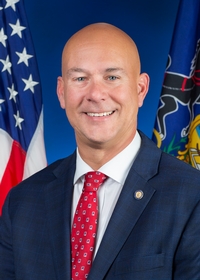
HB 789 amends Pennsylvania's Property Assessed Clean Energy Program to include electric vehicle charging infrastructure as a qualifying project for financing. It defines "electric vehicle charging infrastructure project" as equipment for charging electric vehicles and expands the program to cover such installations alongside energy efficiency, renewable energy, and water conservation projects on commercial, agricultural, and industrial properties. The bill requires local governments to notify the Department of Revenue upon project completion, providing details and property owner contact information to ensure proper tax collection for electric vehicle charging. This update aims to streamline financing access for clean energy improvements while clarifying administrative requirements for local and state agencies.
This resolution directs Pennsylvania's Joint State Government Commission to study the feasibility of developing offshore wind, solar, and hydropower projects on Pennsylvania's portion of Lake Erie. The study will examine potential job creation (including construction, maintenance, and manufacturing roles), economic impacts, environmental benefits like reduced emissions, and the projected electricity generation capacity. It requires the Commission to consult with energy experts, environmental groups, labor leaders, and surrounding states before submitting a report to relevant legislative committees within 12 months. The resolution does not authorize actual projects but aims to inform future policy decisions about renewable energy development in the region.
HB 543 modifies Pennsylvania's electric utility regulations to strengthen energy efficiency program oversight. It requires the Public Utility Commission to review utility efficiency plans within 120 days, provide detailed reasons for disapproval, and allow utilities 60 days to revise plans addressing commission concerns. The bill specifically protects cost-effective mechanical insulation (used in heating/cooling systems) from disapproval solely based on its inclusion, requiring the commission to use a total resource cost test. This directly affects electric distribution companies and the commission, with the changes taking effect 60 days after enactment.
HB 109 creates a new permit review process for specific industrial facilities in Pennsylvania's designated "environmental justice areas" - communities with high pollution burdens and vulnerable populations (low-income, communities of color). It requires the Department of Environmental Protection to consider cumulative environmental and public health impacts when reviewing permits for facilities like large wastewater plants (50,000+ gal/day), major air polluters, waste sites (25+ tons/month), mining operations, and certain landfills. The bill mandates that permits in these areas must address disproportionate environmental impacts, as defined by demographic, economic, health, and environmental data. This directly affects developers and operators of industrial facilities seeking new or expanded permits in designated communities.
HB 362 amends Pennsylvania's 1929 Administrative Code to authorize the Energy Development Authority to administer federal funds from the Inflation Reduction Act of 2022 for the Solar for All Program. It directs the Authority to distribute funds for residential solar installations, storage, and upgrades to qualifying households across all Pennsylvania counties, prioritizing rural, suburban, and urban communities. The bill specifically prohibits using funds for solar panels or parts made with forced labor (defined as work performed under threat of penalty without voluntary consent) and requires the Public Utility Commission to protect non-participating ratepayers from cross-subsidization. This creates a clear administrative framework for implementing the federal program while adding labor and ratepayer safeguards.