Issue · Education

Education (School Choice)

Every education bill, vote, and legislator stance in Pennsylvania, automatically classified by Maddy, our AI policy reader.

Total bills
32
2025-2026 Regular Session
Top supporter
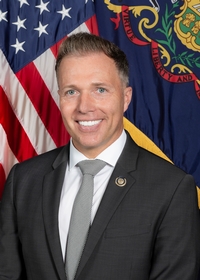
Aerion Abney
100% support rate
Top opponent
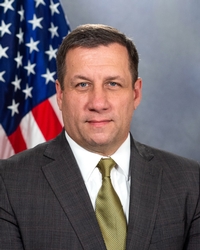
Eric Davanzo
0% support rate
Ranked legislators
10
5 support · 5 oppose
Key legislators

Who's moving school choice in Pennsylvania

Legislators moving school choice in Pennsylvania
Legislator Party Stance Support rate Votes
Aerion Abney
Aerion Abney House · District 19
D
Strong +
100% 11
Gina Curry
Gina Curry House · District 164
D
Strong +
100% 11
Paul Friel
Paul Friel House · District 26
D
Strong +
100% 11
Regina Young
Regina Young House · District 185
D
Strong +
100% 11
Carol Kazeem
Carol Kazeem House · District 159
D
Strong +
100% 8
Eric Davanzo
Eric Davanzo House · District 58
R
Strong −
0% 10
Bryan Cutler
Bryan Cutler House · District 100
R
Strong −
0% 9
Barb Gleim
Barb Gleim House · District 199
R
Strong −
0% 8
Brian Rasel
Brian Rasel House · District 56
R
Strong −
0% 8
Dane Watro
Dane Watro House · District 116
R
Strong −
0% 8
Showing 21–30 of 32 bills

All education bills

in committee · Pennsylvania · Senate May 5, 2025

SB 706: An Act amending the act of March 10, 1949 (P.L.30, No.14), known as the Public School Code of 1949, in educational tax credits, further providing for limitations.

Senate Bill 706 amends Pennsylvania's Public School Code of 1949, specifically addressing limitations on educational tax credits. The bill mandates that the department administering these credits must ensure they are approved equitably for contributions from business firms headquartered in each specified region of the Commonwealth. This includes regions like the northcentral, northeast, and southeast. Additionally, any approved tax credits for firms in one region that go unclaimed must be promptly reallocated to business firms in other regions of Pennsylvania.
Sub-Topics School Choice
in committee · Pennsylvania · House Jan 16, 2025

HB 130: A Joint Resolution proposing an amendment to the Constitution of the Commonwealth of Pennsylvania, further providing for the maintenance and support of public education.

HB 130 proposes a constitutional amendment requiring Pennsylvania to fund public education by allocating state resources directly to individual students, allowing them to attend schools that meet their needs. This would shift funding from the current district-based system to a per-student allocation model, mandating that education spending follow students to their chosen schools. The amendment also requires the state to maintain a thorough and efficient public education system. It would directly affect all public school students and the state's education funding structure.
in committee · Pennsylvania · Senate Mar 21, 2025

SB 496: An Act amending the act of March 10, 1949 (P.L.30, No.14), known as the Public School Code of 1949, in educational tax credits, further providing for school participation in program.

SB 496 requires nonpublic schools participating in Pennsylvania's educational tax credit program to adopt a written policy prohibiting discrimination based on gender identity or sexual orientation. This change directly affects private and parochial schools that receive tax credits through the state's program. The bill amends the Public School Code by adding this specific nondiscrimination requirement as a condition for school participation. It does not alter tax credit amounts or other program eligibility criteria.
Sub-Topics School Choice
in committee · Pennsylvania · House Apr 17, 2025

HB 1258: An Act amending the act of March 10, 1949 (P.L.30, No.14), known as the Public School Code of 1949, in pupils and attendance, providing for personalized education program; providing for student freedom accounts; and establishing the Student Freedom Account Program.

HB 1258 creates a new "Personalized Education Program" (PEP) option under Pennsylvania's Public School Code, allowing parents or guardians to educate children outside traditional public schools. It requires parents to submit an annual affidavit to the school district superintendent detailing the program supervisor, child's information, curriculum outline (including required subjects like English and history), immunization records, and background checks for household members. The program must provide at least 180 days or 900 hours of annual instruction for elementary students (990 hours for secondary), with specific subject requirements. PEPs are explicitly excluded from being classified as "nonpublic schools" under the code, and relocation between school districts requires a formal transfer letter process. This directly affects parents, guardians, and program supervisors managing education for children in these alternatives to public schools.
in committee · Pennsylvania · House Feb 4, 2025

HB 480: An Act amending the act of March 10, 1949 (P.L.30, No.14), known as the Public School Code of 1949, in charter schools, providing for full-time cyber education program offered by school district.

HB 480 allows Pennsylvania school districts to offer full-time cyber education programs directly to students. If a student enrolls in their district's cyber program, they pay no extra fees beyond standard district charges. However, if they choose a cyber charter school instead, parents must pay monthly tuition (based on state funding formulas), and the student won't count toward their district's enrollment for funding purposes. This bill directly affects students and families in districts that provide these cyber programs, clarifying cost responsibilities and funding impacts.
in committee · Pennsylvania · Senate Nov 12, 2025

SB 10: An Act amending the act of March 10, 1949 (P.L.30, No.14), known as the Public School Code of 1949, establishing the Pennsylvania Award for Student Success Scholarship Program and the Pennsylvania Award for Student Success Scholarship Fund.

SB 10 establishes the Pennsylvania Award for Student Success Scholarship Program (PASS), providing financial assistance to low-income students attending nonpublic schools. It directly affects eligible students in Pennsylvania who live in households below 250% of the federal poverty level, attend or reside within the attendance boundary of a low-achieving public school, and have not earned a high school diploma. The program, administered by the State Treasury starting in the 2026-2027 school year, covers tuition, school-related fees, and special education services at participating nonpublic schools. School districts must notify parents of eligible students about the program within 15 days of a school being designated "low-achieving."
in committee · Pennsylvania · House Feb 5, 2025

HB 495: An Act amending the act of March 10, 1949 (P.L.30, No.14), known as the Public School Code of 1949, in charter schools, further providing for enrollment.

HB 495 amends Pennsylvania's Public School Code to change enrollment rules for charter schools and cyber charter schools. It prohibits school boards from imposing enrollment caps on these schools, except as explicitly agreed upon in the school's written charter. For charter schools located in a specific district, the bill allows a limited cap on students residing within that district, but only with approval from the local school board. This cap does not prevent charter schools from enrolling students from outside their district.
Sub-Topics School Choice
in committee · Pennsylvania · House Mar 3, 2025

HB 774: An Act amending the act of March 10, 1949 (P.L.30, No.14), known as the Public School Code of 1949, in school directors, further providing for school director training programs.

HB 774 requires all newly elected or appointed school directors in Pennsylvania to complete a 14-hour training program within their first year, covering topics like academics, trauma-informed approaches (min. 1 hour), finances, governance, and ethics. Existing directors must complete 4 hours annually of advanced training on updated laws, finances, and trauma-informed practices. The bill also applies similar 14-hour initial and 4-hour annual requirements to charter school trustees, with all training provided at no cost by the Department of Education. These provisions take effect for the 2026-2027 school year, replacing current training requirements that expire after 2025-2026.
Sub-Topics School Choice
in committee · Pennsylvania · House Feb 21, 2025

HB 688: An Act amending the act of March 10, 1949 (P.L.30, No.14), known as the Public School Code of 1949, in charter schools, providing for cyber charter school moratorium.

HB 688 imposes a 13-year freeze on new cyber charter school approvals in Pennsylvania, effective July 1, 2025, through June 30, 2038. The bill prohibits the Pennsylvania Department of Education from reviewing or approving any new applications for cyber charter schools during this period, regardless of when the application was submitted. This directly affects organizations or entities seeking to establish new cyber charter schools in the state. The policy change specifically targets new school applications while leaving existing cyber charter schools unaffected.
Sub-Topics School Choice
in committee · Pennsylvania · House Jul 24, 2025

HB 1763: An Act amending the act of March 10, 1949 (P.L.30, No.14), known as the Public School Code of 1949, in educational tax credits, further providing for definitions and providing for compliance with Federal tax credit for contributions to scholarship organizations.

HB 1763 aligns Pennsylvania's tax credit program with a federal tax credit for contributions to scholarship organizations. It requires scholarship organizations in Pennsylvania to verify their tax-exempt status, maintain separate accounts for scholarship funds, provide scholarships to at least 10 students from different schools, spend 90% of income on scholarships, and verify applicants' household income to ensure eligibility. Organizations must submit compliance documentation by June 1, 2026, and annually thereafter, with the state department confirming their eligibility for the federal tax credit. This directly affects scholarship organizations seeking to participate in the federal tax credit program, ensuring they meet federal requirements to allow donors to claim tax benefits.
Showing 21 to 30 of 32 bills
Previous 1 2 3 4 Next