

Issue · Education
Education (Higher Education)
Every education bill, vote, and legislator stance in Pennsylvania, automatically classified by Maddy, our AI policy reader.
Total bills
65
2025-2026 Regular Session
Top supporter
Craig Williams
100% support rate
Top opponent
Chris Gebhard
0% support rate
Ranked legislators
10
5 support · 5 oppose
Key legislators
Who's moving higher education in Pennsylvania
| Legislator | Party | Stance | Support rate | Votes |
|---|---|---|---|---|
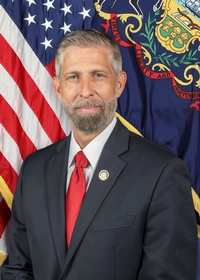
Craig Williams
House · District 160
|
R |
Strong +
|
100% | 16 |
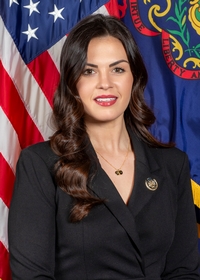
K.C. Tomlinson
House · District 18
|
R |
Strong +
|
100% | 16 |
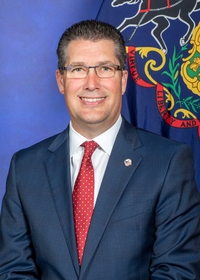
Tom Mehaffie
House · District 106
|
R |
Strong +
|
100% | 16 |
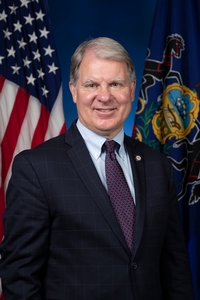
Dave Argall
Senate · District 29
|
R |
Strong +
|
100% | 5 |
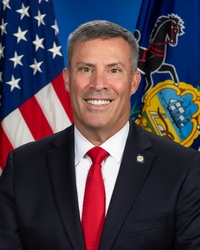
Greg Rothman
Senate · District 34
|
R |
Strong +
|
100% | 5 |
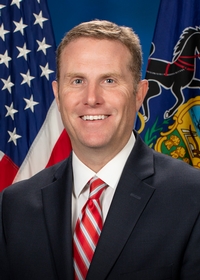
Chris Gebhard
Senate · District 48
|
R |
Strong −
|
0% | 3 |
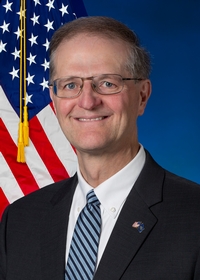
Scott Hutchinson
Senate · District 21
|
R |
Strong −
|
0% | 3 |
|
AT
Ana Tiburcio
House · District 22
|
D |
Strong −
|
18% | 11 |
|
JM
Jen Mazzocco
House · District 42
|
D |
Strong −
|
18% | 11 |
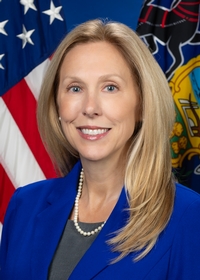
Dawn Keefer
Senate · District 31
|
R |
Strong −
|
20% | 5 |
Showing 21–30 of 65
bills
All education bills
SB 951: An Act amending the act of March 10, 1949 (P.L.30, No.14), known as the Public School Code of 1949, in community colleges, further providing for definitions and for financial program and reimbursement of payments.
Topics
✓ Budget & TaxesSupports Budget & TaxesModifies funding formula to prioritize first responder programs via weighted enrollment (1.5x credit), increasing state allocations for these programs within community college budgets.
✓ EducationSupports EducationBill modifies community college funding to prioritize first responder training programs, increasing financial support for these educational offerings through weighted enrollment allocations.
SB 91: An Act amending the act of December 16, 1998 (P.L.980, No.129), known as the Police Officer, Firefighter, Correction Employee and National Guard Member Child Beneficiary Education Act, further providing for definitions and for Postsecondary Educational Gratuity Program; and repealing provisions relating to retroactivity.
Sub-Topics
Higher Education
SB 969: An Act amending Title 24 (Education) of the Pennsylvania Consolidated Statutes, establishing the Educational Freedom for Families Program and the Teacher Excellence Incentive Fund; and imposing duties on the Department of Education and the State Treasurer.
Topics
✓ Budget & TaxesSupports Budget & TaxesBill allocates state appropriations for education savings accounts, increasing public funding for education programs through new budgetary commitments.
✓ EducationSupports EducationProvides state-funded education savings accounts for students in lowest-performing schools, expanding access to private school tuition, tutoring, and online programs.
HB 1662: An Act amending the act of April 9, 1929 (P.L.343, No.176), known as The Fiscal Code, providing for tax credit for Pennsylvania child learning investment.
Topics
✓ Budget & TaxesSupports Budget & TaxesCreates tax credit reducing state income tax for early education expenses, providing relief for families per Fiscal Code amendment.
✓ EducationSupports EducationCreates tax credit for early childhood education expenses, increasing access to learning resources and reducing costs for families.
HB 1799: An Act amending the act of April 3, 1992 (P.L.28, No.11), known as the Tuition Account Programs and College Savings Bond Act, in tuition account programs, further providing for declaration of policy, for definitions, for Tuition Account Programs Bureau, for powers of department, for Tuition Account Guaranteed Savings Program, for Tuition Account Investment Program, for general provisions governing both tuition account programs and for Federal taxation; establishing the Keystone Scholars Grant Program and the Keystone Scholars Grant Program Account; and making a repeal.
Topics
✓ Budget & TaxesSupports Budget & TaxesBill creates Keystone Scholars Grant Program with dedicated funding account, allocating state budget resources for student scholarships, thus advancing educational funding within fiscal management.
✓ EducationSupports EducationCreates Keystone Scholars Grant Program providing financial aid for postsecondary students, expanding educational access through dedicated funding for higher education.
SB 315: An act amending the act of March 10, 1949 (P.L.30, No.14), entitled "An act relating to the public school system, including certain provisions applicable as well to private and parochial schools; amending, revising, consolidating and changing the laws relating thereto," in preliminary provisions, further providing for Special Education Funding Commission and for minimum number of days or hours; in duties and powers of boards of school directors, providing for admission fees for school-sponsored activities; in intermediate units, further providing for staff; in certification of teachers, further providing for certificates qualifying persons to teach and for instructional certificate grade spans and age levels and duties of department, providing for instructional certificate grade spans and age levels and for State certificate fee reduction, further providing for standard employment application, for career and technical instructional certificate, for program of continuing professional and paraprofessional education and for postbaccalaureate certification, providing for assessment of basic skills, further providing for professional educator discipline fee and providing for career and technical administrative director certification flexibility; in pupils and attendance, further providing for attendance policy at charter, regional charter and cyber charter schools, for procedure when child is truant, for procedure by school when child habitually truant, for procedure upon filing of citation, for penalties for violating compulsory school attendance requirements and for study of truancy procedure, providing for department supports to prevent truancy and further providing for reports to Superintendent of Public Instruction and for exceptional children and education and training; in student supports, further providing for definitions; in school safety and security, further providing for definitions, for School Safety and Security Committee, for school safety and security assessment providers, for School Safety and Security Grant Program, for school safety and security coordinator and for school safety and security training, providing for school safety and mental health grants for 2025-2026 school year and further providing for reporting and memorandum of understanding; in school security, further providing for training, for school resource officers, for school security guards and for duties of commission; in Safe2Say Program, further providing for intent, for definitions, for Safe2Say Program and for annual report; in threat assessment, further providing for definitions, for threat assessment teams and for threat assessment guidelines, training and information materials; in Drug and Alcohol Recovery High School Program, further providing for scope of program and selection of students and for enrollment of students; in evidence-based reading instruction, further providing for definitions and providing for school entity duties related to evidence-based reading instruction, for school entity duties related to reading screening, for reading deficiency identification and parental notification, for reading intervention plans, for grant program, for funding, for reporting, for accountability and for construction; in high schools, further providing for attendance in other districts and providing for Free Application for Federal Student Aid; in interscholastic athletics accountability, further providing for council recommendations and standards; in charter schools, further providing for funding for cyber charter schools, for enrollment and notification and for enrollee wellness checks; in career and technical education, further providing for capital reserve fund for approved purchases of equipment and facility maintenance, for career and technical education equipment grants, for Cosmetology Training through Career and Technical Center Pilot Program and for Barber Training through Career and Technical Center Pilot Program; providing for Nursing Shortage Assistance Program; in community colleges, further providing for financial program and reimbursement of payments; in the State System of Higher Education, further providing for definitions and for Grow Pennsylvania Merit Scholarship Program; in educational tax credits, further providing for limitations; in higher education accountability and transparency, further providing for exit counseling; in miscellaneous provisions relating to institutions of higher education, repealing provisions relating to State-related university performance-based funding model, further providing for prohibition on scholarship displacement at public institutions of higher education and providing for cooperation and for State scholarship renewals; in institutions of higher education, further providing for powers and duties of State Board of Higher Education, for definitions, for Performance-based Funding Council and for public institution of higher education reporting, providing for State-related University Performance Fund, for performance-based funding formula and for public accountability and further providing for agency duties, for grant priority and for report; in Ready-to-Succeed Scholarship, further providing for agency; in funding for public libraries, providing for State aid for fiscal year 2025-2026; in reimbursements by Commonwealth and between school districts, further providing for student-weighted basic education funding beginning with 2023-2024 school year, for extraordinary special education program expenses, for assistance to school districts declared to be in financial recovery status or identified for financial watch status and for Ready-to-Learn Block Grant; in construction and renovation of buildings by school entities, further providing for applicability; abrogating regulations; and making an editorial change.
Topics
✓ Budget & TaxesSupports Budget & TaxesAllocates state funds for school safety grants, career education equipment, higher education scholarships, and library aid, increasing public education spending without tax changes.
✓ EducationSupports EducationAdds school safety grants, updates teacher certification, funds career tech equipment, expands mental health support, and modifies higher education scholarships to strengthen education.
HB 819: An Act amending the act of March 10, 1949 (P.L.30, No.14), known as the Public School Code of 1949, in certification of teachers, further providing for continuing professional development; providing for access to rigorous courses of study for all students; establishing the Access to Rigorous Courses of Study for All Students Grant Program; and imposing duties on the Department of Education.
SB 170: An Act providing for funding for certain State-aided universities for the fiscal year beginning July 1, 2025, and ending June 30, 2026, for costs basis, for frequency of payments and for recordkeeping requirements; imposing a duty on the Auditor General; providing for financial statements, for the Agricultural College Land Scrip Fund and for restrictions; and making appropriations.
Topics
✓ Budget & TaxesSupports Budget & TaxesBill allocates state funding to public universities for 2025-2026 fiscal year with spending oversight, directly advancing public education budget priorities.
✓ EducationSupports EducationProvides direct funding to five PA universities for 2025-2026 fiscal year with reporting requirements, aligning with education funding support indicators per bill summary.
HB 1472: An Act amending the act of March 10, 1949 (P.L.30, No.14), known as the Public School Code of 1949, in higher education accountability and transparency, providing for economic and workforce impact review by State-related universities; and imposing duties of the Department of Labor and Industry.
Sub-Topics
Higher Education