



Issue · Education

Education

Every education bill, vote, and legislator stance in Pennsylvania, automatically classified by Maddy, our AI policy reader.

Total bills
21
2025-2026 Regular Session
Top supporter
Dave Argall
89% support rate
Top opponent
Barb Gleim
23% support rate
Ranked legislators
10
5 support · 5 oppose
Key legislators

Who's moving education in Pennsylvania

Legislators moving education in Pennsylvania
Legislator Party Stance Support rate Decisive votes
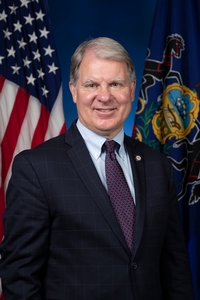
Dave Argall
Dave Argall Senate · District 29
R
Strong +
89% 18
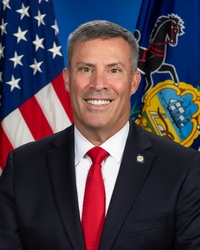
Greg Rothman
Greg Rothman Senate · District 34
R
Strong +
89% 18
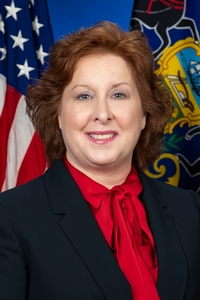
Lynda Culver
Lynda Culver Senate · District 27
R
Strong +
89% 18
Kim Ward
Kim Ward Senate · District 39
R
Strong +
88% 17
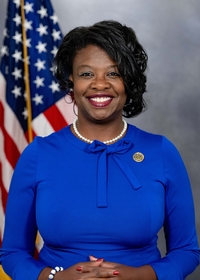
Regina Young
Regina Young House · District 185
D
Strong +
80% 123
Barb Gleim
Barb Gleim House · District 199
R
Oppose
23% 98
Marc Anderson
Marc Anderson House · District 92
R
Oppose
25% 99
Joe D'Orsie
Joe D'Orsie House · District 47
R
Oppose
26% 98
Charity Krupa
Charity Krupa House · District 51
R
Oppose
32% 88
Brian Rasel
Brian Rasel House · District 56
R
Oppose
33% 96
Showing 21–21 of 21 bills

All education bills

passed · Pennsylvania · House Feb 4, 2025

HB 201: An Act amending the act of March 10, 1949 (P.L.30, No.14), known as the Public School Code of 1949, in intermediate units, further providing for powers and duties of the intermediate unit board of directors and for capital subsidy.

HB 201 amends Pennsylvania's Public School Code to update how intermediate units (regional education agencies) manage facilities and receive state funding. It expands boards' authority to acquire land/buildings through purchase, lease, or gift (Section 914-A(11)), and requires pre-approval from the Secretary of Education for lease/loan agreements involving office, classroom, or warehouse space (Section 919.1-A(a)). The bill revises the capital subsidy calculation: the state will allocate funds based on each intermediate unit's student enrollment multiplied by the median per-student instructional cost across all districts, then applying a 0.03% rate. This directly affects intermediate units and school districts using their facilities, changing both facility management rules and state funding distribution.
Showing 21 to 21 of 21 bills