Issue · Criminal Justice

Criminal Justice (Corrections)

Every criminal justice bill, vote, and legislator stance in Pennsylvania, automatically classified by Maddy, our AI policy reader.

Total bills
61
2025-2026 Regular Session
Top supporter
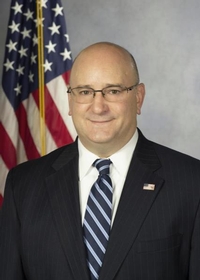
Ben Sanchez
93% support rate
Top opponent
Nick Pisciottano
0% support rate
Ranked legislators
10
5 support · 5 oppose
Key legislators

Who's moving corrections in Pennsylvania

Legislators moving corrections in Pennsylvania
Legislator Party Stance Support rate Votes
Ben Sanchez
Ben Sanchez House · District 153
D
Strong +
93% 28
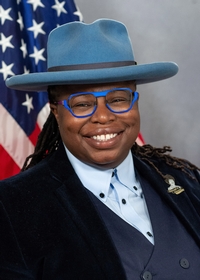
La'Tasha Mayes
La'Tasha Mayes House · District 24
D
Strong +
92% 26
Melissa Shusterman
Melissa Shusterman House · District 157
D
Strong +
92% 26
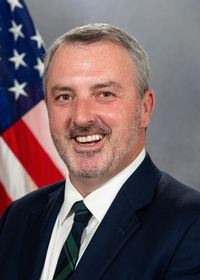
Kyle Donahue
Kyle Donahue House · District 113
D
Strong +
92% 25
Andre Carroll
Andre Carroll House · District 201
D
Strong +
92% 24
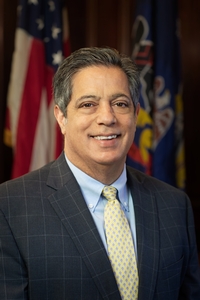
Nick Pisciottano
Nick Pisciottano Senate · District 45
D
Strong −
0% 5
James Malone
James Malone Senate · District 36
D
Strong −
0% 3
Stephanie Borowicz
Stephanie Borowicz House · District 76
R
Strong −
8% 24
Jay Costa
Jay Costa Senate · District 43
D
Strong −
11% 9
Charity Krupa
Charity Krupa House · District 51
R
Strong −
12% 17
Showing 51–60 of 61 bills

All criminal justice bills

in committee · Pennsylvania · Senate Feb 28, 2025

SB 360: An Act amending Title 61 (Prisons and Parole) of the Pennsylvania Consolidated Statutes, providing for solitary confinement.

SB 360 requires Pennsylvania's Department of Corrections to collect detailed data on solitary confinement use in state prisons, including duration, reasons for placement, and impacts on vulnerable inmates such as youth, elderly individuals, pregnant people, and LGBTQ+ inmates. The bill mandates annual public reports to the Governor and legislature containing aggregated statistics (like recidivism rates and self-harm incidents) without personally identifiable information. These reports and prison policies governing solitary confinement must be posted on the department's public website. The bill directly affects all state prison inmates, with specific tracking requirements for vulnerable populations.
in committee · Pennsylvania · Senate Jun 23, 2025

SB 874: An Act amending the act of June 3, 1937 (P.L.1333, No.320), known as the Pennsylvania Election Code, in election districts and polling places, providing for residence of incarcerated individuals.

SB 874 amends Pennsylvania's Election Code to change how incarcerated individuals are counted for redistricting. It requires that people in state or federal prisons (or juvenile facilities) be counted at their last known address in Pennsylvania - not at the facility location - when creating state legislative, congressional, and local district maps based on the federal census. The bill mandates that correctional and juvenile facilities collect and share data (including last known address, demographic details, and facility location) with redistricting bodies by June 1 each year ending in "1." This directly affects how Pennsylvania redraws voting districts, ensuring prison populations are not artificially inflated in the communities where facilities are located.
in committee · Pennsylvania · House Sep 9, 2025

HB 1477: An Act amending Title 18 (Crimes and Offenses) of the Pennsylvania Consolidated Statutes, in assault, further providing for the offense of stalking.

HB 1477 increases penalties for repeat stalking offenses in Pennsylvania. It upgrades second or subsequent stalking convictions (or first offenses with prior violent crimes against the same victim, like assault or rape) to a second-degree felony, requiring a minimum 5-year prison sentence and a maximum of 10 years. The bill mandates that courts must consider prior convictions for specific violent crimes when sentencing, with strict procedures for verifying those records. This directly affects individuals convicted of stalking who have prior violent offenses against the same person, altering sentencing outcomes without changing the definition of stalking itself.
in committee · Pennsylvania · House May 12, 2025

HB 1441: An Act amending Titles 18 (Crimes and Offenses), 42 (Judiciary and Judicial Procedure) and 61 (Prisons and Parole) of the Pennsylvania Consolidated Statutes, in authorized disposition of offenders, further providing for sentence of persons under the age of 18 for murder, murder of an unborn child and murder of a law enforcement officer; in sentencing, further providing for sentences for second and subsequent offenses; and, in Pennsylvania Board of Probation and Parole, further providing for parole power.

HB 1441 proposes significant changes to sentencing and parole eligibility for certain serious offenses in Pennsylvania, applying these changes retroactively. The bill modifies sentences for individuals under 18 convicted of first-degree murder, murder of an unborn child, or murder of a law enforcement officer, replacing "life without parole" with minimum terms of 25 or 35 years to life, making them eligible for parole. It also removes "without parole" from life sentences for repeat violent offenders, allowing them parole consideration. The Pennsylvania Board of Probation and Parole would gain the power to parole individuals serving life sentences, though it would be prohibited from granting parole to offenders who murdered a law enforcement officer. Additionally, for those serving life sentences, parole consideration would not begin until at least five years of incarceration.
in committee · Pennsylvania · House Oct 21, 2025

HB 1975: An Act amending Title 18 (Crimes and Offenses) of the Pennsylvania Consolidated Statutes, in assault, further providing for the offense of assault of law enforcement officer.

HB 1975 would amend Pennsylvania law to expand assault protections for emergency responders (including police, EMTs, and firefighters) beyond just law enforcement officers. The bill makes discharging a firearm at an emergency responder while they are on duty a first-degree felony (up to 40 years in prison), and intentionally exposing them to bodily fluids (blood, saliva, etc.) a third-degree felony, with a second-degree felony penalty if the fluids come from someone with a reportable disease. It directly affects all emergency responders performing their duties and would change sentencing for these specific assault offenses. The bill is pending in the Judiciary Committee as of its October 2025 introduction.
in committee · Pennsylvania · House Oct 29, 2025

HB 2001: An Act amending Title 24 (Education) of the Pennsylvania Consolidated Statutes, providing for incarcerated students; and abrogating a regulation.

HB 2001 amends Pennsylvania's education laws to establish educational opportunities for students incarcerated in state facilities. It directly affects incarcerated individuals in Pennsylvania prisons by requiring educational programming access. The bill removes an existing regulation (abrogating it) to enable this change, though specific program details aren't outlined in the title. This focuses on policy changes to integrate incarcerated students into the state's education framework.
Sub-Topics Corrections
passed · Pennsylvania · House Dec 22, 2025

HB 150: An Act amending Title 42 (Judiciary and Judicial Procedure) of the Pennsylvania Consolidated Statutes, in sentencing, repealing provisions relating to transfer of inmates in need of medical treatment and providing for modification of an imposed term of imprisonment for reasons of illness.

HB 150 proposes changes to Pennsylvania's sentencing laws by removing outdated rules about transferring inmates requiring medical care and creating a new process for judges to modify prison terms when an individual's illness prevents them from serving their full sentence. The bill directly affects people incarcerated in Pennsylvania who develop serious medical conditions during their sentence. Key provisions include ending the current transfer system for medical cases and establishing a clear procedure for courts to adjust sentences based on documented health issues. This would allow judges to shorten sentences for health-related reasons without requiring a separate legal process. The bill is currently under review in the Appropriations committee.
Sub-Topics Corrections Sentencing
in committee · Pennsylvania · Senate Nov 5, 2025

SB 1086: An Act amending Title 61 (Prisons and Parole) of the Pennsylvania Consolidated Statutes, establishing the Identification Upon Reentry Program.

SB 1086 would amend Pennsylvania’s prison and parole laws to establish the Identification Upon Reentry Program. The bill requires the Department of Corrections to work with state agencies to provide identification documents, such as a state ID or driver's license, to individuals released from state prisons. This program would directly affect people leaving prison, who often face barriers to housing, employment, and services without proper identification. The key mechanism creates a formal process to streamline obtaining identification at the time of release, reducing a common reentry obstacle.
in committee · Pennsylvania · House Apr 15, 2026

HB 728: An Act amending Title 61 (Prisons and Parole) of the Pennsylvania Consolidated Statutes, establishing the Identification Upon Reentry Program.

HB 728 establishes Pennsylvania's Identification Upon Reentry Program, requiring prisons to provide newly released inmates with essential identification documents (like state ID cards) before their release. This directly affects individuals transitioning from incarceration back into the community, who often face barriers to accessing services without valid ID. The key provision mandates that correctional facilities coordinate with state agencies to issue these documents during the reentry process, replacing the current inconsistent practice. This policy change aims to streamline access to housing, employment, and government services for returning citizens.
signed · Pennsylvania · Senate Jul 21, 2025

SB 475: An Act amending Title 42 (Judiciary and Judicial Procedure) of the Pennsylvania Consolidated Statutes, in organization and jurisdiction of courts of common pleas, further providing for problem-solving courts; and, in sentencing, further providing for modification or revocation of order of probation.

SB 475 creates a framework for Pennsylvania courts to establish specialized "problem-solving" treatment courts (including veterans, drug, mental health, and DUI courts) and modifies probation rules. It allows courts to create "veterans tracks" within existing treatment programs and requires judges to consider a defendant's employment status when sentencing for technical probation violations. The bill specifically permits up to 30 days of incarceration to allow defendants to enter treatment courts instead of imposing full sentences for technical probation violations. This directly affects Pennsylvania courts, probation officers, and individuals on probation who commit minor violations.
Showing 51 to 60 of 61 bills
Previous 1 5 6 7 Next