Issue · Criminal Justice

Criminal Justice (Violent Crime)

Every criminal justice bill, vote, and legislator stance in Pennsylvania, automatically classified by Maddy, our AI policy reader.

Total bills
55
2025-2026 Regular Session
Top supporter
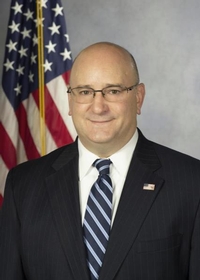
Ben Sanchez
85% support rate
Top opponent
Steve Santarsiero
0% support rate
Ranked legislators
10
5 support · 5 oppose
Key legislators

Who's moving violent crime in Pennsylvania

Legislators moving violent crime in Pennsylvania
Legislator Party Stance Support rate Votes
Ben Sanchez
Ben Sanchez House · District 153
D
Strong +
85% 13
Melissa Shusterman
Melissa Shusterman House · District 157
D
Strong +
83% 12
Kyle Donahue
Kyle Donahue House · District 113
D
Strong +
82% 11
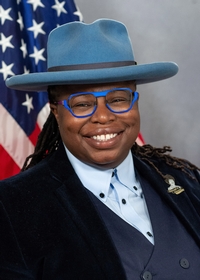
La'Tasha Mayes
La'Tasha Mayes House · District 24
D
Strong +
82% 11
Aerion Abney
Aerion Abney House · District 19
D
Strong +
80% 10
Steve Santarsiero
Steve Santarsiero Senate · District 10
D
Strong −
0% 11
Nick Pisciottano
Nick Pisciottano Senate · District 45
D
Strong −
0% 4
Clint Owlett
Clint Owlett House · District 68
R
Strong −
14% 7
Kate Klunk
Kate Klunk House · District 169
R
Strong −
17% 12
Rob Kauffman
Rob Kauffman House · District 89
R
Strong −
17% 12
Showing 41–50 of 55 bills

All criminal justice bills

in committee · Pennsylvania · House Jun 25, 2025

HB 1665: An Act amending Title 44 (Law and Justice) of the Pennsylvania Consolidated Statutes, in DNA data and testing, further providing for policy, for definitions, for State DNA Data Base, for State Police recommendation of additional offenses and annual report and for DNA sample required upon conviction, delinquency adjudication and certain ARD cases, providing for request for modified DNA search and further providing for DNA data base exchange, for expungement and for mandatory cost; and making an editorial change.

HB 1665 expands Pennsylvania's DNA collection requirements to include individuals convicted of specific misdemeanors (like simple assault, indecent exposure, or certain sex offense-related offenses) in addition to felony sex offenses and criminal homicide. It clarifies that DNA samples must be collected upon conviction, delinquency adjudication, or certain Accelerated Rehabilitative Disposition (ARD) cases for these offenses. The bill establishes a "modified DNA search" mechanism allowing law enforcement to use familial DNA matching (with scientific standards) to identify close relatives of individuals in the DNA database. It also requires the State Police to submit annual reports detailing demographics of collected DNA samples, fiscal impacts, testing timelines, and recommendations for expanding or removing offenses requiring DNA collection.
passed both · Pennsylvania · House Jul 23, 2026

HB 1042: An Act amending Titles 18 (Crimes and Offenses), 42 (Judiciary and Judicial Procedure), 61 (Prisons and Parole) and 63 (Professions and Occupations (State Licensed)) of the Pennsylvania Consolidated Statutes, in crimes against unborn child, further providing for the offense of murder of unborn child; in arson, criminal mischief and other property destruction, further providing for the offense of arson and related offenses; in judicial boards and commissions, further providing for adoption of guidelines for sentencing; in posttrial matters, further providing for jurisdiction and proceedings; in sentencing, providing for sentence for general murder of the second degree, further providing for sentences for second and subsequent offenses and for life imprisonment for homicide, repealing provisions relating to transfer of inmates in need of medical treatment and providing for modification of an imposed term of imprisonment for reasons of illness; in general administration, providing for earned vocational training and education credit; in Pennsylvania Board of Probation and Parole, further providing for parole power, for short sentence parole, for parole procedure and for victim statements, testimony and participation in hearing; and, in powers and duties, further providing for consideration of criminal convictions.

House Bill 1042 creates a system in Pennsylvania allowing eligible incarcerated individuals to earn credits that reduce their minimum sentence. Inmates can receive sentence reductions for completing vocational training, educational programs like a GED or college degree, and other department-required programming. The bill sets specific credit amounts for different achievements, with a maximum limit of one-fourth of an inmate's minimum sentence. However, individuals convicted of certain serious offenses, such as murder or sexual assault, are excluded from earning these credits.
in committee · Pennsylvania · Senate Apr 9, 2025

SB 575: An Act amending Titles 18 (Crimes and Offenses) and 42 (Judiciary and Judicial Procedure) of the Pennsylvania Consolidated Statutes, in assault, further providing for the offense of ethnic intimidation; and making an editorial change.

SB 575 amends Pennsylvania law to expand the definition of hate-based intimidation under Title 18, specifically adding "ethnic" to the list of protected characteristics (alongside race, color, religion, national origin, and disability) for offenses involving assault or property damage. It creates a new civil remedy under Title 42, allowing victims injured by such acts to sue for damages, injunctions, or other relief in court. The bill directly affects individuals who experience hate-motivated crimes and the legal system handling these cases. The changes take effect 60 days after enactment.
in committee · Pennsylvania · House Feb 20, 2025

HB 641: An Act amending Titles 42 (Judiciary and Judicial Procedure) and 61 (Prisons and Parole) of the Pennsylvania Consolidated Statutes, in sentencing, further providing for sentences for second and subsequent offenses; and, in Pennsylvania Board of Probation and Parole, further providing for parole power.

HB 641 requires individuals convicted of a "crime of violence" (as defined in the bill) and sentenced under Pennsylvania's second or subsequent offense provisions to serve 70% of their maximum sentence before becoming eligible for parole. This applies to serious offenses including murder, aggravated assault, sexual assault, robbery, and drug-related crimes resulting in death. The bill does not change the actual sentence length but modifies parole eligibility for repeat offenders in these categories. It affects only those convicted of specific violent crimes under the defined second or subsequent offense rules.
in committee · Pennsylvania · House Jul 3, 2025

HB 1698: An Act amending Title 18 (Crimes and Offenses) of the Pennsylvania Consolidated Statutes, in assault, further providing for the offense of terrorism.

HB 1698 amends Pennsylvania's terrorism statute (Title 18, Section 2717) to increase sentencing for terrorism-related assaults. Specifically, it raises the maximum prison term for individuals convicted of terrorism when the underlying violent offense is a first-degree felony from 40 years to life imprisonment, while maintaining a $100,000 maximum fine. This change directly affects defendants convicted under this terrorism provision who commit first-degree felony assaults. The bill modifies existing sentencing guidelines without creating new offenses or expanding the definition of terrorism. It will take effect 60 days after enactment.
in committee · Pennsylvania · Senate Mar 21, 2025

SB 212: An Act amending Title 18 (Crimes and Offenses) of the Pennsylvania Consolidated Statutes, in general provisions relating to offenses involving danger to the person, further providing for definitions.

SB 212 amends Pennsylvania's criminal code by redefining "serious provocation" in Title 18. It explicitly states that a victim's actual or perceived gender identity, sexual orientation, or unwanted romantic/sexual advances (including past relationships) cannot be considered serious provocation. This change affects defendants in violent crime cases who might claim "serious provocation" as a defense. The bill removes specific LGBTQ+-related scenarios from being used to justify violent acts under this legal defense.
Sub-Topics Violent Crime
in committee · Pennsylvania · Senate Jul 31, 2025

SB 913: An Act amending Title 42 (Judiciary and Judicial Procedure) of the Pennsylvania Consolidated Statutes, in sentencing, providing for sentencing for offenses committed while engaged in riots.

This bill amends Pennsylvania's sentencing guidelines to increase penalties for specific offenses committed during riots. It requires the Pennsylvania Commission on Sentencing to create enhanced penalties for crimes like simple assault, aggravated assault, burglary, and criminal trespass when these occur while violating riot laws (18 Pa.C.S. § 5501). The key mechanism is adding a sentencing enhancement factor for such circumstances, modifying the standard penalty ranges for these offenses. The bill directly affects individuals convicted of these specific crimes during riot-related incidents.
in committee · Pennsylvania · House Sep 9, 2025

HB 1839: An Act amending the act of November 29, 2006 (P.L.1471, No.165), known as the Sexual Assault Testing and Evidence Collection Act, further providing for definitions and for sexual assault evidence collection program; and providing for noncompliance.

HB 1839 amends Pennsylvania's Sexual Assault Testing and Evidence Collection Act by updating definitions related to evidence handling and clarifying requirements for agencies collecting sexual assault evidence. It adds specific penalties for agencies that fail to comply with these procedures. The bill directly affects law enforcement, medical facilities, and crime labs responsible for processing sexual assault evidence. Key changes include standardized protocols for evidence collection and retention to improve case integrity. The bill was referred to the Judiciary Committee on September 9, 2025.
Sub-Topics Violent Crime
in committee · Pennsylvania · House Jul 17, 2025

HB 1744: An Act amending Title 18 (Crimes and Offenses) of the Pennsylvania Consolidated Statutes, in authorized disposition of offenders, further providing for sentence for murder, murder of unborn child and murder of law enforcement officer.

HB 1744 modifies Pennsylvania's parole eligibility rules for second-degree murder convictions. It allows parole consideration after 25 years of imprisonment if the person has no felony convictions in the prior 25 years (excluding convictions from the same criminal episode), is not a principal offender in the murder, and isn't subject to specific other offenses like assault by life prisoner or witness intimidation. The bill does not apply to those convicted under certain sections (e.g., 2704, 4952(b)). It directly affects second-degree murder convicts meeting all specified conditions. The bill takes effect 60 days after enactment.
in committee · Pennsylvania · Senate Oct 3, 2025

SB 1024: An Act amending Titles 18 (Crimes and Offenses) and 42 (Judiciary and Judicial Procedure) of the Pennsylvania Consolidated Statutes, in assault, further providing for the offense of ethnic intimidation; and, in particular rights and immunities, further prohibiting civil rights violations.

SB 1024 amends Pennsylvania law to specifically address ethnic intimidation as a criminal offense under assault statutes (Title 18) and strengthens protections against civil rights violations (Title 42). The bill directly affects individuals who experience or are accused of committing acts of intimidation based on race, ethnicity, or national origin. Key provisions include defining ethnic intimidation as a distinct assault offense and prohibiting actions that violate civil rights protections in public accommodations or services. This legislation updates criminal penalties and civil recourse for targeted discrimination under existing state law.
Showing 41 to 50 of 55 bills
Previous 1 4 5 6 Next