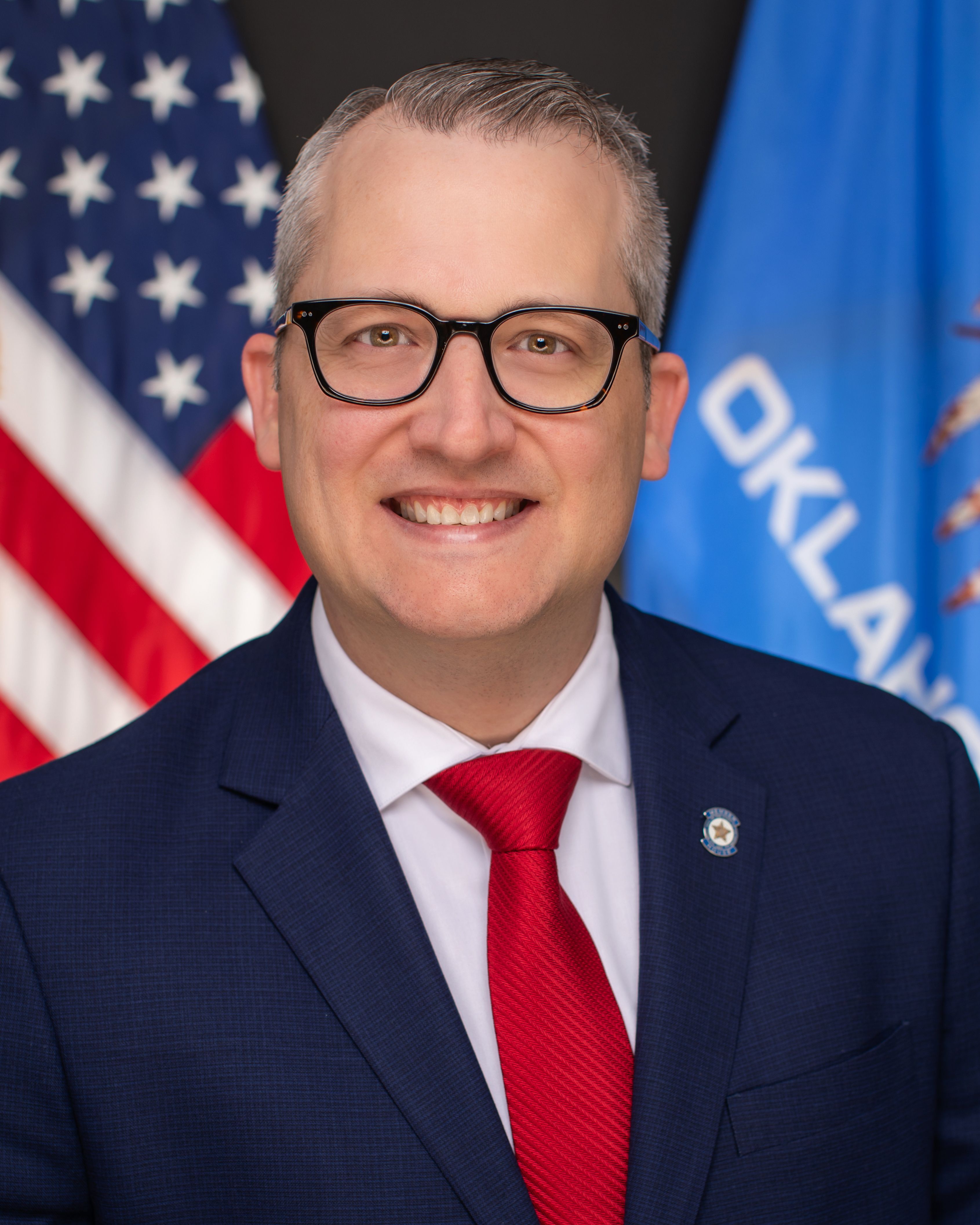
Photo of Mark Lawson
R Oklahoma House · District 30 On the 2026 ballot

Rep. Mark Lawson

Compare
Total votes
6,685
all sessions
Attendance
83%
986 missed
Lower than 82% of chamber peers
With party
97%
of cast votes
Higher than 96% of chamber peers
Bipartisan score
2%
crosses aisle rarely
Lower than 96% of chamber peers
Sponsored
332
bills & resolutions
Higher than 83% of chamber peers
Committees
4
assignments
332 bills and resolutions

Sponsored bills

Total
332
Primary
332
Co-sponsor
0
This page
332
matching current filters
Primary SB 1806
Signed into law · Oklahoma Senate · Lead sponsor
Foster care; directing the Department of Human Services to implement certain extension of foster care services. Effective date. Emergency.

Maddy summarySB 1806 extends Oklahoma foster care services until age 21 for eligible young adults who were in state custody at 18 or achieved legal permanency (guardianship/adoption) at age 16 or older. To qualify, individuals must be enrolled in school, working 80+ hours monthly, in job training, or have a qualifying medical condition with a treatment plan. Participation is voluntary, and the Department of Human Services must establish rules and seek funding to implement the program. The bill takes effect July 1, 2026, with an emergency declaration.

Signed into law May 29, 2026 0 co-sponsors
Primary SB 1796
Signed into law · Oklahoma Senate · Lead sponsor
Foster care; allowing foster parents to use certain caregivers and arrangements for temporary care of foster children; specifying certain time limit on temporary care. Effective date.

Maddy summarySB 1796 allows Oklahoma foster parents to temporarily arrange care for foster children through three specific options: approved "alternate caregivers" (for up to 14 consecutive days), "respite care" by other foster families, or short-term "informal care" (friends/relatives for up to 72 hours). Foster parents must identify and get Department approval for alternate caregivers, who must pass background checks and home evaluations. The bill requires foster parents to notify the Department before using any temporary care and prohibits unsafe informal caregivers. It directly affects foster parents and children in foster care by expanding temporary care options while adding safety requirements for caregivers. The law takes effect November 1, 2026.

Signed into law May 13, 2026 0 co-sponsors
Primary SB 1379
Signed into law · Oklahoma Senate · Lead sponsor
Attorney General; establishing certain pilot program; stating eligibility requirements; Victims of Human Trafficking and Prevention Revolving Fund. Effective date. Emergency.

Maddy summarySB 1379 establishes a two-year pilot program through Oklahoma's Attorney General's Office to provide grants to private nonprofit organizations supporting victims of sexual and labor trafficking. The program funds specific services like emergency shelter, mental health counseling, legal assistance, job training, and medical care - directly benefiting trafficking victims through partner organizations. Eligible organizations must demonstrate experience serving trafficking victims, maintain confidentiality, and use grants primarily for direct services (not exceeding 15% for administrative costs). Recipients must submit quarterly reports on services provided and outcomes, with the Attorney General compiling annual program evaluations for state leaders. The bill expands allowable uses of the Victims of Human Trafficking Fund to support this initiative.

Signed into law May 8, 2026 0 co-sponsors
Primary SB 2155
Signed into law · Oklahoma Senate · Lead sponsor
Oklahoma Route 66 Commission; granting certain power to the Oklahoma Route 66 Commission. Effective date.

Maddy summarySB 2155 allows Oklahoma municipalities to consider the competitiveness of their development fee schedules when setting or raising fees for new construction or expansions. It clarifies that cities are not required to keep fees uniform across jurisdictions and mandates periodic reviews of these fee schedules. The bill requires that fees directly match the cost of new infrastructure capacity (like water, roads, or storm systems) generated by development, cannot fund maintenance of existing systems, and must be proportionate to the actual impact. This affects developers and local governments by changing how municipalities calculate and adjust fees tied to new growth.

Signed into law May 6, 2026 0 co-sponsors
Primary SB 1645
Signed into law · Oklahoma Senate · Lead sponsor
Medicaid; establishing certain requirements and procedures for audits of providers; directing establishment of certain appeals. Effective date.

Maddy summarySB 1645 establishes new rules for auditing long-term care providers (like nursing homes and Medicaid home-care agencies) under Oklahoma's Medicaid program. It requires the Oklahoma Health Care Authority to give providers 1 week's notice before audits, limits audits to 50 claims or 0.25% of annual claims, and prohibits holding providers liable for simple clerical errors (like typos) as fraud. Providers must be allowed 60 days to correct claims after an audit, and recoupments (recovery of overpaid funds) can only apply to corrected claims, not original billing errors. The bill also creates a two-step appeals process, allowing providers to challenge audit results through the Authority and then to an administrative law judge.

Signed into law May 5, 2026 0 co-sponsors
Primary HB 3622
Signed into law · Oklahoma House · Lead sponsor
2030 Census; creating the U.S. Decennial Census Revolving Fund; establishing fund at Commerce; deeming funds appropriated; requirements and limitations; effective date.

Maddy summaryHB 3622 appropriates $500,000 from Oklahoma's General Revenue Fund to the Oklahoma Department of Commerce for preparing for the 2030 Decennial Census. The funds are specifically designated for technology improvements to support census operations. This bill directly affects state agencies responsible for census coordination, ensuring Oklahoma is prepared for the nationwide count. It becomes effective July 1, 2026, and was declared an emergency to expedite funding.

Signed into law May 4, 2026 0 co-sponsors
Primary SB 1378
Passed · Oklahoma Senate · Lead sponsor
State government; creating the Olympics in Oklahoma Revolving Fund; requiring certain disbursal of monies on certain approval of the Department of Commerce. Effective date. Emergency.

Maddy summarySB 1378 creates the "Olympics in Oklahoma Revolving Fund" within the State Treasury to manage all funding for Oklahoma's 2028 Olympic Games preparations. The fund, administered by the Oklahoma Department of Commerce, will include state appropriations, donations, and grants, with expenditures requiring approval by the Commerce Department. Crucially, the bill mandates that at least 5% of all funds disbursed must go to contracts fulfilled by Oklahoma-based businesses. The fund becomes effective July 1, 2026.

Passed Apr 29, 2026 0 co-sponsors
Primary HB 3624
Passed · Oklahoma House · Lead sponsor
Counties and county officers; repealer; watercourse bounding counties; taxable situs of property; effective date.

Maddy summaryHB 3624 repeals Section 36 of Title 19, Oklahoma Statutes (2021), which previously governed watercourse bounding counties and taxable situs of property. The bill has no new provisions - it only removes the existing statute. It will take effect on November 1, 2026. Since the bill text does not describe the content of the repealed section, its specific impacts or affected parties cannot be detailed from the provided context.

Passed Apr 23, 2026 0 co-sponsors
Primary SB 1733
Signed into law · Oklahoma Senate · Lead sponsor
Schools; requiring public and private school employees to report certain disclosure, allegation, or information to law enforcement within certain time period; requiring school employees to annually sign certain attestation. Effective date. Emergency.

Maddy summarySB 1733 requires Oklahoma school employees (including teachers, coaches, and administrators) to report suspected student sexual abuse, assault, or misconduct to law enforcement within 24 hours. It prohibits school investigations or disciplinary actions before reporting and mandates annual attestation forms confirming staff understanding of these duties. The law applies to all public and charter school staff, with confidentiality protections for reporters. It takes effect July 1, 2026, and declares an emergency for immediate implementation.

Signed into law Apr 22, 2026 0 co-sponsors
Primary HB 1746
Passed · Oklahoma House · Lead sponsor
Children; defining terms; safety plan; Office of Juvenile Affairs; approval or denial; transmission; effective date.

Maddy summaryHB 1746 changes Oklahoma's juvenile code to require jury trials in specific parental rights termination cases. It mandates a jury trial when a court first determines a child is neglected (deprived) and simultaneously requests termination, or after a prior deprivation finding, the state or child files a termination request. The bill sets strict timelines: courts must schedule jury trials within 30 days and hold them within six months, unless justified exceptions exist. This directly affects parents facing termination, child welfare agencies, and courts handling these cases by altering the trial process.

Passed Apr 22, 2026 0 co-sponsors
Showing 1 to 10 of 332 bills
1 2 3 34 Next