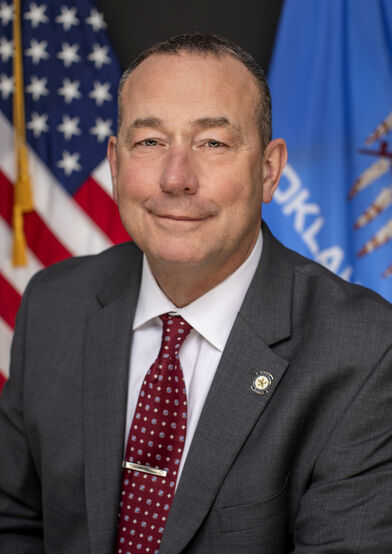
HB 4490 creates the Oklahoma Families Thriving Everywhere Now (OFTEN) program through the Oklahoma State Department of Health, using $3 million in state funds for the 2027 fiscal year. The program provides telecare support, community outreach, and care coordination for women with high-risk pregnancies and parents of children under three, aiming to promote healthy childbirth, stable family formation, and economic self-sufficiency. Services include referrals, case management, and parenting assistance delivered by Oklahoma-based community providers. The bill takes effect July 1, 2026, and includes an emergency declaration to accelerate implementation.
HB 3259 bans specific restrictive clauses in health insurance provider contracts within Oklahoma. It prohibits "anti-steering" clauses (blocking insurers from directing patients to lower-cost providers), "gag" clauses (preventing disclosure of prices or out-of-pocket costs to patients), and "most favored nation" clauses (forcing uniform rates across insurers). The bill directly affects health insurance providers and "general contracting entities" (insurers or entities managing provider networks), requiring them to prioritize enrollees' interests when directing care. Enrollees gain greater transparency into costs and more choice in providers, as contracts containing these banned clauses are void. The law takes effect November 1, 2026.
SB 1039 modifies Oklahoma's medical marijuana licensing system. It establishes a new Oklahoma Medical Marijuana Authority to process applications, sets a $100 biannual fee (or $20 for Medicaid/Medicare/SoonerCare users) for patient licenses, and creates three license types: standard two-year licenses, 60-day short-term licenses for patients with limited physician recommendations, and 30-day temporary licenses for out-of-state patients from regulated states. The bill requires the Authority to review applications within 14 business days and provide written denial reasons, while also creating caregiver licenses for homebound patients with specific limits. This law directly affects Oklahoma residents seeking medical marijuana access, out-of-state visitors with valid programs, and caregivers.
HB 1224 allows certain minors to consent to specific health services without parental approval, including treatment for pregnancy, sexually transmitted infections, substance abuse, or sexual assault. Parents generally retain access to their minor child's medical records, but this right is limited when the minor uses the bill's self-consent provisions for the listed health conditions. Health professionals must make a reasonable attempt to notify parents for emergency care but are not required to inform them for most other services covered under the bill. The bill also protects health providers from liability when acting in good faith under these rules, ensuring minors' confidentiality in sensitive health matters.
HB 2785 requires Oklahoma's Office of Management and Enterprise Services (OMES) to implement stricter budget oversight for the Department of Mental Health and Substance Abuse Services. It mandates OMES to review agency budgets against actual spending before releasing funds, prohibit contracts without clear cost limits, restrict multi-year contract encumbrances to current-year funds, and block payments for unapproved expenses. The bill also requires OMES to report monthly revenue and spending status to the Governor, legislature leadership, and relevant committees. This directly affects state budget management for mental health services by adding specific financial controls to prevent overspending. The law takes immediate effect due to an emergency declaration.
HB 2788 transfers specific funds back into Oklahoma's Statewide Recovery Fund from several existing programs. It moves $1.56 million from domestic violence services, $162,668 from food assistance programs, $1.49 million from health workforce initiatives, $2.16 million from rural healthcare, $5 million from medical facilities, $20.5 million from mental health hospital construction, and $3.3 million from water resources projects. All transfers align with recommendations from the Joint Committee on Pandemic Relief Funding. The bill takes effect July 1, 2025, and was enacted without the governor's signature on May 29, 2025.
HB 2797 prohibits Oklahoma's Health Care Authority (OHCA) from using statistical methods like extrapolation to audit Medicaid home and community-based service claims, which could require providers to repay overpayments. It invalidates all past audits using these methods (January 2020-November 2025) and voids related repayment demands. The bill requires OHCA and the Department of Human Services to jointly develop new audit standards and provide training for providers by November 2027. It also mandates compliance with existing fraud reporting rules and updates audit responsibilities for Medicaid waiver programs.
HB 2052 exempts certain domestic health maintenance organizations (HMOs) that exclusively contract with Oklahoma's Medicaid program (via the Oklahoma Health Care Authority) from most state health insurance regulations. These HMOs, which serve only Medicaid recipients and no other patients, are no longer subject to specific provisions of the Health Maintenance Organizations Act, including requirements about benefit coverage and certain administrative rules. The exemption applies solely to services provided to Medicaid recipients under Oklahoma Statutes Title 56, Section 4002.2. The law became effective November 1, 2025, after passing without the Governor's signature.
SB 95 updates key definitions in Oklahoma's workers' compensation law to clarify eligibility and claims processing. It directly affects injured workers (claimants), employers, insurance carriers, and medical providers by defining terms like "case manager" (requiring specific nursing licenses or certifications) and "carrier" (explicitly including self-insured employers). The bill also clarifies what constitutes a "compensable injury," excluding age-related conditions like arthritis and adding drug testing rules for claims involving intoxication. These changes aim to standardize claims administration and reduce disputes over coverage. The bill became effective after the governor signed it on May 6, 2025.
HB 2087 modifies Oklahoma's income tax credit for donations to qualified research institutes. It adjusts annual funding caps: for biomedical research institutes, the limit drops from $2 million to $1.5 million per year starting in 2026, while cancer research institute credits are capped at $500,000 annually. The credit percentage for each donation type is recalculated yearly based on prior-year claims, using specific formulas to stay within these new limits. Taxpayers donating to qualifying nonprofit biomedical or cancer research institutes (defined by NIH funding requirements) can claim the credit, with individual limits of $1,000-$25,000 depending on filing status or business type.