This bill authorizes Salamanca City School District to create a reserve fund (capped at $5 million) using existing district funds if federal impact aid decreases. The fund would stabilize school tax levies and maintain educational services if federal aid is reduced, directly affecting Salamanca students and taxpayers. Voter approval via a separate ballot question is required before establishing the fund, and withdrawals would be disclosed in annual budget reports. The bill specifies that funds would be drawn from unassigned balances or other existing reserves, not new taxes.
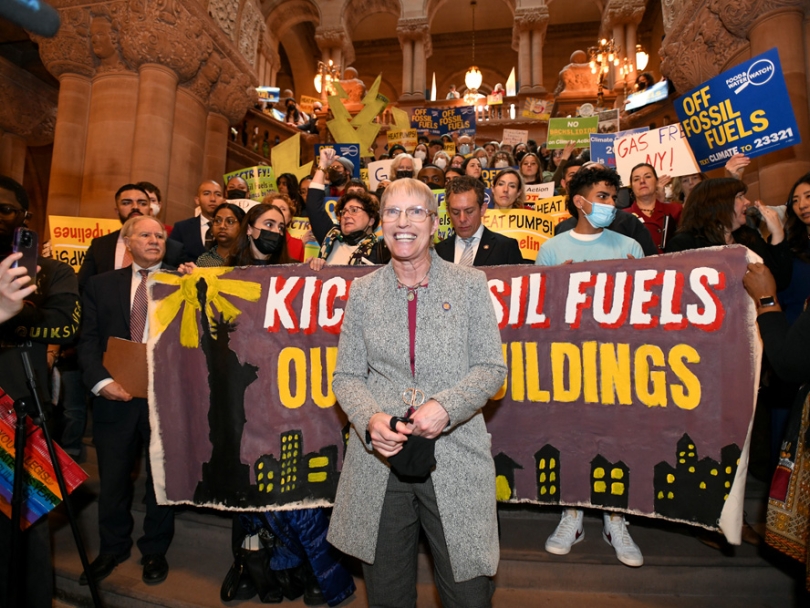
Enacts the "go green schools act" to assist school districts in converting to renewable energy sources as a primary source of energy; directs NYSERDA to conduct a study and make recommendations for such purpose.
Establishes the New York state Black history preservation commission to ensure the documentation and preservation of Black history in New York state within the state university of New York.
Requires instruction in arts and music education to be incorporated into curriculums for all public school students; requires school districts to ensure that appropriately certified teachers are providing such education; authorizes rules and regulations consistent with such provisions.
This bill establishes a program to help school districts and eligible public buildings (like housing or hospitals) with structures over 20,000 square feet reduce energy costs through mechanical insulation upgrades. It requires free, qualified energy audits to identify needed insulation work and provides competitive grants covering 50% to 75% of approved insulation costs for HVAC systems, piping, and equipment. Grants are issued on a first-come basis after an approved audit, with the program to be implemented within one year of enactment. The law defines specific requirements for qualified contractors and insulation standards to ensure energy savings.
This bill expands New York's veterans tuition awards program by allowing qualified veterans to transfer unused benefits to eligible family members, including spouses, children, or financially dependent survivors. It defines "eligible immediate family member" and sets key rules: transfers are one-time only, children receiving benefits must be under 26, and annual transfers are capped at 100. Veterans must formally designate beneficiaries through a prescribed process, and transfers cannot exceed the original award amount. The changes take effect in 2027, building on prior legislative proposals to enhance support for veterans' families.
Creates a single, streamlined process whereby a facility or program operating both a pre-kindergarten program and a daycare program may apply for and receive any certification, licensing, or other requirement otherwise necessary to operate a pre-kindergarten program or daycare program under the laws of the state.
Renames an office of addiction services and supports scholarship program the "NYS Father Peter Young Memorial Addiction Professionals Scholarship Program"; codifies the purposes of such program as offering financial education assistance to individuals pursuing a bachelor's degree in addiction studies or the education requirements for an office of addiction services and supports credential at Alfred State College, Stony Brook University or Empire State University.
Establishes a task force to conduct a comprehensive study on the presence of educator diversity in the state, state actions taken to promote educator diversity, and how the state can encourage new initiatives to enhance and promote educator diversity in New York; provides for the repeal of such provisions upon the expiration thereof.
This bill expands New York's veterans tuition awards program by allowing qualified veterans to transfer unused education benefits to eligible family members. It directly affects veterans who served at least 10 years (with exceptions for certain discharges) but didn't use their full tuition benefit, enabling them to transfer it to a spouse, child, or surviving financial dependent who lives in New York. Key provisions include requiring children receiving transfers to be under 26, capping annual transfers at 100, and establishing application rules for the transfer process. The bill repeals outdated language about "survivor" definitions and updates eligibility terms to clarify who qualifies for these transferred benefits.