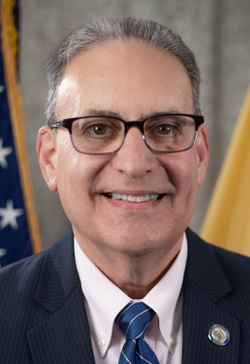
Key legislators
Who's moving labor & employment in New Jersey
Showing 4 of 4
bills
All labor & employment bills
This New Jersey bill introduces a new fee for employers who have at least 50 employees receiving Medicaid health coverage. The fee amount varies based on company size, charging $325, $525, or $725 per covered employee and their dependents depending on whether the employer has between 50-249, 250-499, or 500 or more Medicaid recipients. Employers with employees who have developmental, intellectual, or permanent physical disabilities are exempt from paying this charge. The revenue generated from these fees is intended to help cover the costs of the State Medicaid program.
This New Jersey bill (S 2962) gives educational support professionals (like cafeteria workers, bus drivers, and administrative staff) who served in the U.S. military and qualify for VA benefits up to four years of seniority credit. The credit counts military service completed before or during their school district employment, treating it as equivalent to actual work time for seniority purposes. It expands an existing benefit currently only available to teaching staff. The policy takes effect immediately upon enactment.
This bill waives initial application and issuance fees for professional and occupational licenses in New Jersey for veterans and their spouses, domestic partners, or civil union partners who already hold a current, equivalent license in another state. It applies when the applicant resides in New Jersey and the out-of-state license meets the board's equivalent or substantially equivalent requirements. The exemption covers all licenses issued by professional boards under the Division of Consumer Affairs. The bill does not affect renewal fees or licenses obtained through other pathways.
Bill A 2205 requires New Jersey's Commissioner of Health (working with the Attorney General) to create clear, easily understandable signs for emergency rooms. These signs must display VCCO services/benefits, contact details, and how to file a compensation claim. The bill mandates posting these signs in all general hospital emergency departments and satellite emergency departments, with electronic displays permitted. It aims to make VCCO information more accessible to individuals who may qualify for victim compensation after crimes. The bill takes effect four months after enactment.