Issue · Criminal Justice

Criminal Justice

Every criminal justice bill, vote, and legislator stance in New Jersey, automatically classified by Maddy, our AI policy reader.

Total bills
836
2026-2027 Regular Session
Top supporter
Paul Sarlo
100% support rate
Top opponent
Mike Testa
0% support rate
Ranked legislators
10
5 support · 5 oppose
Key legislators

Who's moving criminal justice in New Jersey

Legislators moving criminal justice in New Jersey
Legislator Party Stance Support rate Decisive votes
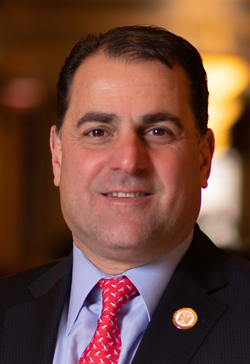
Paul Sarlo
Paul Sarlo Senate · District 36
D
Strong +
100% 14
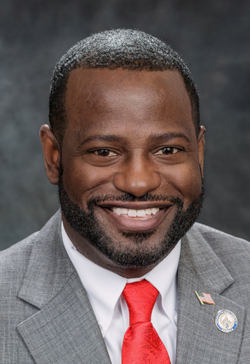
Renee Burgess
Renee Burgess Senate · District 28
D
Strong +
100% 14
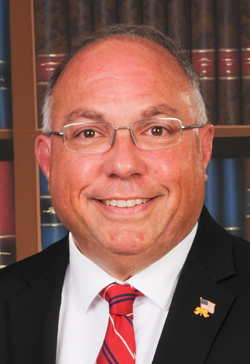
Joe Danielsen
Joe Danielsen House · District 17
D
Strong +
100% 13
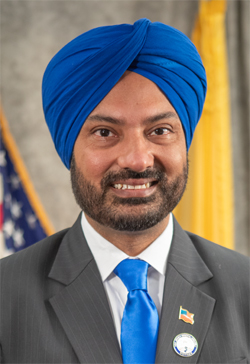
Balvir Singh
Balvir Singh House · District 7
D
Strong +
100% 12
Bob Smith
Bob Smith Senate · District 17
D
Strong +
100% 12
Mike Testa
Mike Testa Senate · District 1
R
Strong −
0% 14
Antwan McClellan
Antwan McClellan House · District 1
R
Strong −
0% 11
Paul Kanitra
Paul Kanitra House · District 10
R
Strong −
0% 11
Carmen Amato
Carmen Amato Senate · District 9
R
Strong −
0% 10
Dawn Fantasia
Dawn Fantasia House · District 24
R
Strong −
0% 10
Showing 81–90 of 836 bills

All criminal justice bills

in committee · New Jersey · General Assembly May 7, 2026

A 5007: Requires establishment of hotline for purpose of reporting certain acts of misconduct by public officials.

This bill requires New Jersey's Department of Law and Public Safety to create a 24-hour toll-free hotline within 60 days for reporting misconduct by public officials. It covers state and local government employees and allows citizens to report specific issues such as bribery, corruption, and misuse of public funds. The department must investigate all credible reports and can refer cases to law enforcement or ethics commissions for further action. Additionally, the agency must prominently display the hotline number on its website to ensure public awareness.
Sub-Topics Law Enforcement
in committee · New Jersey · General Assembly May 7, 2026

A 4928: Establishes offense of harassment of residential tenant; expands liability of certain members of limited liability company that own residential rental properties.

This bill creates a new criminal offense for landlords who harass residential tenants with the intent to force them out of their homes. It defines harassment to include actions such as cutting off essential services, threatening violence, repeatedly entering the property, or filing frivolous eviction cases. The law also expands liability for members of limited liability companies that own rental properties, holding them personally accountable for these actions. Penalties range from disorderly persons offenses to fourth- or third-degree crimes depending on the severity and frequency of the behavior, while also allowing victims to seek civil penalties and damages. Additionally, the bill provides a mechanism for prosecutors to delay charges if the landlord agrees to fix the problematic behavior within ten days.
in committee · New Jersey · General Assembly May 28, 2026

A 5189: Eliminates presumption of pretrial release when defendant is charged with contempt of domestic violence restraining order.

This bill modifies New Jersey's pretrial release laws to remove the automatic presumption of release for individuals charged with contempt of a domestic violence restraining order. Under the new rules, judges will no longer be required to release these defendants on their own recognizance or an unsecured bond simply because they meet standard safety criteria. Instead, courts must evaluate each case individually to determine if release conditions can reasonably ensure the defendant's appearance in court and the safety of others. This change directly affects defendants facing contempt charges for violating domestic violence orders, requiring a more deliberate assessment of their risk before granting freedom pending trial.
in committee · New Jersey · General Assembly May 14, 2026

A 5095: Implements procedures for automated "Clean Slate" expungements.

This New Jersey bill establishes a new "Clean Slate" process that allows individuals with certain criminal convictions to automatically request expungement without needing to file a separate petition. The law primarily affects people who have completed their sentences and paid any required fines but may still face barriers due to unpaid financial assessments or other minor delays. Key provisions include granting expungements even if court-ordered financial assessments remain unpaid due to reasons other than willful noncompliance, while transferring the debt collection responsibility to the State Treasurer. Additionally, the bill permits courts to grant expungements before the standard waiting period ends if a person has substantially complied with payment plans or faces compelling circumstances preventing full payment. This legislation aims to streamline the legal process by reducing administrative burdens and providing clearer pathways for record clearance.
Sub-Topics Courts
in committee · New Jersey · Senate May 14, 2026

S 4270: Implements procedures for automated "Clean Slate" expungements.

This bill establishes an automated "Clean Slate" expungement process in New Jersey to help individuals with criminal records clear their histories more easily. It allows people to petition for expungement even if they do not meet standard eligibility criteria, provided they have waited the required amount of time after their conviction and paid any associated court fines or fees. The law includes specific provisions for cases where financial obligations are delayed due to reasons other than intentional nonpayment, as well as exceptions for those who have substantially complied with payment plans despite facing difficult circumstances. By streamlining these procedures, the legislation aims to reduce the administrative burden on courts while offering a pathway for record clearance to eligible residents.
Sub-Topics Courts
in committee · New Jersey · Senate May 28, 2026

S 4340: Directs DOLWD to identify, and post on website, employment opportunities with minimal barriers to entry for persons returning to workforce after imprisonment.

This New Jersey bill directs the Department of Labor and Workforce Development to find and list jobs with few entry barriers for people returning to the workforce after imprisonment. The department must post these opportunities on its website and collect quarterly reports from reentry programs about employment partnerships and data. The law aims to help formerly incarcerated individuals find work by providing a centralized resource for available positions.
in committee · New Jersey · General Assembly May 4, 2026

A 4816: Revises "Administrative Procedure Act" concerning socio-economic impact statements for proposed rule-making.

This bill amends New Jersey's Administrative Procedure Act to require state agencies to prepare and publish detailed statements analyzing the socio-economic impacts of proposed rules. Specifically, agencies must include assessments of job creation or loss, effects on agriculture, housing affordability, smart growth development, and racial and ethnic community criminal justice outcomes. The legislation also mandates that these documents be made available online and distributed to the public alongside the standard notice of proposed rule-making. By formalizing these requirements, the bill aims to ensure that citizens and stakeholders receive clearer information about how new regulations might affect their communities before rules are finalized.
in committee · New Jersey · General Assembly May 4, 2026

A 4849: Creates civil and criminal penalties for invasive grooming of vulnerable adults.

This New Jersey bill establishes criminal and civil penalties for caretakers who perform invasive grooming, such as shaving or waxing, on vulnerable adults without proper authorization. The law defines "vulnerable adults" as individuals over 18 who lack the capacity to consent due to illness, disability, or incapacity, and requires both written permission from a legal guardian and a physician's certification of medical necessity for such procedures. Penalties escalate based on severity, ranging from a third-degree crime for causing minor distress to a first-degree crime if the act involves sexual gratification, repeated abuse, or recording the incident. Additionally, the bill allows affected adults to sue both the individual caretaker and their employer for damages, while explicitly removing the defense that the caretaker believed the procedure was in the victim's best interest.
in committee · New Jersey · General Assembly May 4, 2026

A 4809: Imposes notice requirement to victim or victim's family when probation or suspended sentence changes or defendant is discharged.

This New Jersey bill requires the probation division to notify victims or the nearest relatives of homicide victims when a defendant's probation or suspended sentence is modified to shorten its duration or when the defendant is discharged. The law applies specifically to individuals convicted of homicide and ensures they receive updates regarding changes that affect the length of their supervision or the end of their sentence. By mandating these notifications, the legislation aims to keep affected parties informed about significant developments in the case without altering the existing rules for other types of crimes. The act takes effect immediately upon passage.
in committee · New Jersey · Senate May 4, 2026

S 4071: Requires DLPS to establish and make available to law enforcement agencies training materials concerning interactions with hearing impaired; requires annual training for law enforcement and contracting with qualified interpreters.

This bill requires New Jersey's Department of Law and Public Safety to create training materials and an online tutorial for law enforcement officers on interacting with hearing-impaired individuals. It mandates that all state, county, municipal, and campus police departments use these resources for annual training and must contract with qualified interpreters who can respond to requests within two hours. The legislation defines a hearing-impaired person as someone unable to understand oral communication and specifies that a qualified interpreter must be certified by recognized national or state registries.
Showing 81 to 90 of 836 bills
Previous 1 … 8 9 10 … 84 Next