Issue · Criminal Justice

Criminal Justice

Every criminal justice bill, vote, and legislator stance in New Jersey, automatically classified by Maddy, our AI policy reader.

Total bills
836
2026-2027 Regular Session
Top supporter
Paul Sarlo
100% support rate
Top opponent
Mike Testa
0% support rate
Ranked legislators
10
5 support · 5 oppose
Key legislators

Who's moving criminal justice in New Jersey

Legislators moving criminal justice in New Jersey
Legislator Party Stance Support rate Decisive votes
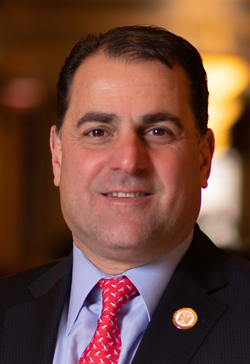
Paul Sarlo
Paul Sarlo Senate · District 36
D
Strong +
100% 14
Renee Burgess
Renee Burgess Senate · District 28
D
Strong +
100% 14
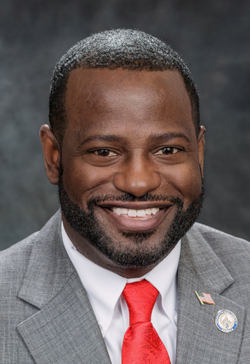
Joe Danielsen
Joe Danielsen House · District 17
D
Strong +
100% 13
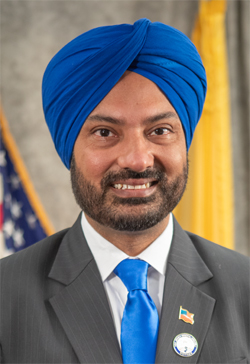
Balvir Singh
Balvir Singh House · District 7
D
Strong +
100% 12
Bob Smith
Bob Smith Senate · District 17
D
Strong +
100% 12
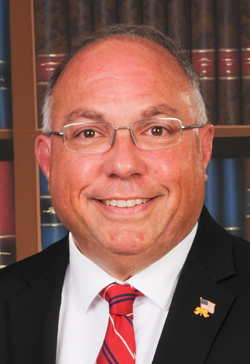
Mike Testa
Mike Testa Senate · District 1
R
Strong −
0% 14
Antwan McClellan
Antwan McClellan House · District 1
R
Strong −
0% 11
Paul Kanitra
Paul Kanitra House · District 10
R
Strong −
0% 11
Carmen Amato
Carmen Amato Senate · District 9
R
Strong −
0% 10
Dawn Fantasia
Dawn Fantasia House · District 24
R
Strong −
0% 10
Showing 701–710 of 836 bills

All criminal justice bills

in committee · New Jersey · Senate Jan 13, 2026

S 341: Authorizes municipality to enact ordinance regulating where certain sex offenders may reside.

This bill allows New Jersey municipalities to create local ordinances that prohibit certain sex offenders from living within 500 feet of schools, playgrounds, or child care centers. It applies to individuals convicted of sex offenses against minors under 18 (excluding those deemed low-risk), who must register under state law. Municipalities must map restricted zones and maintain these maps as official records, while providing exceptions for offenders in correctional facilities, mental health facilities, or with court-approved exemptions. Existing residents covered by the ordinance before its enactment are not displaced.
Sub-Topics Courts
in committee · New Jersey · Senate Jan 13, 2026

S 1859: Upgrades domestic violence-related assault under certain circumstances.

This bill (S 1859) amends New Jersey's assault statute to upgrade certain assaults to "aggravated assault" when committed against specific professionals. It directly affects individuals like firefighters, school staff (teachers, administrators, bus drivers), healthcare workers, and emergency medical personnel when they are attacked while performing their duties. The key provision adds these groups to the list of protected individuals under aggravated assault, increasing penalties for assaults targeting them. The change applies to attacks occurring during work, whether the attacker recognizes the victim's professional role or not. This is a policy adjustment to strengthen legal protections for public safety and service workers.
died · New Jersey · Senate Jan 13, 2026

S 1787: Concerns use of force by law enforcement officers under certain circumstances and requires certain reporting of use of force incidents.

S 1787 requires New Jersey's Attorney General to review and update the statewide use-of-force policy every even-numbered year (or sooner if needed), ensuring it prioritizes de-escalation, limits force to what's necessary and proportional, and treats deadly force as a last resort. It mandates public reporting of all law enforcement use-of-force incidents through a publicly accessible online database and establishes specific protocols for handling barricaded persons - especially those in mental health crises - requiring crisis intervention training for officers. The bill also requires the Police Training Commission to include barricaded-person response training in all officer basic courses. Note: This bill was withdrawn on January 13, 2026, after being approved as part of P.L.2025, c.243.
in committee · New Jersey · Senate Feb 19, 2026

S 1290: Prohibits sharing automated license plate reader information for interstate investigation concerning reproductive health care services that are legal in NJ.

This bill prohibits New Jersey law enforcement and automated license plate reader (ALPR) operators from sharing ALPR data with other states for investigations targeting people seeking or providing reproductive health care services that are legal in New Jersey (including pregnancy care, contraception, or abortion). It requires out-of-state law enforcement agencies to provide written assurance they won’t use the data for such investigations before NJ agencies share information. Violations carry civil penalties of up to $1,000 for a first offense and $5,000 for repeat offenses. The bill directly affects NJ law enforcement agencies, ALPR operators, and out-of-state agencies seeking to investigate legal reproductive health services.
in committee · New Jersey · Senate Jan 13, 2026

S 449: Establishes Governor's Survivor Leader Advisory Council in DOH; requires council to create report on human trafficking and 2026 FIFA World Cup; appropriates $1 million.

This bill creates a Governor's Survivor Leader Advisory Council within New Jersey's Department of Health to address human trafficking risks linked to the 2026 FIFA World Cup. The council, composed of survivors and experts, must evaluate existing anti-trafficking laws, recommend new policies, review assistance programs, and develop public awareness campaigns - including signage and hotlines - within 180 days of the bill's enactment. It requires the council to submit a report with specific recommendations to the Governor and Legislature, including best practices for victim identification, public service announcements, and coordination with law enforcement. The bill appropriates $1 million for the council's operations and expires after the report is submitted or one year post-World Cup, whichever comes later.
died · New Jersey · Senate Jan 13, 2026

S 2878: Establishes new mitigating factor, reduced sentencing, and resentencing for certain defendants who are victims of abuse.

This bill (S 2878) amends New Jersey sentencing law to add a new mitigating factor for defendants convicted of crimes who were victims of substantial physical, sexual, or psychological abuse that contributed to their offense. It directly affects individuals convicted of non-murder offenses (excluding certain sex offenses) who can demonstrate their abuse was a contributing factor to their crime. The key provision requires courts to consider this abuse history during sentencing, regardless of whether the defendant raised it as a defense. The bill was introduced in 2026 but withdrawn after being approved as part of P.L.2025, c.328.
Sub-Topics Sentencing
in committee · New Jersey · Senate Feb 19, 2026

S 1294: Permits exception to VCCO compensation reporting requirement for unreported sexual offenses if victim received certain forensic medical services.

S 1294 amends New Jersey's crime compensation law to allow victims of certain sexual offenses to qualify for financial assistance from the Victims of Crime Compensation Office (VCCO) without having reported the crime to police. Specifically, it removes the police report requirement for victims who received forensic medical services (like rape exams) through a county sexual assault response team within nine months of the offense - covering aggravated sexual assault, sexual assault, or related crimes. This directly affects victims who chose not to report to law enforcement but sought medical care through designated response teams. The change ensures these victims can access compensation for medical, counseling, or other eligible expenses without needing a police report. The bill does not alter other eligibility rules, such as the five-year filing limit or the $25,000 compensation cap.
in committee · New Jersey · Senate Jan 13, 2026

S 400: Provides that act of sexual penetration committed without victim's consent constitutes sexual assault; defines term "consent."

This bill updates New Jersey's sexual assault laws by defining "consent" as a "freely given, knowledgeable, and informed agreement" and stating that sexual penetration without consent constitutes sexual assault. It clarifies key terms like "sexual penetration" (including vaginal, anal, or oral contact) and "intimate parts" to ensure consistent legal application. The law directly affects individuals charged with sexual assault, requiring prosecutors to prove lack of consent rather than relying on ambiguous standards. These changes apply to all cases under New Jersey's criminal code for sexual assault and penetration, replacing outdated definitions with clearer, victim-centered language.
Sub-Topics Violent Crime
in committee · New Jersey · Senate Jan 13, 2026

S 1434: Eliminates immunity for State, county, and municipal prosecutors who fail to disclose exculpatory evidence in criminal cases.

This bill eliminates legal immunity for New Jersey prosecutors who fail to disclose evidence that could help a defendant (exculpatory evidence) in criminal cases, as required by state guidelines based on federal court rulings. It directly affects state, county, and municipal prosecutors, as well as defendants who were denied such evidence. Key mechanisms include requiring courts to notify ethics officials within 24 hours of a violation, allowing victims to sue prosecutors and their employers for damages, and removing immunity for these failures. The law also mandates that courts award attorney fees to successful plaintiffs and specifies that prosecutors must follow clear disclosure standards set by the Attorney General.
Sub-Topics Courts
in committee · New Jersey · Senate Jan 13, 2026

S 2144: Revises licensure requirements for residential substance use disorders treatment facilities or programs.

This bill (S 2144) updates licensing rules for residential substance use disorder treatment facilities in New Jersey. It requires applicants to submit independent financial audits (paid by the applicant) and undergo criminal background checks for all owners or major stakeholders (5%+ ownership), with licensure denied for financial misconduct or convictions involving fraud/dishonesty. The Department of Health must also conduct unannounced facility inspections. These changes directly affect facilities seeking or holding licenses and their owners, aiming to ensure financial accountability and safety through stricter vetting.
Showing 701 to 710 of 836 bills
Previous 1 … 70 71 72 … 84 Next