Issue · Criminal Justice

Criminal Justice

Every criminal justice bill, vote, and legislator stance in New Jersey, automatically classified by Maddy, our AI policy reader.

Total bills
320
2026-2027 Regular Session
Top supporter
Paul Sarlo
100% support rate
Top opponent
Mike Testa
0% support rate
Ranked legislators
10
5 support · 5 oppose
Key legislators

Who's moving criminal justice in New Jersey

Legislators moving criminal justice in New Jersey
Legislator Party Stance Support rate Decisive votes
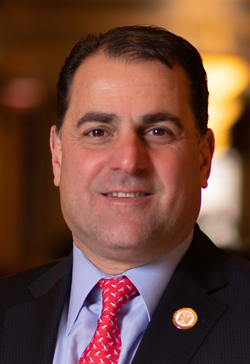
Paul Sarlo
Paul Sarlo Senate · District 36
D
Strong +
100% 14
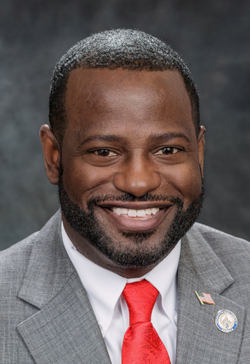
Renee Burgess
Renee Burgess Senate · District 28
D
Strong +
100% 14
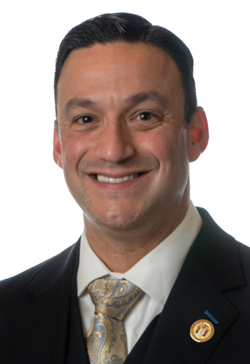
Joe Danielsen
Joe Danielsen House · District 17
D
Strong +
100% 13
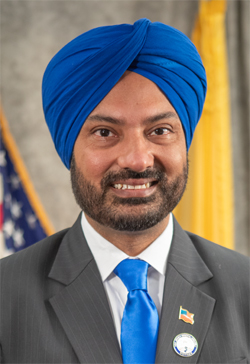
Balvir Singh
Balvir Singh House · District 7
D
Strong +
100% 12
Bob Smith
Bob Smith Senate · District 17
D
Strong +
100% 12
Mike Testa
Mike Testa Senate · District 1
R
Strong −
0% 14
Antwan McClellan
Antwan McClellan House · District 1
R
Strong −
0% 11
Paul Kanitra
Paul Kanitra House · District 10
R
Strong −
0% 11
Carmen Amato
Carmen Amato Senate · District 9
R
Strong −
0% 10
Dawn Fantasia
Dawn Fantasia House · District 24
R
Strong −
0% 10
Showing 291–300 of 320 bills

All criminal justice bills

in committee · New Jersey · Senate Jan 13, 2026

S 128: Upgrades offense of criminal mischief if person interrupts or impairs power supply.

S 128 amends New Jersey's criminal mischief law to specifically upgrade the offense when someone intentionally interrupts or impairs the supply of power. Currently, causing such power disruption is a third-degree crime (3-5 years in prison, up to $15,000 fine), but this bill makes it a second-degree crime (5-10 years, up to $150,000 fine). The change directly affects individuals who deliberately disrupt power infrastructure, such as damaging electrical lines or systems. This policy update increases penalties for power-related disruptions without altering the definition of the crime.
Sub-Topics Corrections
in committee · New Jersey · Senate Jan 13, 2026

S 1452: Affords civil immunity to private colleges and their police officers in certain cases.

This bill provides legal protection by granting civil immunity to police officers employed by private nonprofit colleges and the colleges themselves. If these officers act in good faith while enforcing laws, they and their institutions cannot be sued for damages. The immunity does not exceed the protections already available to other duly appointed police officers. The law takes effect immediately upon passage.
Sub-Topics Policing
in committee · New Jersey · Senate Jan 13, 2026

S 1036: Requires automatic waiver of juvenile age 16 and older to be tried as adult for criminal matters.

New Jersey's S 1036 would require courts to automatically send juveniles aged 16 or older to adult court for any crime they allegedly committed, if there's probable cause the act would be a crime if committed by an adult. This applies to all offenses, including serious crimes like homicide, robbery, sexual assault, and firearm violations, removing judicial discretion that currently allows courts to deny waivers based on factors like the juvenile's age, maturity, or prior history. The bill changes the current process where prosecutors must seek a waiver and courts weigh specific factors before deciding. It directly affects juveniles 16 and older charged with crimes that would be prosecutable as adult offenses. The bill is currently pending in the Senate Judiciary Committee.
in committee · New Jersey · Senate Jan 13, 2026

S 576: Increases mandatory minimum term of imprisonment for certain repeat sex offenders.

This bill increases mandatory minimum prison sentences for repeat sex offenders in New Jersey. It requires second or subsequent convictions for offenses like sexual assault, criminal sexual contact, or lewdness involving minors to receive at least 85% of the maximum sentence for that offense (e.g., 85% of 20 years for aggravated sexual assault), with no parole eligibility during that period. Courts may reduce sentences only if the defendant pleads guilty to a victim-centered plea agreement or if a "serious injustice" finding overrides deterrence needs, requiring specific court justification. The Attorney General must create uniform guidelines for prosecutors handling these cases, and prosecutors gain a 10-day window to appeal reduced sentences.
in committee · New Jersey · Senate Jan 13, 2026

S 456: Concerns pretrial detention for firearms offenses.

This bill amends New Jersey's pretrial detention rules to address how firearm-related offenses are evaluated. It requires courts to treat public firearm discharges (including those with "ghost guns" or conversion devices) as violent offenses in the Public Safety Assessment (PSA) risk tool, rather than categorizing them as lesser crimes like mischief. This change directly affects defendants charged with firearm offenses that currently don't trigger violent offense status under the PSA, potentially leading to stricter pretrial detention decisions for such cases. The amendment ensures the PSA more accurately reflects the danger posed by modern firearm threats, as highlighted in a 2024 state commission report.
Sub-Topics Firearms
in committee · New Jersey · Senate Jan 13, 2026

SR 14: Urges Congress to pass "Safe and Open Streets Act."

This is a Senate resolution (SR 14) urging Congress to pass the "Safe and Open Streets Act" (pending as S.3492/H.R.6926). The resolution states the Act would make it a federal crime to intentionally block public roads or highways to obstruct commerce or delay movement of goods. It cites disruptions from protests - like those in New York City and Los Angeles - as justification, noting such blockages endanger people, disrupt emergency services, and divert law enforcement resources. The resolution itself does not create law but formally requests Congress enact the proposed federal criminal penalty.
in committee · New Jersey · Senate Jan 13, 2026

S 1942: Establishes procedures for disqualification from public office or employment upon conviction of certain crimes; creates registry.

This bill requires immediate forfeiture of any public office, position, or employment (elected or appointed) in New Jersey state or local government upon conviction for certain crimes, including dishonesty offenses or third-degree crimes or higher. It automatically disqualifies individuals convicted of crimes "involving or touching" their public role from holding future public office, with disqualification orders entered by courts at sentencing. The bill establishes a central registry maintained by the Administrative Office of the Courts to track all disqualified individuals. It directly affects current and future public officials convicted of specified offenses, creating a permanent bar to public service.
Sub-Topics Sentencing
in committee · New Jersey · Senate Jan 13, 2026

S 2482: Provides that records of convictions for carjacking and promoting prostitution of child shall not be expunged.

This bill (S 2482) amends New Jersey's expungement law to permanently prevent the removal of criminal records for two specific offenses: carjacking convictions and convictions for promoting the prostitution of a child. It directly affects individuals convicted of these crimes, ensuring their records remain accessible in background checks and public records indefinitely. The law changes the eligibility criteria under N.J.S.2C:52-2 by explicitly excluding these offenses from all expungement possibilities, regardless of other factors like time passed or prior convictions. This means convicted individuals cannot petition to have these records sealed or erased, maintaining transparency for employers, landlords, and law enforcement.
Sub-Topics Law Enforcement
in committee · New Jersey · Senate Jan 13, 2026

S 1545: Criminalizes fifth or subsequent drunk driving offenses.

This bill (S 1545) makes a fifth or subsequent drunk driving conviction a criminal offense (third degree) in New Jersey, rather than a traffic violation. It imposes a 10-year driver’s license suspension for repeat offenders, extending to 20 years if the offense occurs near schools (within 1,000 feet of school property, at designated school crossings, or where juveniles are present). Convicted individuals must complete alcohol education programs and pay a $100 fee, with failure to comply risking additional jail time. The bill directly affects individuals with multiple DUI convictions, particularly those driving in school zones.
in committee · New Jersey · Senate Jan 13, 2026

S 1024: Establishes rebuttable presumption of pretrial detention and increases penalties for motor vehicle theft offenses; authorizes home detention for minors adjudicated delinquent for motor vehicle theft offenses; establishes Grants for Underage Auto-Theft Risk Deterrence Pilot Program in Juvenile Justice Commission; appropriates $7 million.

New Jersey's S 1024 establishes a rebuttable presumption that defendants charged with motor vehicle theft (including theft, receiving stolen vehicles, or unlawful taking) must be detained before trial unless they prove they won’t flee or pose a danger. It increases penalties for motor vehicle theft offenses and allows home detention for minors convicted of such theft. The bill also creates a $7 million pilot program through the Juvenile Justice Commission to prevent underage auto theft, targeting risk factors like peer influence or access to vehicles. These changes directly affect individuals charged with motor vehicle theft and juveniles adjudicated for such offenses in New Jersey.
Sub-Topics Juvenile Justice
Showing 291 to 300 of 320 bills
Previous 1 … 29 30 31 … 32 Next