Issue · Labor & Employment

Labor & Employment (Public Employees)

Every labor & employment bill, vote, and legislator stance in Montana, automatically classified by Maddy, our AI policy reader.

Total bills
7
2025 Regular Session
Top supporter
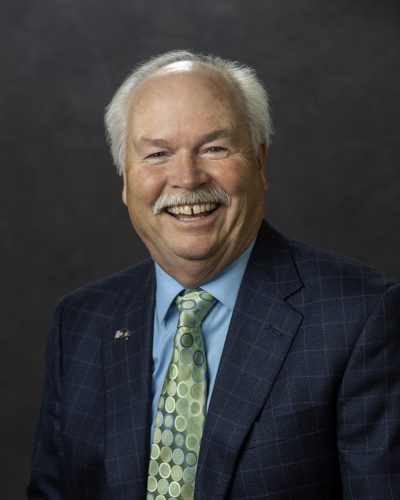
Pat Flowers
100% support rate
Top opponent
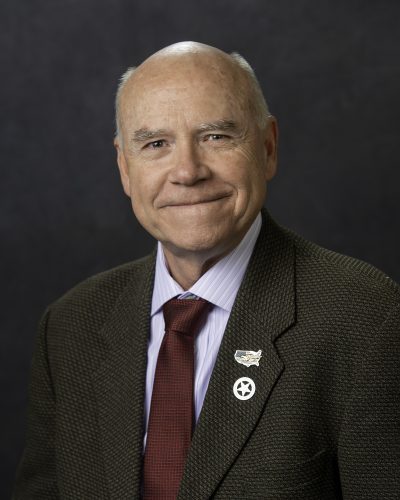
Carl Glimm
0% support rate
Ranked legislators
10
5 support · 5 oppose
Key legislators

Who's moving public employees in Montana

Legislators moving public employees in Montana
Legislator Party Stance Support rate Votes
Pat Flowers
Pat Flowers Senate · District 31
D
Strong +
100% 8
Willis Curdy
Willis Curdy Senate · District 49
D
Strong +
100% 8
Mike Yakawich
Mike Yakawich Senate · District 24
R
Strong +
100% 7
Mary Caferro
Mary Caferro House · District 81
D
Strong +
100% 6
Paul Tuss
Paul Tuss House · District 27
D
Strong +
100% 6
Carl Glimm
Carl Glimm Senate · District 3
R
Strong −
0% 9
Ken Bogner
Ken Bogner Senate · District 18
R
Strong −
0% 9
Mark Noland
Mark Noland Senate · District 6
R
Strong −
0% 8
Theresa Manzella
Theresa Manzella Senate · District 44
R
Strong −
0% 8
Matt Regier
Matt Regier Senate · District 5
R
Strong −
10% 10
Showing 7 of 7 bills

All labor & employment bills

introduced · Montana · Legislature Feb 21, 2025

LC 1366: Revise labor laws relating to employers and public service

This bill prevents employers from stopping employees from running for or accepting public office at the city, county, or state level. It also protects workers from retaliation or discrimination if they pursue these public positions. The law requires employers to allow employees on mandatory public service leave to use their own leave time and benefits without permission, and it prohibits requiring work during that leave. Additionally, if an employer permits personal use of company equipment like phones or computers, employees may continue using them while serving in public office. These rules apply to all employers within Montana and aim to remove barriers for workers considering public service roles.
Sub-Topics Public Employees
died · Montana · House May 20, 2025

HB 700: Changing the amortization period for statewide DB retirement systems to 25 years

House Bill 700 (HB 700) proposes to shorten the maximum amortization period for statewide defined benefit public employee retirement systems from 30 years to 25 years. This change directly affects the funding requirements for various public employee retirement plans, including those for general public employees, judges, highway patrol officers, sheriffs, police officers, firefighters, and teachers. The bill specifies that contributions must be sufficient to cover future benefits and amortize unfunded liabilities over this shorter 25-year period. Additionally, it establishes that no new benefits can be added to these systems unless they can amortize within 25 years or less and are projected to be fully funded.
signed · Montana · House May 16, 2025

HB 85: Reinstating former employer contributions for JRS, HPORS, SRS, GWPORS

HB 85 reinstates former employer contribution rates for four specific public employee retirement systems: the Judges', Highway Patrol Officers', Sheriffs', and Game Wardens' and Peace Officers' Retirement Systems. This directly impacts the governmental entities that employ these personnel and contribute to their pensions. The bill also amends the state's property tax levy calculation procedures, outlining how local governments determine their maximum mill levies based on factors like prior year assessments and newly taxable property. It specifically exempts certain levies, such as those funding the sheriffs' retirement system, from these new
signed · Montana · House Mar 27, 2025

HB 13: State Employee Pay Plan

HB 13 revises pay and benefits for all Montana state employees, including a $1.00 hourly or 2.5% base salary increase (whichever is greater) effective July 1, 2025, plus one-time lump-sum payments based on work hours: $1,040 for full-time employees, $780 for 20-40 hours/week, and $520 for under 20 hours/week. It also adjusts per diem rates for travel, increasing daily meal allowances to $8.25 (breakfast), $9.25 (lunch), and $16.00 (dinner) for in-state travel. The bill applies broadly to all state employees and was enacted into law on March 27, 2025.
Sub-Topics Public Employees
died · Montana · Legislature May 26, 2025

LC 1409: Create a public employee bill of rights

This bill (LC 1409), titled "Create a public employee bill of rights," was proposed to establish specific rights for state and local government employees. The bill never advanced beyond the drafting stage, as it was placed on hold in February 2025 and ultimately died in process on May 26, 2025. No concrete policy provisions were enacted, as the bill did not reach a vote or committee hearing. Therefore, it did not directly affect any public employees or create new legal protections. The proposal was procedural in nature but never became law.
Sub-Topics Public Employees
signed · Montana · House May 13, 2025

HB 823: Revise laws relating to the state plan committee

HB 823 revises the State Plan Committee, which oversees career and technical education in Montana. It expands the committee by adding three new members appointed by the Commissioner of Labor and Industry, representing the state workforce innovation board, business, and labor communities. The bill also coordinates the committee's meetings with the Montana State Workforce Innovation Board and requires its state plan to align with the federal Workforce Innovation and Opportunity Act combined state plan.
Sub-Topics Public Employees
signed · Montana · House May 19, 2025

HB 667: Revise labor laws relating to employers and public service

HB 667 revises labor laws regarding employees who seek or hold public office. It prohibits employers from restricting employees from seeking election or appointment to city, county, or state public office, or from retaliating against them for doing so. During an employee's mandatory leave of absence for public service, employers cannot require the employee to use personal leave or benefits without their consent, nor can they require them to perform work. If an employer generally permits personal use of company devices, they cannot prohibit an employee on public service leave from using those devices for personal reasons.