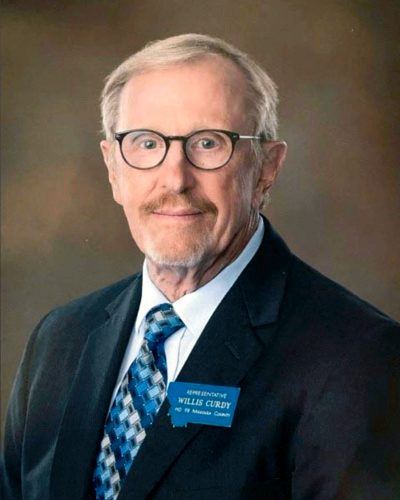
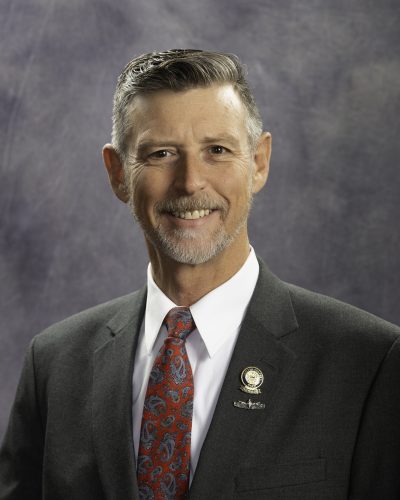
SB 394 would have expanded Montana's workers' compensation system to cover posttraumatic stress disorder (PTSD) for eligible first responders. It defines "first responder" to include firefighters, law enforcement officers, detention center/prison staff, and emergency care providers, requiring a diagnosis per the latest DSM-5 manual that links PTSD directly to work duties. The bill amended existing laws to allow PTSD claims under workers' compensation, subject to standard procedural requirements. However, this bill was vetoed by the Governor on June 9, 2025, so it did not become law.
SB 321 proposes three tax credits to support Montana families and child-care providers. It would provide a $1,200 annual credit per child under age 5 for eligible residents (with income limits of $40,000 single/$80,000 married filing jointly), a $1,000 credit for child-care workers employed at least 6 months (20+ hours weekly), and a $2,500 employer credit for businesses offering dependent care assistance. All credits adjust annually for inflation and require filing a Montana tax return. The bill directly affects low-to-moderate-income families, child-care workers, and employers who provide on-site or subsidized care. (Note: The bill died in committee on May 23, 2025, and did not become law.)
HB 640 would revise the Firefighters' Unified Retirement System (FURS) to allow certain airport authority employees to participate. The bill defines "public safety officer" as an airport authority employee who serves as both a full-paid firefighter and a sworn peace officer. It would permit airport authorities to elect to join FURS for these public safety officers, who are currently covered by the Public Employees' Retirement System. Existing eligible employees would have 90 days to choose whether to remain in PERS or join FURS.
HB 697 clarifies that public employees in Montana do not have an expectation of privacy in electronic communications sent or received through systems provided and managed by their public agency. This means that any communications, including personal ones, made using public agency equipment are subject to public records laws and agency policies. As a result, public agencies would not be required to review these communications for privacy implications when responding to public information requests.
HB 552 revises Montana's workers' compensation laws to include coverage for Posttraumatic Stress Disorder (PTSD). This bill directly affects first responders, such as firefighters, law enforcement officers, dispatchers, and employees of county detention centers or prisons. For a claim to be compensable, the PTSD must be diagnosed according to the Diagnostic and Statistical Manual of Mental Disorders and be caused by events arising out of their employment, excluding personnel-related actions. This creates an exception for first responders' PTSD claims within the state's existing policy that generally excludes stress claims from workers' compensation.
HB 635 proposes to prohibit state and local government agencies from funding, establishing, or supporting Diversity, Equity, and Inclusion (DEI) programs. It would prevent these agencies from requiring employees to participate in DEI programs or spending public funds on related services or staff. The bill defines DEI programs as activities that focus on describing power structures, methods to dismantle them, or advancing theories like implicit bias or systemic oppression. However, it includes exceptions for complying with federal law, specific state human rights laws, court orders, and offering sexual harassment training. This legislation directly affects state and local government agencies and their employees in Montana.
SB 326 revises Montana's MEDIA Act film tax credits, extending them through 2045 and increasing the aggregate credit limit. The bill provides additional tax credits for production companies that hire veterans and enrolled tribal members. It establishes a fee for unused allocated credits, with these funds directed to a new film industry workforce training account to support workforce development. These changes aim to expand job opportunities and encourage investment in Montana's media manufacturing sector.
HB 543 repeals the termination date for laws requiring the reporting and disclosure of violence against healthcare employees. Previously, these reporting requirements were set to expire on a specific date. By repealing that sunset clause, this bill makes the reporting and disclosure obligations permanent. This ensures that information about violence affecting healthcare workers will continue to be collected and shared indefinitely.
This bill revises and expands supplemental employer contributions to several state retirement systems, directly impacting state and local government employers and the retirement funds for their employees. For the Public Employees' Retirement System (PERS), it extends the schedule of increasing supplemental employer contributions through fiscal year 2035 and then sets a higher rate. Additionally, the bill introduces new supplemental employer contribution rates for the Highway Patrol Officers' Retirement System, the Sheriffs' Retirement System, and the Game Wardens' and Peace Officers' Retirement System. These new contributions are intended to help address unfunded liabilities and cover the normal cost of benefits for these specific systems.
SB 7 revised the retirement eligibility criteria for members of the Highway Patrol Officers' Retirement System (HPORS) and the Sheriffs' Retirement System (SRS). It removed the requirement for members hired on or after July 1, 2023, to reach age 50 in addition to completing 20 years of service to be eligible for retirement benefits. This change would allow all members, regardless of hire date, to qualify for service retirement after 20 years of membership service. The bill was intended to apply retroactively to those hired on or after July 1, 2023, and take immediate effect.