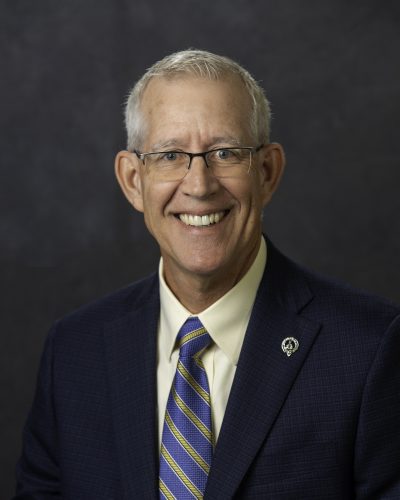
House Resolution 7 (HR 7) requests that members of the Montana State Legislature, when introducing or amending bills to include new spending, also identify existing programs from which funds would be reallocated to cover those new appropriations. This means any bill proposing new expenditures would need to specify how those funds would be offset within the state budget.
HB 451 revises how tax increment financing (TIF) is calculated for newly established targeted economic development districts and urban renewal areas. For districts created after the bill's effective date, it excludes several specific mill levies from the tax increment calculation. These exclusions include certain university system mills, a portion of elementary, high school, and state equalization mills, new voter-approved levies, and mills for general obligation bond debt service. This means that a larger share of the new property tax revenue generated in these areas would directly go to the affected taxing jurisdictions, rather than into the TIF fund.
HB 320 establishes Montana's Academic Prosperity Program for Scholars (MAPPS) to offer educational options for eligible students aged 5-19. The program provides state income tax credits to individuals and corporations who donate to educational assistance accounts for participating students, and also to parents for their qualified education expenses. A program manager oversees these funds and their distribution for educational assistance, with guidance from a new MAPPS council. Students participating in MAPPS are exempt from public school compulsory enrollment requirements.
HB 243 proposed a new state income tax credit for qualified volunteer emergency first responders. This credit would apply to individuals providing active, uncompensated volunteer service as firefighters, EMTs, auxiliary officers, or search and rescue volunteers. The credit amount would be the lesser of $15 per hour of service or $1,500 annually. If the credit exceeds a taxpayer's liability, the excess amount would be refunded. The bill's stated purpose was to retain existing volunteers and recruit new ones, with an applicability date for income tax years beginning January 1, 2026.
HB 369 authorizes the creation of county road maintenance districts to maintain roads that were previously serviced by the county but owned by other entities. These districts can be formed when at least 66% of property owners in a proposed area petition the county commissioners. The districts are funded by assessing maintenance costs directly against the benefited properties within the district. The amount assessed by a district must then be subtracted from the county's general fund dedicated to road improvement or maintenance.
HB 884 sought to establish the Montana Behavioral Health Trust Fund and an oversight board to support behavioral health services statewide. It would have created a permanent endowment, with only the interest generated from it being transferred quarterly into a special revenue account. This account would fund grants for various eligible purposes, including mental health programs in public schools, expanding crisis care services, and providing support for individuals experiencing homelessness. A newly formed seven-member board would have been responsible for administering the fund, determining grant priorities, and monitoring the effectiveness of funded services.
HB 537 proposed creating a new "birth day" tax credit for resident taxpayers in Montana upon the birth of a child. The credit would be up to $3,000, or the total of the taxpayer's Montana income taxes, federal income taxes, and FICA contributions, whichever is less. This credit would be refundable, allowing taxpayers to receive a refund even if they have no state tax liability. The credit amount would be reduced for higher-income taxpayers and capped at $1,500 in certain situations, such as for parents filing separately or unmarried parents sharing custody. If passed, it would have applied to income tax years beginning after December 31, 2025.
HB 429, titled the "Inflation Protection Act of 2025," proposed creating a new state special revenue account within the state special revenue fund. This account would be initially funded by a $50 million transfer from the state's general fund by July 15, 2025, with additional funding from future legislative transfers. The bill authorized the Board of Investments to invest the funds in this account in precious metals, digital assets, and stablecoins. Any proceeds generated from these investments would remain within the account, affecting the state's financial management and investment strategies.
House Bill 950 sought to establish and maintain a Montana trade office in Israel, staffed by the Department of Commerce. The office's primary goal was to promote trade, tourism, and cultural exchange between Montana and Israel. It aimed to strengthen ties and expand opportunities in areas such as agriculture, technology, security, and educational programs. The bill proposed appropriating $500,000 from the general fund for the biennium beginning July 1, 2025, to fund the office. This act was intended to be effective July 1, 2025, and terminate on June 30, 2033.
HB 326, titled the "State Energy Resource Severance Act," would establish a new 10% tax on the sale price of electrical energy produced in the state. This tax would apply to electricity generated from sources such as water, wind, and solar, but specifically exempts coal-fired electrical generation. The bill also reduces the existing coal severance tax rate to match this new electrical energy production tax rate. Revenue from this new tax would be allocated to special accounts, primarily for local government infrastructure projects traditionally funded by coal.