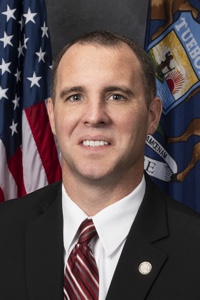
SB 236 creates a tax credit program in Michigan to incentivize the production of sustainable aviation fuel (SAF). It directly affects fuel producers who meet specific environmental standards, requiring SAF to achieve at least a 50% reduction in life-cycle greenhouse gas emissions compared to petroleum fuel and comply with ASTM aviation fuel standards. Producers must apply to the Department of Environment, Great Lakes, and Energy for certification of their tax credit, providing evidence of domestic production, emissions reduction, and proof that the fuel was used in aircraft departing Michigan airports. The program administers tax credits through a state-certified process, aiming to boost local SAF production while meeting federal environmental benchmarks.
SB 184 is a supplemental appropriations bill allocating $445.86 million for Michigan state departments, agencies, and branches for fiscal year 2024-2025. It directly affects state agencies and local governments by funding specific programs, including $1 million for the Department of Agriculture and Rural Development's food safety program and $41.77 million for capital projects. Key provisions include funding land acquisitions for parks and conservation areas across multiple counties (e.g., Lamberts Trail Park in Kent County, Munising Bay Overlook in Alger County). The bill specifies that these funds come primarily from state restricted revenues and special funds, not the general state budget.
SB 172 is a funding bill that allocates over $636 million to Michigan's Department of Natural Resources (DNR) for the 2025-2026 fiscal year. It provides budget authority for DNR operations, including state parks, wildlife programs, and Great Lakes restoration, funded through state general funds, federal grants, and special revenue accounts like park fees and hunting licenses. The bill specifies exact funding amounts for key areas such as department administration, invasive species control, and public outreach programs. This is a routine budget appropriation, not a policy change, directly affecting DNR's ability to manage natural resources and public facilities.
SB 181 is a routine appropriations bill that allocates $1.03 billion in funding for Michigan's Department of Environment, Great Lakes, and Energy for the 2025-2026 fiscal year. It provides specific funding levels for department operations, including water resources programs, environmental investigations, and administrative support, with $187.4 million coming from the state general fund. The bill directs how existing state and federal funds, along with revenue from environmental fees and special funds (like the Great Lakes protection fund), will be spent. As a procedural budget measure, it does not create new policy but enables the department to operate within its established responsibilities.