Issue · Housing

Housing (Property Development)

Every housing bill, vote, and legislator stance in Maryland, automatically classified by Maddy, our AI policy reader.

Total bills
30
2026 Regular Session
Top supporter
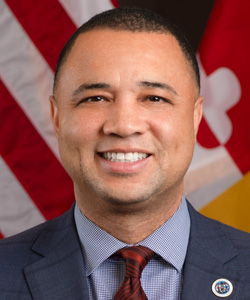
Alonzo Washington
100% support rate
Top opponent
Jack Bailey
0% support rate
Ranked legislators
10
5 support · 5 oppose
Key legislators

Who's moving property development in Maryland

Legislators moving property development in Maryland
Legislator Party Stance Support rate Votes
Alonzo Washington
Alonzo Washington Senate · District 22
D
Strong +
100% 3
Antonio Hayes
Antonio Hayes Senate · District 40
D
Strong +
100% 3
Ben Brooks
Ben Brooks Senate · District 10
D
Strong +
100% 3
Ben Kramer
Ben Kramer Senate · District 19
D
Strong +
100% 3
Brian Crosby
Brian Crosby House · District 29B
D
Strong +
100% 3
Jack Bailey
Jack Bailey Senate · District 29
R
Strong −
0% 3
Johnny Mautz
Johnny Mautz Senate · District 37
R
Strong −
0% 3
Johnny Salling
Johnny Salling Senate · District 6
R
Strong −
0% 3
Justin Ready
Justin Ready Senate · District 5
R
Strong −
0% 3
Mary Beth Carozza
Mary Beth Carozza Senate · District 38
R
Strong −
0% 3
Showing 1–10 of 30 bills

All housing bills

signed · Maryland · Senate May 26, 2026

SB 829: Residential-in-Commercial-Zone Laws - Study (Bring Back Main Street Act)

SB 829, the "Bring Back Main Street Act," requires certain Maryland counties to permit multifamily developments (buildings with five or more dwelling units sharing common walls) and mixed-use developments (residential plus non-residential uses where non-residential is under 50% of space and limited to first floors) as standard zoning. It prohibits counties from imposing restrictions on these developments, such as limiting height or density, while allowing counties to require a minimum percentage of retail space and on-site parking. The bill directly affects counties, developers, and communities by streamlining approval for housing projects that combine residential and commercial uses. This change aims to increase housing options in areas where such developments were previously restricted under local zoning rules.
in committee · Maryland · Senate Feb 10, 2026

SB 938: Community Development - Affordable Multifamily Rental Housing Stabilization Program - Establishment

SB 938 establishes Maryland's Affordable Multifamily Rental Housing Stabilization Program to provide emergency capital repair funding for private, affordable multifamily rental properties with 15+ units serving low-income households. The program requires property owners to prove they lack sufficient operating or reserve funds to cover urgent repairs, and offers low- or no-interest loans or grants up to $1 million per property annually. The Governor may allocate $5 million yearly for the program during fiscal years 2028-2031, with priority given to repairs that reduce operating costs. Applications are accepted on a rolling basis, administered by the Department of Housing and Community Development.
in committee · Maryland · House of Delegates Feb 17, 2026

HB 1501: Department of Housing and Community Development - Homeless Shelter Certification

HB 1501 requires Maryland's Department of Housing and Community Development to create a certification program for homeless shelters, mandating that all shelters obtain certification by July 1, 2026, or cease operations. The bill establishes a tiered certification system prioritizing year-round shelters (including transitional and medical care shelters) over seasonal or motel-based shelters, with staggered application deadlines for different shelter types. It mandates specific requirements for certification, including organizational documentation, regular on-site inspections, and a grievance process for residents to report violations. This directly affects all homeless shelter operators statewide, requiring them to meet new standards or face penalties for operating without certification after the deadline.
signed · Maryland · House of Delegates May 12, 2026

HB 1452: Economic Development - Prince George's County Suitland Development Authority - Established

HB 1452 establishes the Suitland Development Authority in Prince George’s County to revitalize the Suitland Road and Silver Hill Road intersection area, which has faced decades of underdevelopment and blight. The Authority will create neighborhood revitalization plans with resident input, modify project boundaries (subject to a vote), manage finances, and operate tax-exempt under certain conditions. It directly affects residents and businesses in this specific neighborhood by aiming to boost economic activity, reduce unemployment, retain existing businesses, and increase property tax revenue for the county and state. The bill creates a new government entity focused on targeted neighborhood redevelopment, not broader policy changes.
signed · Maryland · Senate May 26, 2026

SB 847: Wicomico County - Property Tax Credit - Salisbury Neighborhood Housing Services, Inc.

This bill authorizes Wicomico County or its municipalities to grant a property tax credit against local property taxes for real estate owned by Salisbury Neighborhood Housing Services, Inc. (SNHS), specifically for properties SNHS intends to transfer to private owners within a near future. The credit applies only to properties used for development, rehabilitation, and transfer to private owners, excluding administrative or warehouse buildings owned by SNHS. SNHS must submit annual reports detailing all its property holdings and transactions in the jurisdiction granting the credit. The credit becomes effective for taxable years beginning after June 30, 2026.
signed · Maryland · House of Delegates May 26, 2026

HB 1466: Department of Housing and Community Development - Appraisal Gap From Historic Redlining Financial Assistance Program - Qualified Properties

HB 1466 expands Maryland's Appraisal Gap From Historic Redlining Financial Assistance Program by redefining "qualified property" to include homes in neighborhoods **historically redlined or affected by urban renewal**, in addition to existing criteria. This change directly affects **homebuyers and developers** seeking affordable housing in these specific areas by allowing them to access financial assistance to cover appraisal gaps. The program helps address undervaluation of homes in historically redlined neighborhoods - where appraisals often fall below market value due to systemic bias - by providing funds to bridge that difference. The bill amends Maryland Code, Housing and Community Development Article, Section 4-2801(h), effective July 1, 2026.
in committee · Maryland · House of Delegates Feb 13, 2026

HB 1516: Human Services - Energy Assistance Programs - Administration and Funding

HB 1516 transfers administration of Maryland's electric universal service program from the Public Service Commission to the Office of Home Energy Programs within the Department of Human Services. It also expands the Strategic Energy Investment Fund to cover fuel assistance programs, including weatherization for low-income households. The bill directly affects low-income residents with annual incomes at or below 200% of the federal poverty level who receive energy bill assistance. Key provisions include requiring the new Office to implement the electric universal service program and continuing the weatherization component previously managed by the Department of Housing and Community Development. The changes aim to streamline administration under one agency while maintaining existing eligibility and service mechanisms.
in committee · Maryland · House of Delegates Feb 17, 2026

HB 1538: Land Use - Accessory Dwelling Units - Requirements and Prohibitions (Maryland Generational Housing Act of 2026)

HB 1538, the Maryland Generational Housing Act of 2026, requires Maryland counties and municipalities to adopt local laws by October 1, 2026, permitting at least one internal accessory dwelling unit (ADU, like a converted basement) and one external ADU (like a backyard cottage) on single-family residential properties. The bill directly affects homeowners, local governments, and utility providers by prohibiting localities from imposing off-street parking requirements on ADUs, banning utility fees for shared meters/services, and exempting ADUs from property taxes. Key provisions include removing ADUs from density calculations for zoning purposes and ensuring they meet basic safety standards without requiring additional parking. This law aims to increase housing options for multi-generational households while streamlining development for existing single-family lots.
died · Maryland · House of Delegates Mar 13, 2026

HB 983: State Tax Credits, Modifications, and Exemptions - Alterations and Repeal

HB 983 modifies Maryland's tax credit programs and exemptions. It terminates the Enterprise Zone Program and the One Maryland Economic Development Tax Credit Program on specific dates, ending eligibility for related tax benefits. The bill also limits annual claims for enterprise zone tax credits, restricts carryforwards for film production tax credits, and repeals sales tax exemptions for concrete, telecom equipment, and construction materials. Additionally, it alters eligibility rules for certain vehicle tax credits and ends property tax credits tied to enterprise zones.
signed · Maryland · House of Delegates May 26, 2026

HB 889: Wicomico County - Property Tax Credit - Salisbury Neighborhood Housing Services, Inc.

HB 889 authorizes Wicomico County or its municipalities to grant a property tax credit against local property taxes for real property owned by Salisbury Neighborhood Housing Services, Inc. (SNHS), specifically for properties they intend to transfer soon, use for housing development/rehabilitation, and are not used for administrative purposes. The nonprofit must submit annual reports detailing all its properties and transactions in the jurisdiction granting the credit. The credit terms (amount, duration, scope) would be set by the local government, and the law takes effect June 1, 2026, applying to taxes for 2026 and later.
Showing 1 to 10 of 30 bills
1 2 3 Next