Issue · Criminal Justice

Criminal Justice (Sentencing)

Every criminal justice bill, vote, and legislator stance in Louisiana, automatically classified by Maddy, our AI policy reader.

Total bills
16
2026 Regular Session
Top supporter
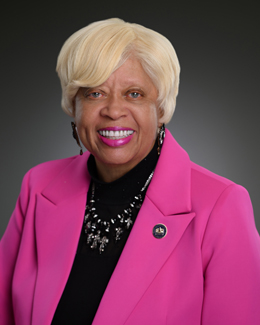
Sylvia Taylor
100% support rate
Top opponent
Larry Bagley
0% support rate
Ranked legislators
10
5 support · 5 oppose
Key legislators

Who's moving sentencing in Louisiana

Legislators moving sentencing in Louisiana
Legislator Party Stance Support rate Votes
Sylvia Taylor
Sylvia Taylor House · District 57
D
Strong +
100% 10
Barbara Carpenter
Barbara Carpenter House · District 63
D
Strong +
100% 9
Tammy Phelps
Tammy Phelps House · District 3
D
Strong +
100% 7
Gary Carter
Gary Carter Senate · District 7
D
Strong +
100% 5
Sam Jenkins
Sam Jenkins Senate · District 39
D
Strong +
100% 5
Larry Bagley
Larry Bagley House · District 7
R
Strong −
0% 5
Phil Tarver
Phil Tarver House · District 36
R
Strong −
0% 5
Valarie Hodges
Valarie Hodges Senate · District 13
R
Strong −
0% 5
Blake Miguez
Blake Miguez Senate · District 22
R
Strong −
0% 4
Patrick Connick
Patrick Connick Senate · District 8
R
Strong −
0% 4
Showing 1–10 of 16 bills

All criminal justice bills

passed · Louisiana · House Jun 3, 2026

HR 322: CRIME/HOMICIDE: Creates the Task Force on Sentencing for Second Degree Murder

This bill amends a resolution to establish a Task Force on Sentencing for Second Degree Murder in Louisiana by adding the president of the Louisiana Association of Criminal Defense Lawyers as a member. The key provision inserts a specific line item to include this legal representative in the group tasked with reviewing sentencing practices for this specific crime. Directly affected parties include the task force members who will conduct the review and the broader criminal justice system in the state. The legislation does not change existing laws or sentencing guidelines but rather creates a committee to study and potentially recommend changes.
passed · Louisiana · House May 21, 2026

HB 1107: CRIMINAL/PROCEDURE: Provides relative to determination of intellectual disability in capital cases

This bill establishes clear legal standards for determining intellectual disability in Louisiana capital cases, affecting defendants facing the death penalty and those seeking post-conviction relief. It defines intellectual disability as having an IQ of 70 or below, significant deficits in adaptive behavior, and both conditions manifesting before age 18. The law requires defendants to prove intellectual disability by a preponderance of the evidence during sentencing hearings, while post-conviction petitioners must provide clear and convincing evidence. Additionally, the bill creates an irrebuttable presumption that a petitioner does not have intellectual disability if they score above 75 on a standardized IQ test administered by a licensed professional.
Sub-Topics Sentencing
in committee · Louisiana · House Mar 24, 2026

HB 991: CRIMINAL/SENTENCING: Provides relative to sentencing guidelines

This bill updates Louisiana's sentencing guidelines to include a new factor that courts must consider when deciding whether to grant probation or suspend a sentence. It allows judges to weigh a defendant's history of being a victim of domestic abuse, human trafficking, child trafficking, or sexual assault if there is a clear connection between that victimization and the current crime. When a court finds this connection exists, it must also order a presentence investigation before making sentencing decisions. The bill also adds a general provision for courts to consider any other relevant mitigating circumstances in their sentencing determinations.
signed · Louisiana · Senate May 29, 2026

SB 410: CRIME/PUNISHMENT: Provides enhanced penalties for accessories after the fact to sex offenses. (8/1/26) (EN SEE FISC NOTE GF EX)

This bill amends Louisiana law to impose stricter penalties on individuals who help sex offenders avoid arrest or punishment after a crime has occurred. It directly affects people who harbor, conceal, or assist sex offenders with the intent to help them escape legal consequences. Under the new provisions, anyone convicted of being an accessory to a sex offense must receive a mandatory minimum sentence equal to at least half of the minimum sentence the principal offender would face, with no parole or probation allowed for cases involving life imprisonment. The law also clarifies that accessories can be prosecuted even if the original offender has not yet been caught or tried.
in committee · Louisiana · House Mar 9, 2026

HB 491: PAROLE: Provides for parole eligibility (OR SEE FISC NOTE SG EX)

HB 491 modifies Louisiana's parole eligibility rules for individuals serving life sentences. It requires life-sentence inmates to meet eight specific conditions to qualify for parole consideration, including serving at least 25 years, having no violent or sex offense convictions, completing mandatory programming (100+ hours), substance abuse treatment if applicable, educational/job training, a low-risk assessment, and a reentry program. The bill directly affects life-sentence inmates who meet all these criteria, regardless of whether they were convicted as juveniles or adults. It does not change sentencing but sets clear, measurable requirements for parole eligibility. The bill is currently in early legislative review stages.
in committee · Louisiana · House Mar 9, 2026

HB 343: PARDON/PAROLE: Provides relative to parole eligibility (OR SEE FISC NOTE GF EX)

HB 343 creates parole eligibility in Louisiana for individuals who were 18-20 years old at the time of committing their offense and are serving 30+ year sentences. To qualify, they must have served 25 years, have no major disciplinary issues in the prior 36 months, complete 100 hours of prerelease programming, substance abuse treatment (if applicable), and one of several educational or job skills programs, while also receiving a low-risk assessment and completing a reentry program. The bill specifically applies to first-time offenders with no prior sex offenses or life imprisonment convictions. It establishes concrete, measurable requirements for parole consideration rather than altering sentencing laws.
signed · Louisiana · House Apr 30, 2026

HB 111: CRIMINAL/SENTENCING: Provides relative to diminution of sentence for the earning of an associate's degree (EN SEE FISC NOTE GF EX)

HB 111 would allow incarcerated individuals in Louisiana to earn an additional 90 days of credit toward their parole supervision date if they obtain an associate's degree from a regionally accredited, department-approved educational institution while serving their sentence. This policy directly affects people in Louisiana state prisons who complete such a degree program. The key provision adds this specific credit to existing good time calculations under Louisiana law, reducing the time they must serve under parole supervision. The bill does not alter prison sentences but shortens the parole period for eligible individuals who earn the degree.
in committee · Louisiana · House Mar 9, 2026

HB 479: CRIMINAL/JUSTICE: Creates the Fiscal Truth in Sentencing Act (OR INCREASE GF EX See Note)

HB 479, the Fiscal Truth in Sentencing Act, requires Louisiana district clerks of court to provide quarterly reports to the legislative auditor containing sentencing data, including the number of sentences and total confinement years per judge, excluding traffic cases. It specifically mandates reporting on juvenile cases sentenced to incarceration (20+ years) starting in 2026. The legislative auditor uses this data, combined with annual budget figures from criminal justice agencies, to create annual reports projecting five-year incarceration costs and average per-person costs. This law aims to improve budget transparency for the criminal justice system by standardizing data collection and reporting.
signed · Louisiana · House Jun 2, 2026

HB 289: CRIMINAL/SENTENCING: Provides relative to the time period between conviction and sentencing (EN DECREASE LF EX See Note)

HB 289 sets a minimum three-day waiting period between a felony conviction and sentencing in Louisiana courts. It requires courts to delay sentencing for at least 24 hours after denying a motion for a new trial or arrest of judgment. Defendants may waive this waiting period by pleading guilty or expressly agreeing to immediate sentencing. The bill directly affects felony defendants in Louisiana criminal cases by standardizing timing between conviction and sentencing. It does not change sentencing guidelines or penalties, only the procedural timeline.
Sub-Topics Sentencing
in committee · Louisiana · House Mar 9, 2026

HB 480: COURTS/CRIMINAL: Provides for participation in reentry courts

HB 480 amends Louisiana law to clarify eligibility for reentry courts and workforce development sentencing programs. It removes a prior restriction on defendants with sex offense convictions (defined under R.S. 15:541) and specifies that participation is barred only for crimes of violence (with 15 listed exceptions, including aggravated assault, robbery, and battery of police officers). The bill also repeals outdated provisions and requires district attorneys to consent to participation for eligible violent crime cases. This directly affects criminal defendants facing charges who may qualify for reentry court programs instead of standard sentencing.
Showing 1 to 10 of 16 bills
1 2 Next