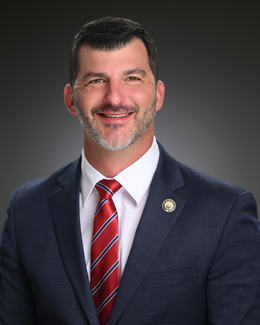
This bill requires all K-12 school employees in Louisiana to immediately report any threats of violence or terrorism to local law enforcement and, if applicable, to the school administrator. It also mandates that law enforcement agencies forward these threat reports to the state's Louisiana Fusion Center within seven days, while protecting the privacy of students and individuals who made the reports. Additionally, the bill establishes a program where the Fusion Center will conduct free physical security assessments of public schools every three years starting in 2027, with optional assessments available for charter and nonpublic schools. The assessments will identify safety vulnerabilities and provide nonbinding recommendations for improvements, but schools are not required to implement these suggestions and will be protected from liability regardless of their decisions.
HB 167 requires Louisiana's Department of Public Safety and Corrections to provide specific documentation to inmates before release from prison, primarily affecting those convicted of felony offenses. The bill mandates the department to issue a special identification card (valid for four years) to inmates without state ID, along with employment-related documents like vocational records, birth certificates, social security cards, and a resume detailing skills. It also creates a "Certificate of Employability" for inmates who completed approved rehabilitation programs, earned educational credentials, had no major disciplinary issues in the past year, and passed a skills assessment. This certificate, valid unless revoked for a new felony conviction, helps former inmates prove job readiness to employers. The law aims to improve post-release employment outcomes by streamlining access to essential identification and work documentation.
HB 579 in Louisiana establishes specific rights for sexual assault survivors by amending the state's Sexual Assault Survivor Bill of Rights. It requires that unreported sexual assault evidence collection kits be preserved without cost for at least 20 years (or longer per state policy), ensures survivors are notified of all their rights under the law, and confirms survivors retain any additional rights granted by other Louisiana laws. The bill directly affects individuals who have experienced sexual assault in Louisiana, focusing on preserving evidence and ensuring awareness of legal protections. These provisions aim to strengthen support systems for survivors through concrete policy changes in evidence handling and rights communication.
HB 590 creates two new programs to improve communication during traffic stops for drivers with specific conditions. The Green Envelope Program provides specially designed green envelopes (for drivers with mental health conditions or their guardians) and the Blue Envelope Program provides blue envelopes (for drivers with autism spectrum disorder or their guardians). Each envelope includes exterior communication guidelines for law enforcement and can hold essential documents like licenses, registrations, and medical information, with no medical documentation required to request either envelope. The programs aim to help officers interact more effectively during stops, directly affecting drivers with these conditions and their families.
HB 769 requires courts to hold a domestic abuse offender without bail for 48-72 hours (a "cooling off" period) after arrest for specific offenses like domestic abuse battery, violation of protective orders, or stalking involving family, household, or dating partners. This applies to defendants charged with offenses listed in the bill, directly affecting those arrested for these crimes and the courts handling their cases. The bill mandates a court hearing about bail conditions within five days (excluding weekends/holidays) if bail isn't set immediately during this holding period. It does not change the definition of offenses but modifies the immediate detention and hearing process for these cases. The law aims to provide safety time for victims before bail decisions.
HB 511 creates a grant program within Louisiana's Commission on Law Enforcement to fund pursuit intervention technologies for state, parish, and municipal police departments. The bill authorizes funding for specific safety tools like GPS tracking projectiles, vehicle-stopping nets, and remote tire deflation devices to safely end high-speed chases. Agencies must integrate these technologies into their use-of-force policies to qualify for grants, with priority given to those emphasizing reduced manual deployment risks. Funds may come from state, federal, or other sources aligned with Louisiana's Strategic Highway Safety Plan. The program aims to improve officer and public safety during vehicle pursuits by supporting technology adoption.
HB 823 establishes a pilot program in Orleans Parish that offers homeless individuals facing criminal charges an alternative to court proceedings. Instead of traditional sentencing, eligible defendants can participate in a diversion program providing housing assistance, mental health services, job training, and substance abuse treatment. If participants successfully complete the program’s requirements, the criminal charges are dismissed without a conviction. The program requires annual evaluations and reporting to the Louisiana Supreme Court, aiming to reduce recidivism, court workload, and prison overcrowding while addressing homelessness through community partnerships.
This resolution establishes a task force to evaluate the 18th Judicial District Court Drug Court Program and related behavioral health services for incarcerated individuals in Iberville, Pointe Coupee, and West Baton Rouge Parishes. The eleven-member group includes representatives from the courts, health and corrections departments, mental health and substance abuse professionals, and legislative leaders. Their mandate is to examine specific operational aspects such as recidivism rates, treatment effectiveness, mental health evaluation timeliness, and the costs of the program compared to standard incarceration. The task force must hold its initial meeting within sixty days and submit a final report with findings and recommendations to state committees by February 1, 2027.
This bill amends a resolution to establish a Task Force on Sentencing for Second Degree Murder in Louisiana by adding the president of the Louisiana Association of Criminal Defense Lawyers as a member. The key provision inserts a specific line item to include this legal representative in the group tasked with reviewing sentencing practices for this specific crime. Directly affected parties include the task force members who will conduct the review and the broader criminal justice system in the state. The legislation does not change existing laws or sentencing guidelines but rather creates a committee to study and potentially recommend changes.
HB 1247 establishes a statewide Sexual Assault Nurse Examiner Coordinator to oversee and support forensic care for sexual assault survivors across the state. The bill directly affects healthcare providers, law enforcement agencies, and survivors by creating a centralized role to improve the consistency and quality of medical examinations and evidence collection. Key provisions include defining the coordinator's responsibilities, setting up a funding mechanism, and outlining procedures for training and certification of Sexual Assault Nurse Examiners. The legislation aims to streamline the response to sexual assaults by ensuring survivors receive standardized, trauma-informed care from qualified professionals.