Issue · Criminal Justice

Criminal Justice (Policing)

Every criminal justice bill, vote, and legislator stance in Iowa, automatically classified by Maddy, our AI policy reader.

Total bills
35
2025-2026 Regular Session
Top supporter
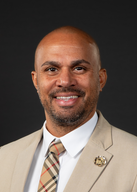
Bill Dotzler
100% support rate
Top opponent
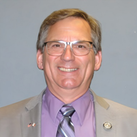
Kevin Alons
25% support rate
Ranked legislators
10
5 support · 5 oppose
Key legislators

Who's moving policing in Iowa

Legislators moving policing in Iowa
Legislator Party Stance Support rate Votes
Bill Dotzler
Bill Dotzler Senate · District 31
D
Strong +
100% 4
Jeff Taylor
Jeff Taylor Senate · District 2
R
Strong +
100% 3
Dan Dawson
Dan Dawson Senate · District 10
R
Support
67% 3
Doug Campbell
Doug Campbell Senate · District 30
R
Support
67% 3
Izaah Knox
Izaah Knox Senate · District 17
D
Support
67% 3
Kevin Alons
Kevin Alons Senate · District 7
R
Oppose
25% 4
Mike Zimmer
Mike Zimmer Senate · District 35
D
Oppose
25% 4
Tom Townsend
Tom Townsend Senate · District 36
D
Oppose
25% 4
Amy Sinclair
Amy Sinclair Senate · District 12
R
Oppose
33% 3
Janet Petersen
Janet Petersen Senate · District 18
D
Oppose
33% 3
Showing 11–20 of 35 bills

All criminal justice bills

passed · Iowa · House Mar 31, 2026

HF 2629: A bill for an act relating to trespass, and providing penalties.

HF 2629 proposes a new criminal offense for "unlawful squatting" in Iowa, targeting individuals who enter and occupy someone else's property without legal permission. It defines unlawful squatting as entering and residing on a dwelling, commercial building, or vacant property without showing valid documents like a lease, deed, rental receipt, or owner authorization - unless the person is an immediate family member of the owner. Violations are classified as a serious misdemeanor (first offense), aggravated misdemeanor (second), or class D felony (third+), with fines and jail time increasing for repeat offenses. The bill also requires property owners (or their authorized representatives) to report squatting to police and allows victims to sue for damages, while exempting law enforcement acting in good faith. This is a proposed law introduced on February 19, 2026, not yet enacted.
in committee · Iowa · House Feb 10, 2026

HF 2369: A bill for an act establishing procedures and requirements for reverse-location information searches by law enforcement or any governmental entity.

HF 2369 requires law enforcement to obtain a search warrant before using reverse-location searches (like tracking all devices in a crime area or cell tower locations) for violent felony investigations with an imminent public safety threat. Warrant applications must include a map of the area, evidence of probable cause, and a notice that the search may capture innocent people's devices. Courts must order all collected location data to be anonymized before sharing it with police. This bill directly affects how law enforcement gathers location data and protects the privacy of individuals not suspected of a crime.
died · Iowa · House Apr 8, 2026

HF 2533: A bill for an act relating to the safety of persons in certain professions involved with the judicial system, including authorizing a judicial officer, attorney general, deputy attorney general, or assistant attorney general to be issued a professional permit to carry weapons, establishing the criminal offenses of threatening and the malicious sharing of personal information of a judicial officer or a judicial officer’s immediate family, and considering true threats to public officials as harassment, and providing penalties.

HF 2533 creates new protections for judicial professionals in Iowa. It allows judicial officers, attorneys general, and their deputies to obtain special permits enabling them to carry concealed weapons anywhere in the state (except openly in courtrooms), with requirements similar to police training. The bill also establishes two new crimes: threatening a judicial officer or their immediate family (a class C felony) and maliciously sharing their personal contact information (a serious misdemeanor), treating true threats against officials as harassment. These provisions directly affect judges, prosecutors, and their families by enhancing safety measures and increasing penalties for targeted threats.
introduced · Iowa · House Feb 19, 2026

HF 2637: A bill for an act relating to the confidentiality of peer support communications for public safety officers and civilian employees.

HF 2637 protects confidential conversations between public safety workers (including police officers, firefighters, emergency medical staff, and civilian employees in these agencies) and their peer support counselors. It prohibits counselors from disclosing these communications in investigations, disciplinary actions, or legal proceedings, except when the conversation involves a plan to commit a crime, an explicit threat of harm, or mandatory reporting requirements like child abuse. The bill defines "confidential communication" as any discussion during peer support sessions and ensures these protections do not limit employers' ability to direct staff to employee assistance programs. This law aims to encourage open mental health support by preventing fear of professional consequences for sharing sensitive information.
Sub-Topics Policing Mental Health
passed · Iowa · Senate Mar 19, 2026

SF 2283: A bill for an act relating to the use of unmanned aerial vehicles by law enforcement officers.

Iowa's SF 2283 restricts law enforcement use of drones (unmanned aerial vehicles) for general traffic enforcement, prohibiting state or local police from using them except in specific situations. The bill allows certified officers to operate drones only to assist in apprehending drivers fleeing police during a pursuit under Iowa Code §321.279, and to cite traffic violations committed during that pursuit. Operators must hold FAA certification, register drones with the FAA, avoid controlled airspace, and follow aviation notices, with noncompliance making them liable for damages. Evidence collected by drones under this exception is admissible in criminal cases against fleeing drivers, but otherwise drone-collected information is inadmissible in court unless obtained with a search warrant.
passed · Iowa · Senate Mar 11, 2026

SF 2400: A bill for an act relating to assaults on persons engaged in certain occupations and harassment against public utility employees or contractors, and making penalties applicable.

This bill (SF 2400) strengthens penalties for assaults against specific public safety and service workers in Iowa. It adds "employee or contractor of a public utility engaged in public utility responsibilities" to the list of protected occupations, expanding existing assault penalty tiers. Assaults causing injury or using weapons against these workers become class C felonies, while assaults involving spitting or saliva contact are classified as aggravated misdemeanors requiring a minimum 7-day jail term. The bill directly affects public utility employees and contractors, as well as other covered professions like police, firefighters, and healthcare workers, by increasing legal consequences for violence against them.
in committee · Iowa · House Jan 30, 2026

HF 2233: A bill for an act relating to facial coverings worn by peace officers and providing penalties.

This Iowa bill prohibits peace officers (including state troopers, city/county police, and federal/state agency officers) from wearing opaque facial coverings like balaclavas or tactical masks during duty, except for clear face shields, medical masks, motorcycle helmets, or safety gear. Violating this would be a serious misdemeanor (up to 1 year in jail or $2,560 fine). Crucially, if an officer commits misconduct (e.g., false arrest) while wearing a prohibited covering, they lose legal immunity and could face $10,000+ in damages. The bill specifically defines "facial covering" to exclude items used for medical protection, safety, or operational needs.
in committee · Iowa · House Feb 5, 2026

HSB 612: A bill for an act relating to the use of unmanned aerial vehicles by law enforcement officers.

This bill (HSB 612) prohibits Iowa law enforcement from using drones for routine traffic enforcement, except when assisting in pursuits of drivers evading police under Iowa Code section 321.279. It allows officers to operate drones during such pursuits to cite traffic violations committed while fleeing. The bill also restricts drone evidence in court: footage is inadmissible unless obtained from public airspace, visible to the public, or gathered legally under state/federal law. These provisions directly affect law enforcement practices and court proceedings involving drone-collected evidence.
in committee · Iowa · House Jan 29, 2026

HSB 509: A bill for an act relating to level II law enforcement academy training programs.

This bill sets new requirements for Iowa's Level II law enforcement academy training programs. To qualify, applicants must show they completed a two- or four-year police science or criminal justice degree from an accredited school approved by the academy, plus meet specific qualifications for military veterans or federal officers. It also requires individuals to be hired by a law enforcement agency within 18 months of finishing the training to maintain certification. The bill directly affects aspiring law enforcement officers seeking Level II certification in Iowa.
in committee · Iowa · House Jan 28, 2026

HF 2139: A bill for an act related to eluding, including aggravated eluding and fresh pursuit, and providing penalties.

HF 2139 amends Iowa law to address fleeing police across state lines. It defines "aggravated eluding" as knowingly crossing into another state while being pursued without yielding to police, making it a class D felony punishable by up to five years in prison and fines up to $10,245. The bill also allows Iowa officers to continue pursuing and arresting drivers in other states during "fresh pursuit" (defined as pursuit without unreasonable delay), requiring them to report the arrest to that state's authorities and subjecting the driver to extradition. This directly affects drivers fleeing police across state borders and Iowa law enforcement officers conducting interstate pursuits.
Showing 11 to 20 of 35 bills
Previous 1 2 3 4 Next