Issue · Housing

Housing (Property Development)

Every housing bill, vote, and legislator stance in Indiana, automatically classified by Maddy, our AI policy reader.

Total bills
4
2026 Regular Session
Top supporter
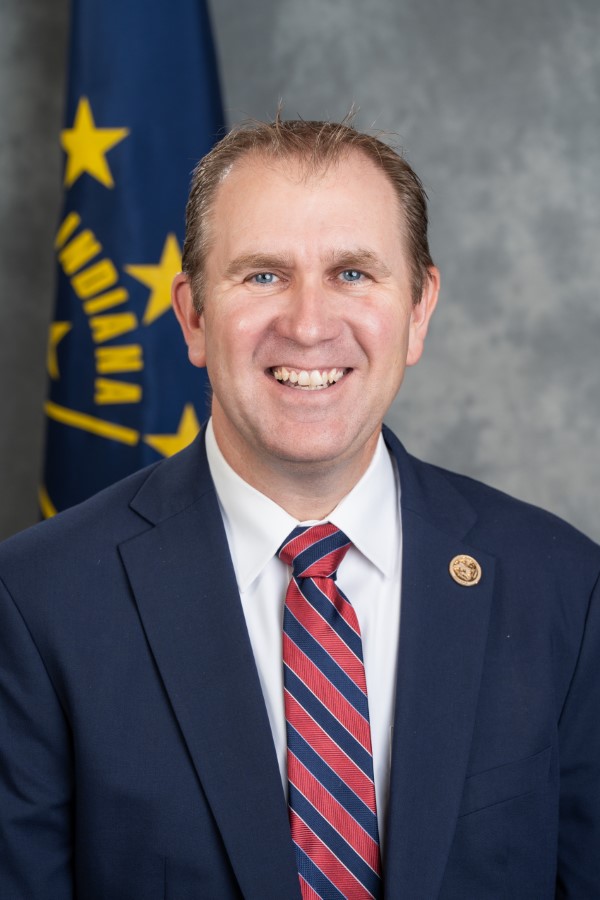
Mike Aylesworth
100% support rate
Top opponent
Craig Haggard
0% support rate
Ranked legislators
10
5 support · 5 oppose
Key legislators

Who's moving property development in Indiana

Legislators moving property development in Indiana
Legislator Party Stance Support rate Votes
Mike Aylesworth
Mike Aylesworth House · District 11
R
Strong +
100% 4
Ryan Dvorak
Ryan Dvorak House · District 8
D
Strong +
100% 4
Blake Doriot
Blake Doriot Senate · District 12
R
Strong +
100% 3
Brett Clark
Brett Clark Senate · District 24
R
Strong +
100% 3
Brian Buchanan
Brian Buchanan Senate · District 7
R
Strong +
100% 3
Craig Haggard
Craig Haggard House · District 57
R
Strong −
0% 3
Eric Bassler
Eric Bassler Senate · District 39
R
Strong −
0% 3
Jim Buck
Jim Buck Senate · District 21
R
Strong −
0% 3
Jim Tomes
Jim Tomes Senate · District 49
R
Strong −
0% 3
Lonnie Randolph
Lonnie Randolph Senate · District 2
D
Strong −
0% 3
Showing 4 of 4 bills

All housing bills

in committee · Indiana · House Jan 8, 2026

HB 1403: First time home buyer savings program.

Establishes the first time home buyer savings program (program) for the purpose of assisting first time home buyers who seek to open a first time home buyer savings account (account) at a financial institution to save money for the purchase of a single family residence. Requires the Indiana housing and community development authority to administer the program, to prepare and supervise the issuance of public information concerning the program, and to prescribe various forms for use by financial institutions that choose to offer accounts. Specifies that: (1) money in an account (including all earnings or interest on an account) is exempt from taxation in Indiana; and (2) withdrawals from an account used for a down payment and allowable closing costs for the purchase of a single family residence; are exempt from state adjusted gross income taxation. Creates a state adjusted gross income tax credit for contributions to an account (credit) in an amount equal to the lesser of: (1) 20% multiplied by the amount of the total contributions made to the account during a taxable year; or (2) $5,000. Requires repayment of all or a part of the credit in a taxable year in which the taxpayer withdraws funds from an account for purposes other than payment of a down payment and allowable closing costs.
signed · Indiana · House Mar 4, 2026

HB 1001: Housing matters.

Revises the allocation of money available for making loans from the residential housing infrastructure assistance revolving fund. Adds requirements regarding the location of impact zones designated by a county, city, or town (unit) after June 30, 2026. Requires a unit to approve a project that complies with the legal restrictions in effect on the date the project's permit application is submitted. After December 31, 2026, restricts a unit's ability to impose and increase fees related to building approvals and permits. Delays the implementation of building permit increases to 180 days after publication of the ordinance. Beginning January 1, 2027, requires a unit to annually report the unit's housing status to the Indiana housing and community development authority. Requires the department of environmental management to review and update its Indiana Storm Water Quality Manual not later than December 1, 2026. Prohibits the state or local government from requiring a person intending to fill land in a flood plain to provide compensatory storage at a ratio greater than three (mitigated land) to one (filled land). Requires a unit to forfeit or refund regulatory fees if the unit fails to meet statutory deadlines for issuing a Class 2 building permit. After June 30, 2026, prohibits a state agency or political subdivision from requiring the installation of the following: (1) An arc-fault circuit interrupter in Class 2 structure or structure classified as an R-2 building occupancy classification. (2) An emergency responder communications enhancement system in a Class 1 structure. Repeals a provision that would have reinstated on July 1, 2027, the statute in effect before its amendment in the 2023 regular session of the general assembly setting forth the authorization and procedures for establishing a residential housing development program (program). Amends the current statute for establishing a program to provide that a program terminates: (1) 25 years (instead of 20 years) after the date on which the first obligation was incurred to pay principal and interest on obligations payable from tax increment revenues from the program; or (2) on the date on which the bond obligations or lease rentals are satisfied. Requires a unit not later than January 1, 2027 to: (1) review its unified development ordinance in a public hearing with the purpose of increasing housing development; and (2) report to the executive director of legislative services agency. Urges assignment of the topic of housing developments by religious institutions to an interim study committee. Resolves conflicts for IC 36-2-4-8, which was amended by both P.L.22-2021 and P.L.152-2021. Increases the average construction cost allowable for certain housing projects to be completed by a housing authority. Provides that bonds, notes, or warrants of a housing authority may be sold at less than par value at a negotiated sale.
signed · Indiana · Senate Mar 5, 2026

SB 285: Housing matters.

Requires the Indiana housing and community development authority (authority) to establish eligibility criteria for a potential recipient to be included in the authority's application for funding under the federal continuum of care program (program). Requires a recipient of program funding to submit an annual report to the authority. Defines "gravely disabled" for purposes of involuntary commitment. Prohibits an individual from camping, sleeping, or using for long term shelter land owned by the state or a political subdivision, unless the land has been authorized for that use by law. Requires a law enforcement officer who discovers a person unlawfully using land owned by the state or a political subdivision for unlawful camping, sleeping, or long term shelter to determine if there are reasonable grounds for an emergency detention of the person, and, if reasonable grounds exist, to proceed under the emergency detention procedure and not the criminal law. Provides that, if there are not grounds for emergency detention and certain elements are met, a person who knowingly or intentionally uses land owned by the state or a political subdivision for unauthorized camping, sleeping, or long term shelter commits a Class C misdemeanor. Creates a defense to the crime if: (1) no beds are available in a shelter or treatment facility located within five miles; or (2) less than six months have passed since the person was released from a facility to which the person was involuntarily committed. Prohibits a political subdivision from adopting or enforcing any policy that prohibits or discourages the enforcement of any order or ordinance prohibiting public camping, sleeping, or other obstruction of a sidewalk. Requires: (1) each local law enforcement agency to provide to the state police department the number of arrests made for violations of the prohibition of street camping; and (2) the state police department to provide this information to the authority. Specifies that the bill does not prohibit a policy, program, or order of a political subdivision that encourages a diversion program or encourages or requires providing housing or shelter in lieu of a citation or arrest. Makes technical corrections.
in committee · Indiana · House Jan 12, 2026

HB 1109: Homeless veterans initiative shelter program.

Establishes the Hoosier homeless veteran initiative for the purpose of providing a means for homeless veterans to have access to temporary shelter during the veteran's rehabilitation. Provides that the initiative shall be coordinated and administered by the Indiana department of veterans' affairs (department) in consultation with the Indiana department of health. Requires each homeless shelter with at least 25 beds to reserve at least one bed out of every 25 beds for a homeless veteran. Provides that a homeless shelter or other entity may apply to the department to become a participating shelter. Provides that a participating shelter shall receive grants from the department. Provides that a participating shelter shall provide food and housing and other services prescribed by the department for a participating veteran for a period consisting of the lesser of: (1) two years; or (2) the period necessary for the veteran to complete the requirements necessary for the participating veteran to receive a housing voucher in accordance with the United States Department of Housing and Urban Development's (HUD) HUD-VASH program. Provides that a homeless veteran who is not married may request to become a participating veteran in a manner prescribed by the department. Provides that the homeless veteran shall not be required to test negative on a drug or alcohol test to obtain initial placement in a participating shelter. Requires that a participating veteran receive services and meet certain requirements to remain eligible for placement in a participating facility.