Issue · Criminal Justice

Criminal Justice (Sentencing)

Every criminal justice bill, vote, and legislator stance in Illinois, automatically classified by Maddy, our AI policy reader.

Total bills
42
104th Regular Session
Top supporter
Lilian Jiménez
100% support rate
Top opponent
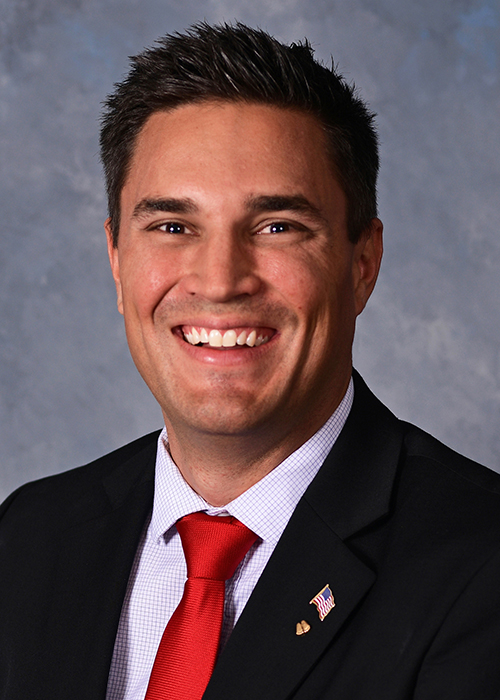
David Friess
0% support rate
Ranked legislators
10
5 support · 5 oppose
Key legislators

Who's moving sentencing in Illinois

Legislators moving sentencing in Illinois
Legislator Party Stance Support rate Votes
LJ
Lilian Jiménez House · District 4
D
Strong +
100% 13
Lisa Davis
Lisa Davis House · District 32
D
Strong +
100% 13
Maurice West
Maurice West House · District 67
D
Strong +
100% 12
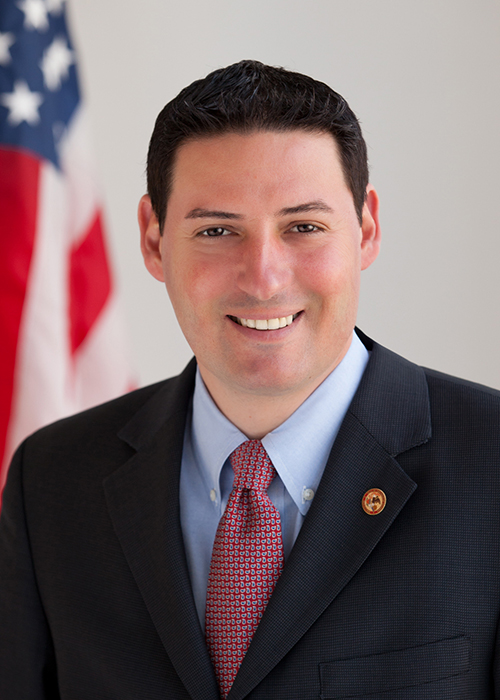
Mike Crawford
Mike Crawford House · District 31
D
Strong +
100% 12
Kimberly Du Buclet
Kimberly Du Buclet House · District 5
D
Strong +
100% 11
David Friess
David Friess House · District 115
R
Strong −
0% 15
Patrick Windhorst
Patrick Windhorst House · District 117
R
Strong −
0% 15
Dave Severin
Dave Severin House · District 116
R
Strong −
0% 11
Adam Niemerg
Adam Niemerg House · District 102
R
Strong −
0% 7
John Cabello
John Cabello House · District 90
R
Strong −
0% 7
Showing 11–20 of 42 bills

All criminal justice bills

in committee · Illinois · House Aug 6, 2026

HB 5287: CD CORR-SENTENCE CREDITS

Provides that the Act may be referred to as the Credit for Change Act. Amends the Unified Code of Corrections. Eliminates provisions that a person must serve various percentages for particular offenses. Provides that the rules and regulations shall provide that the individual in custody shall receive one day of sentence credit for each day of service in prison other than when a sentence of natural life imprisonment has been imposed. Provides that each day of sentence credit shall reduce by one day the incarcerated person's period of incarceration set by the court. Provides that within 6 months after the effective date of the amendatory Act, the Department of Corrections shall recalculate each incarcerated person's release date irrespective of the incarcerated person's conviction or sentencing date by crediting each person one day sentence credit for each day the incarcerated person has spent in prison on the current sentence. Provides that the Department shall award sentence credit accumulated prior to the effective date of the amendatory Act in a specified amount to a committed person serving a sentence for an offense committed after June 19, 1998, if the Department determines that the committed person is entitled to this sentence credit, based upon certain specified factors. Provides that the Department, in consultation with the Advisory Board, shall make available to all persons in its custody current materials about sentence credits, containing detailed information regarding eligibility, earning, revocation, calculation, and documentation of credit, in the following formats: (1) in print; (2) on the Department's website; and (3) in a visible location on the premises of each Department facility where notices are customarily posted. Makes technical changes. Effective January 1, 2027.
in committee · Illinois · Senate May 21, 2026

SB 3354: CD CORR-SENTENCE CREDITS

Provides that the Act may be referred to as the Credit for Change Act. Amends the Unified Code of Corrections. Eliminates provisions that a person must serve various percentages for particular offenses. Provides that the rules and regulations shall provide that the individual in custody shall receive one day of sentence credit for each day of service in prison other than when a sentence of natural life imprisonment has been imposed. Provides that each day of sentence credit shall reduce by one day the incarcerated person's period of incarceration set by the court. Provides that within 6 months after the effective date of the amendatory Act, the Department of Corrections shall recalculate each incarcerated person's release date irrespective of the incarcerated person's conviction or sentencing date by crediting each person one day sentence credit for each day the incarcerated person has spent in prison on the current sentence. Provides that the Department shall award sentence credit accumulated prior to the effective date of the amendatory Act in a specified amount to a committed person serving a sentence for an offense committed after June 19, 1998, if the Department determines that the committed person is entitled to this sentence credit, based upon certain specified factors. Provides that the Department, in consultation with the Advisory Board, shall make available to all persons in its custody current materials about sentence credits, containing detailed information regarding eligibility, earning, revocation, calculation, and documentation of credit, in the following formats: (1) in print; (2) on the Department's website; and (3) in a visible location on the premises of each Department facility where notices are customarily posted. Makes technical changes. Effective January 1, 2027.
passed · Illinois · House May 21, 2026

HB 5434: CRIMINAL JUSTICE TASK FORCE

Creates the Emerging Adult Criminal Justice Task Force Act. Establishes the Emerging Adult Criminal Justice Task Force within the Illinois Criminal Justice Information Authority. Provides that the Task Force shall hold public meetings. Requires at least 3 meetings of the Task Force to be held in different regions of Illinois. Provides that the first meeting of the Task Force shall be held within 60 days after the appointment of its members. Provides that the Task Force shall review Illinois law and practices affecting emerging adults across pretrial, sentencing, corrections, supervision, and reentry. Provides that the Task Force shall develop recommendations for statutory, policy, and programmatic improvements to the Illinois criminal justice system. Allows any Task Force member to prepare a written dissent or statement of concern regarding any finding or recommendation. Provides that the Task Force shall submit an interim report summarizing preliminary findings, analyses, and recommendations, to the Governor and the General Assembly, no later than January 31, 2027. Provides that the Task Force shall submit a final report, including all final findings and recommendations, draft statutory language, and estimated fiscal impacts, no later than December 1, 2027. Repeals the Act on June 30, 2028. Effective immediately.
in committee · Illinois · Senate Jan 27, 2026

SB 2974: JUV CT-COMMUNITY MEDIATION

Amends the Juvenile Court Act of 1987. Provides that either the court or the State's Attorney, or both, (rather than the State's Attorney) or an entity designated by the State's Attorney, may establish community mediation programs designed to provide citizen participation in addressing juvenile delinquency. Provides that prior to entering a sentence, the court shall require the parties involved to consider participation in a restorative practice, such as a conference or circle as defined in the Code of Civil Procedure, to identify and repair harm to the extent possible, address trauma, reduce the likelihood of further harm, and strengthen community ties by focusing on the needs and obligations of all parties involved through a participatory process. Provides that participation in the process shall be voluntary by all parties, and any resulting agreement shall contain only reasonable and proportionate obligations. Provides that the agreement shall be recommended to the court as an alternative to sentencing.
in committee · Illinois · House Mar 27, 2026

HB 4422: 2ND CHANCE PROBATION&WEAPONS

Amends the Unified Code of Corrections. Provides that the conditions of Second Chance Probation that the defendant: (1) make full restitution to the victim or property owner; (2) obtain or attempt to obtain employment; (3) pay fines and costs; (4) attend educational courses designed to prepare the defendant for obtaining a high school diploma or to work toward passing high school equivalency testing or to work toward completing a vocational training program; and (5) perform community service are discretionary conditions of the probation (rather than mandatory conditions). Eliminates the provision that the defendant submit to periodic drug testing at a time and in a manner as ordered by the court, but no less than 3 times during the period of probation, with the cost of the testing to be paid by the defendant. Provides that the determination of the length of the First Time Weapon Offense Program, as determined by the court, shall be at the recommendation of the Program administrator and with the input from the State's Attorney and defense counsel (rather than determined by the court at the recommendation of the Program administrator and State's Attorney). Deletes provisions that the State's Attorney must consent to the defendant's sentencing to Second Chance Probation or to the First Time Weapon Offense Program.
signed · Illinois · House Jul 31, 2026

HB 4639: JUV CT-COMMUNITY MEDIATION

Amends the Juvenile Court Act of 1987. Provides that either the court or the State's Attorney, or both, (rather than the State's Attorney) or an entity designated by the State's Attorney, may establish community mediation programs designed to provide citizen participation in addressing juvenile delinquency. Provides that prior to entering a sentence, the court shall require the parties involved to consider participation in a restorative practice, such as a conference or circle as defined in the Code of Civil Procedure, to identify and repair harm to the extent possible, address trauma, reduce the likelihood of further harm, and strengthen community ties by focusing on the needs and obligations of all parties involved through a participatory process. Provides that participation in the process shall be voluntary by all parties, and any resulting agreement shall contain only reasonable and proportionate obligations. Provides that the agreement shall be recommended to the court as an alternative to sentencing.
in committee · Illinois · House Jan 14, 2026

HB 4325: POST CONVICTION-RESENTENCING

Amends the Code of Criminal Procedure of 1963. Provides that an eligible offender or an eligible offender's attorney or an attorney associate of the attorney (rather than the State's Attorney of the county in which the defendant was sentenced) may petition the sentencing court or the sentencing court's successor to resentence the offender if the original sentence no longer advances the interests of justice. Provides that the court has 6 months from when a petition was filed to respond to the petition. Provides that the criteria for being an "eligible offender" are that the eligible offender: (1) must have been originally sentenced to 10 or more years in the Department of Corrections by a circuit court of this State; (2) must have been convicted for a crime that is not a violent crime for which the offender is seeking resentencing; (3) must have participated in educational programs, drug programs, or received earned credit through work programs; (4) must have served a minimum of 24 months in the Department of Corrections for the conviction in which the offender is seeking resentencing; (5) must not have violated serious rules or disciplinary standards within the Department of Corrections in the last 24 months prior the filing of the petition; and (6) must have remained in the least restrictive privilege level for privileges within the Department of Corrections for incarcerated persons, one year prior to the petition.
in committee · Illinois · House Apr 17, 2026

HB 4258: EMERGING ADULT SENTENCING

Creates the Emerging Adult Sentencing Act. Provides that upon a conviction by way of plea or otherwise finding of guilt, and with the express agreement of the State's Attorney and the defendant, the court may sentence a defendant who meets the eligibility requirements under the Act to a term of probation to be performed at a community-based residential workforce development center for a period of not less than one year and not more than 3 years in lieu of incarceration in the Illinois Department of Corrections. Provides that the defendant shall be monitored by the adult probation department. Provides that the defendant shall: (1) not violate any criminal statute of the State or any other jurisdiction; (2) refrain from possessing a firearm or any other dangerous weapon; and (3) attend and participate in any program activities as detailed in the individualized service plan. Provides that a defendant is eligible for the program if the defendant is between the ages of 18 through 25, at the time of the commission of the offense, and is convicted of specified felony offenses in which a period of incarceration must be imposed, other than a sentence of natural life. Provides that prior criminal history shall not preclude eligibility for sentencing under the Act. Provides that upon successful fulfillment of the terms and conditions of probation, the court shall discharge the defendant from probation. Provides that if the defendant has not previously been granted a vacation of judgment, upon motion, the court shall vacate the judgment of conviction and dismiss the criminal proceedings against him or her unless, having considered the nature and circumstances of the offense and the history, character, and condition of the individual, the court finds that the motion should not be granted. Effective immediately.
in committee · Illinois · Senate Oct 24, 2025

SB 2675: CD CORR-C NUMBER PRISONER

Amends the Unified Code of Corrections. Provides that notwithstanding any prior exclusion, any person incarcerated under an indeterminate sentence on the effective date of the amendatory Act whose minimum term was 20 years or more as of February 1, 1978, may elect to be resentenced under the 1978 determinate sentencing law. Provides that the election must be made in writing to the Department of Corrections, which shall inform all eligible persons within 60 days after the effective date of the amendatory Act. Provides that the Department of Corrections shall provide all necessary forms and assistance to eligible persons. Provides that upon election, the person's indeterminate sentence shall be converted to a determinate sentence consistent with the 1978 sentencing structure and the offense for which the person was convicted. Provides that time served shall be applied retroactively, and the person shall be credited with all sentence credits and earned time applicable under the law in effect since the date of original commitment. Provides that any person whose recalculated determinate sentence has been fully served shall be immediately released to a mandatory supervised release term under the terms applicable to the offense class and sentence length at the time of original sentencing. Provides that the Prisoner Review Board shall schedule hearings for eligible persons who elect the option within 180 days after receiving their request. Provides that thereafter, continued review shall occur no less frequently than every 12 months, unless earlier action is deemed by the Board to be appropriate. Provides that nothing in the provision shall be construed to require parole or mandatory supervised release for any person who does not elect the option, or who is otherwise ineligible. Effective immediately.
failed · Illinois · House Apr 10, 2025

HB 3332: CD CORR-SENTENCING REVIEW

Amends the Unified Code of Corrections. Provides that a person under 21 years of age at the time of the commission of an offense or offenses, other than first degree murder, shall be eligible for sentencing review after serving 10 years or more of his or her sentence or cumulative sentences. Provides that a person under 21 years of age at the time of the commission of first degree murder shall be eligible for sentencing review after serving 20 years or more of his or her sentence or cumulative sentences, except for those subject to a term of natural life imprisonment under the Code or any person subject to sentencing for first degree murder for killing certain victims committed when the person was under 18 years of age, who shall be eligible for sentencing review after serving 30 years or more of his or her sentence or cumulative sentences. Establishes procedures for filing petitions for sentencing review and the manner in which hearings on those petitions are held. Provides that the Illinois Sentencing Policy Advisory Council shall report on the impact of resentencing motions on the prison population contingent on having sufficient reliable data to support the analysis. Provides that the report shall be due 3 years after the effective date of the amendatory Act. Effective immediately.
Sub-Topics Sentencing
Showing 11 to 20 of 42 bills
Previous 1 2 3 5 Next