Issue · Healthcare

Healthcare (Medicaid)

Every healthcare bill, vote, and legislator stance in Idaho, automatically classified by Maddy, our AI policy reader.

Total bills
20
68th Legislature, 2nd Regular Session (2026)
Top supporter
Jack Nelsen
100% support rate
Top opponent
Bruce Skaug
22% support rate
Ranked legislators
10
5 support · 5 oppose
Key legislators

Who's moving medicaid in Idaho

Legislators moving medicaid in Idaho
Legislator Party Stance Support rate Votes
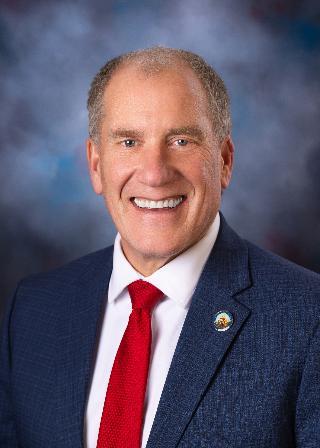
Jack Nelsen
Jack Nelsen House · District 26B
R
Strong +
100% 11
Clay Handy
Clay Handy House · District 27B
R
Strong +
91% 11
Jim Woodward
Jim Woodward Senate · District 1
R
Strong +
90% 10
Lori Den Hartog
Lori Den Hartog Senate · District 22
R
Strong +
90% 10
Jeff Cornilles
Jeff Cornilles House · District 12A
R
Strong +
89% 9
Bruce Skaug
Bruce Skaug House · District 10B
R
Oppose
22% 9
Clint Hostetler
Clint Hostetler House · District 24A
R
Oppose
27% 11
David Leavitt
David Leavitt House · District 25B
R
Oppose
27% 11
Faye Thompson
Faye Thompson House · District 8B
R
Oppose
27% 11
Kent Marmon
Kent Marmon House · District 11A
R
Oppose
27% 11
Showing 11–20 of 20 bills

All healthcare bills

in committee · Idaho · House Mar 9, 2026

H 845: MEDICAID – Adds to existing law to establish provisions regarding hospital presumptive eligibility determinations.

This bill establishes rules for hospitals in Idaho to make temporary Medicaid eligibility decisions for patients who may qualify but haven't completed full applications. It requires hospitals to notify the state within five days of making these determinations and to help patients finish their applications before the temporary coverage ends. The bill creates a performance tracking system where hospitals face mandatory training after two violations and lose their ability to make these determinations after three violations within a year. Hospitals can appeal violation findings, and the state must provide clear written notices explaining any standards they failed to meet.
Sub-Topics Hospitals Medicaid
in committee · Idaho · Senate Mar 17, 2026

S 1390: INSURANCE – Amends existing law to revise provisions regarding 340B drug pricing program reporting.

This bill requires healthcare organizations participating in the federal 340B drug pricing program to submit annual reports to Idaho state agencies about their program participation and financial details. The reports must include information on drug acquisition costs, payments to contract pharmacies, savings generated, and how those savings are used for charity care or community benefits, broken down by insurance payer type. The data will be kept confidential and shared through a secure portal, with an aggregated summary made available publicly on the state website. The attorney general may use the information to investigate potential Medicaid fraud and ensure compliance with federal requirements.
in committee · Idaho · House Feb 4, 2026

H 578: MEDICAID – Adds to existing law to provide legislative approval for a state plan amendment regarding incarcerated juveniles transition services.

This Idaho bill (H 578) requires legislative approval for a Medicaid state plan amendment to provide transition services for juveniles in custody. It directly affects incarcerated juveniles within 30 days of release from correctional facilities after a court hearing, ensuring they receive medical/dental screenings and case management referrals. Key provisions mandate that these services - screenings meeting medical standards and referrals to local care - must be included in a state plan submitted by July 2026, with services starting no earlier than July 2027. The bill also specifies that services must align with federal Medicaid requirements and depend on annual legislative funding.
Sub-Topics Courts Medicaid
in committee · Idaho · House Feb 13, 2026

H 655: MEDICAID – Adds to existing law to establish provisions regarding Medicaid prior authorization exemptions for certain preceptorships.

This Idaho bill (H 655) exempts physicians in primary care, psychiatry, or OB/GYN from needing prior approval for Medicaid-covered services if they provide 360+ hours of unpaid mentoring (preceptorship) to graduate students annually, with at least 60% of those hours in rural shortage areas. Physicians must track and report hours to the state health department, which verifies eligibility and grants a 12-month exemption starting the next calendar year. The exemption is limited to 100 physicians per specialty yearly, and the state can revoke it if claims review shows insufficient adherence to the program. This directly affects Idaho physicians mentoring students in rural areas, aiming to reduce administrative barriers for rural healthcare training.
Sub-Topics Medicaid Primary Care
in committee · Idaho · Senate Feb 17, 2026

S 1312: MEDICAID – Amends existing law to revise provisions regarding provider payment.

S 1312 revises Idaho's Medicaid payment rules for healthcare providers, directly affecting hospitals, mental health facilities, and home care services. It sets payment rates at 100% of Medicare for primary care and 90% for other services where Medicare equivalents exist, while requiring annual cost surveys (with 15% audits) for services without Medicare rates. The bill mandates providers to allocate funds to staff wages and employee costs, reduces general fund needs by $3.1 million in FY2020 and $8.72 million in FY2021, and transitions most hospitals to value-based payment systems by July 2021. It also nullifies specific administrative rules (IDAPA 16.03.26) after July 2026.
in committee · Idaho · House Feb 24, 2026

H 753: ASSERTIVE COMMUNITY TREATMENT – Adds to existing law to provide legislative approval for and to establish provisions regarding assertive community treatment.

Idaho's H 753 establishes a framework for Assertive Community Treatment (ACT) programs to provide intensive, community-based mental health support. It directly affects individuals with serious mental illness who have experienced frequent hospitalizations, crisis services, or failed to benefit from standard outpatient care. The bill defines ACT as 24/7 multidisciplinary teams delivering comprehensive services in community settings, requiring specific staff composition (including clinicians, peer specialists, and substance use counselors). It mandates the Department of Health and Welfare to seek federal Medicaid approval by March 2026 to implement these programs, aiming to reduce hospitalizations and support community living. The law sets eligibility criteria based on medical need, functional impairment, and documented service failures.
Sub-Topics Medicaid Mental Health
signed · Idaho · House Apr 1, 2026

H 788: MEDICAID – Adds to existing law to establish provisions regarding Medicaid prior authorization exemptions for certain preceptorships.

This bill creates a Medicaid exemption from prior approval requirements for healthcare providers who mentor medical students. Practitioners in family medicine, psychiatry, or OB/GYN qualify if they provide 360+ hours of preceptorship (with 60% in rural/underserved areas) to graduate students at Idaho institutions. Idaho's Department of Health and Welfare verifies hours and grants a 12-month exemption starting the next calendar year. The exemption is limited to 100 providers per specialty annually and may be revoked if claims fail risk-based quality reviews.
Sub-Topics Medicaid Primary Care
in committee · Idaho · House Feb 20, 2026

H 729: IDAHO DENTAL PLAN TRANSPARENCY ACT – Adds to existing law to establish the Idaho Dental Plan Transparency Act.

Idaho's H 729, the "Idaho Dental Plan Transparency Act," requires dental health insurance plans (excluding Medicaid, CHIP, short-term plans, and direct primary care) to annually report their "dental loss ratio" (DLR) to the Idaho Department of Insurance. The DLR shows what percentage of premium dollars go directly toward patient dental care versus administrative costs, calculated using specific rules that exclude overhead and other expenses. Starting in 2027, plans must submit these reports by July 31, and the Department will publish the data publicly on a searchable website by January 1 each year for consumers to compare. This law aims to increase transparency about how dental plan premiums are used, without changing coverage or costs.
in committee · Idaho · Senate Feb 9, 2026

S 1267: MEDICAID – Adds to existing law to direct the Department of Health and Welfare to conduct a study of options regarding certain Medicaid programs.

This bill requires Idaho's Department of Health and Welfare to study policy options for two Medicaid groups: workers with disabilities who can no longer work due to age or disability, and individuals in home care programs facing high out-of-pocket costs. The study will examine ways to prevent participants from losing savings or coverage when transitioning between programs, and to keep people in community settings instead of institutions. The department must report findings by December 2026, including federal approval needs, cost impacts, and recommendations for maintaining work incentives while reducing institutionalization. The bill does not change current Medicaid rules but directs a review of potential improvements.
in committee · Idaho · House Mar 20, 2026

H 529: HEALTH CARE – Adds to existing law to establish provisions regarding certain out-of-pocket payments for health care services.

This Idaho bill (H 529) allows health insurance policyholders to pay cash directly to providers for covered services at a negotiated discounted price, with that payment counting toward their out-of-pocket deductible and annual maximum. It requires health carriers to count such cash payments toward these limits if the patient negotiated a lower price than the insurance plan’s allowed amount and provides required documentation. The law applies to in-network or out-of-network providers but excludes dental/vision plans, Medicaid, Medicare, and certain short-term policies. Providers must accept cash as full payment and cannot bill patients or insurers for the difference. The provisions take effect July 1, 2026.
Showing 11 to 20 of 20 bills