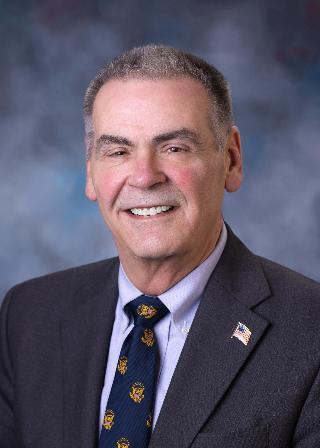
H 690 removes the Attorney General's requirement to establish a sobriety and drug monitoring program. It amends Idaho Code by deleting subsection (18) from Section 67-1401 (which directed the Attorney General to create this program) and repeals all related sections (67-1412 through 67-1416) that detailed the program's rules and fees. This bill directly affects the Attorney General's office by eliminating a specific duty to implement and manage this program. The change takes effect on July 1, 2026, with no new program or requirements replacing the repealed provisions.
H 575 requires Idaho's State Controller to publish a public list of property seized through asset forfeiture cases. It mandates that state, county, and local law enforcement agencies report asset forfeiture details to the State Controller. The law applies specifically to property seized under Idaho's controlled substances laws (as defined in Section 37-2744). This creates a centralized, transparent record of these seizures for public access.
This Idaho bill allocates state funds to the Department of Correction for fiscal years 2026 and 2027, with the majority of money designated for operating expenses at various prisons and correctional facilities. The legislation provides specific amounts for management services, prison administration, medical services, and community corrections programs, drawing from funds like the General Fund and Inmate Labor Fund. Additionally, the bill requires the department to conduct a review of community reentry center operations and submit findings to a legislative committee by November 1, 2026, evaluating efficiency, recidivism outcomes, and security considerations.
This bill requires courts to mandate ignition interlock devices for certain DUI offenders in Idaho. Specifically, it orders convicted drivers (who had suspended sentences) to install state-approved devices on all their vehicles at their own expense, preventing cars from starting if alcohol is detected above a .025 BAC level. The device must be certified by the transportation department, and courts may help cover costs for those demonstrating financial hardship. The restriction lasts one year from when the device is proven installed, and fees collected fund a dedicated court device account.
This bill allocates additional funding to Idaho's Commission of Pardons and Parole for fiscal years 2026 and 2027, while simultaneously reducing existing appropriations from the state's General Fund. The legislation provides $221,500 for fiscal year 2027 and $87,200 for fiscal year 2026, with money drawn from both the General Fund and Miscellaneous Revenue Fund to cover personnel and operating expenses. The bill also declares an emergency to allow immediate implementation of certain funding adjustments, with most provisions taking effect upon signing and remaining changes beginning July 1, 2026. This funding adjustment directly impacts the financial resources available to the state agency responsible for reviewing clemency requests and managing parole decisions.
H 727 updates Idaho's laws on video voyeurism and the disclosure of realistic computer-generated media (like deepfakes). It revises definitions to better protect privacy, clarifying what constitutes "intimate areas" and places where people reasonably expect privacy, such as changing rooms or bedrooms. The bill creates a new offense for knowingly sharing synthetic media depicting an identifiable person in sexual acts or intimate areas without consent - this is a misdemeanor, but becomes a felony (up to 10 years in prison or $25,000 fine) if the victim is under 18 or the person has a prior conviction. This directly affects individuals who create or share such media without consent and law enforcement handling related cases.
This bill changes how Idaho pays counties for housing state prisoners in county jails. Counties will now receive $80 per day for the first seven days of each inmate's stay (up from $55), then $75 daily thereafter. The state must also cover all medical/dental costs for these inmates, and counties must bill the state every 60 days with payment due within 60 days. The changes take effect July 1, 2026, as an emergency measure.
This bill allocates $100.5 million to Idaho's Judicial Branch for fiscal year 2027, covering personnel costs, operating expenses, capital outlays, and benefit payments across various court divisions including the Supreme Court, Court of Appeals, and District Courts. The legislation provides flexibility by exempting the Judicial Branch from certain expense transfer limits, allowing funds to move between categories as needed, and requires monthly transfers of uncommitted retirement contributions to the Judges' Retirement Fund. Additionally, the bill reappropriates up to $16.2 million from the American Rescue Plan Act for nonrecurring expenditures and sets an effective date of July 1, 2026.
H 642 adjusts Idaho's public safety officer retirement benefits to ensure consistency between catastrophic injury and death benefits. It increases the lump-sum death benefit for surviving spouses or dependent children to $500,000 (matching the existing catastrophic injury benefit) and adds an annual pension of $75,000 for surviving spouses. The bill specifically affects surviving spouses and dependent children of police officers and firefighters who die in the line of duty due to catastrophic injuries. Benefits will be funded solely through public safety officers' pension contributions, with no tax on the payments. The legislation repeals outdated death benefit provisions and defines "catastrophic injury" through specific medical criteria.
This Idaho bill removes the requirement for verifying immigration status when applying for crime victims compensation. It amends state law (Section 67-7903) to explicitly exempt this program from verification rules, directly affecting crime victims seeking state-funded financial assistance. Under the change, applicants no longer need to prove "lawful presence" to access compensation under Title 72, Chapter 10. This policy change applies specifically to victims of crime who qualify for state compensation programs.