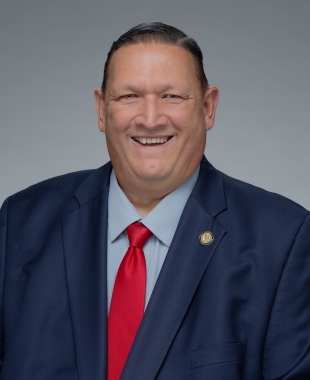
SB 299 allocates state funds to the Healthcare Education Loan Repayment Program, helping healthcare professionals repay student loans. It directly affects licensed healthcare workers (like nurses or doctors) who agree to work in underserved areas of the state. The bill provides financial assistance through the existing program, requiring participants to serve in designated high-need communities. The measure is currently under review by the Health and Human Services committee, with a public hearing scheduled for February 10, 2025. It is set to take effect on July 1, 3000.
Establishes a two-year Mental Health Emerging Therapies Pilot Program within the Office of Wellness and Resilience. Appropriates funds. Effective 7/1/3000. (HD1)
For policies, contracts, plans, and agreements issued or renewed after 12/31/2025, requires insurers, mutual benefit societies, and health maintenance organizations to provide coverage for standard fertility preservation services for persons undergoing medically necessary treatment that may cause iatrogenic infertility. Effective 12/31/2050. (SD1)
Appropriates funds to support educational training programs to expand the State's health care workforce, including funding to support health care certification programs offered in public high schools and education programs that support certified nurse assistants in becoming licensed practical nurses. Effective 12/31/2050. (SD1)
Expands workers' compensation medical benefits for firefighters to include coverage for adenocarcinoma or mesothelioma of the respiratory system; cancer of the buccal cavity, colon, pharynx, and thyroid; and malignant melanoma. Specifies that an employer may prove that the cancer or disease was not associated with the firefighting duties to deny medical benefits under workers' compensation law. Effective 7/1/3000. (HD1)
Allows terminally ill patients and qualifying patients over sixty-five years of age with chronic diseases to use medical cannabis within specified health care facilities under certain conditions. Requires enforcement by the Department of Health. Effective 7/1/3000. (HD1)
This Senate Concurrent Resolution asks the Governor to request a federal exemption from the Drug Enforcement Administration for Hawaii's registered medical cannabis patients and to seek registration waivers for state-licensed dispensaries. The bill aims to resolve the conflict between Hawaii's state medical cannabis program and federal law, which currently classifies cannabis as an illegal Schedule I substance. By pursuing these exemptions and waivers, the resolution seeks to protect patients from federal prosecution and allow dispensaries to operate with full banking and tax compliance. It also directs the Department of Health to report progress to the Legislature and sends copies of the resolution to federal officials and state agencies.
This Senate Resolution asks the Governor to request a federal exemption from the Drug Enforcement Administration for registered medical cannabis patients and registration waivers for state-licensed dispensaries. The bill addresses the conflict between Hawaii's state medical cannabis program and federal law that classifies cannabis as a Schedule I controlled substance. By seeking these exemptions, the resolution aims to protect patients from federal prosecution and allow dispensaries to operate legally without violating federal regulations. The measure also requests that the Department of Health provide updates on the status of these federal applications to the Legislature.
Establishes the Maternal Health Monitoring Pilot Program within the Department of Health to offer eligible participants improved maternal health care through remote patient monitoring for maternal hypertension and maternal diabetes. Appropriates funds. Effective 1/1/2050. (SD1)
Appropriates funds to be expended by the Department of Health as a grant for the Hawaii Primary Care Association to support solar-plus-storage microgrid implementation at community health centers in medically underserved communities, and provide programmatic services, project management, contract management, reporting and fiscal stewardship responsibilities, and developing future scalable plans for the development and deployment of solar-plus-storage microgrids at nonprofit community health centers. Effective 7/1/3000. (HD1)