Issue · Budget & Taxes

Budget & Taxes (Sales Tax)

Every budget & taxes bill, vote, and legislator stance in Connecticut, automatically classified by Maddy, our AI policy reader.

Total bills
52
2026 Regular Session
Top supporter
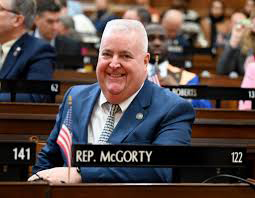
Ben McGorty
100% support rate
Top opponent
Aimee Berger-Girvalo
33% support rate
Ranked legislators
10
5 support · 5 oppose
Key legislators

Who's moving sales tax in Connecticut

Legislators moving sales tax in Connecticut
Legislator Party Stance Support rate Votes
Ben McGorty
Ben McGorty House · District 122
R
Strong +
100% 3
Bill Pizzuto
Bill Pizzuto House · District 71
R
Strong +
100% 3
Billy Buckbee
Billy Buckbee House · District 67
R
Strong +
100% 3
Brian Lanoue
Brian Lanoue House · District 45
R
Strong +
100% 3
Carol Hall
Carol Hall House · District 59
R
Strong +
100% 3
Aimee Berger-Girvalo
Aimee Berger-Girvalo House · District 111
D
Oppose
33% 3
Al Paolillo
Al Paolillo House · District 97
D
Oppose
33% 3
Amy Morrin Bello
Amy Morrin Bello House · District 28
D
Oppose
33% 3
Andre Baker
Andre Baker House · District 124
D
Oppose
33% 3
Anne Hughes
Anne Hughes House · District 135
D
Oppose
33% 3
Showing 11–20 of 52 bills

All budget & taxes bills

in committee · Connecticut · Senate Feb 11, 2026

SB 184: AN ACT EXEMPTING CERTAIN ARTICLES OF CLOTHING FROM THE SALES AND USE TAXES.

SB 184 would exempt from state sales and use taxes the purchase of clothing items priced under $100. This directly affects consumers buying affordable clothing, as they would no longer pay tax on these items. The bill amends tax law to remove the tax requirement for clothing costing less than $100, applying to both in-store purchases and online orders within the state. It does not change tax rates for other goods or services. The exemption applies to all eligible clothing items sold within the state.
in committee · Connecticut · House Feb 4, 2026

HB 5013: AN ACT ESTABLISHING A FEE AND TAX RELATED TO ELECTRIC VEHICLES.

HB 5013 establishes a registration fee for electric vehicles and plug-in hybrid electric vehicles, and imposes a per-kilowatt-hour tax on electricity purchased at public electric vehicle charging stations. This bill directly affects EV owners through the new registration fee and charging station operators through the electricity tax. Revenue from both the fee and tax must be deposited into the Special Transportation Fund. The legislation aims to generate dedicated funding for transportation infrastructure without specifying how the money will be spent beyond this allocation.
in committee · Connecticut · Senate Feb 20, 2026

SB 101: AN ACT ESTABLISHING A STATE-WIDE PROPERTY TAX ON CERTAIN RESIDENTIAL REAL PROPERTY.

SB 101 would create a new statewide property tax on residential properties valued over $3 million. It sets three tax rates based on property value: 0.2% (2 mills) for homes worth $3-5 million, 0.3% (3 mills) for $5-10 million properties, and 0.4% (4 mills) for homes valued at $10 million or more. This tax would apply uniformly across the state to qualifying high-value residential properties, directly affecting owners of such homes. The bill specifies the tax rates but does not detail how the revenue would be allocated.
passed · Connecticut · House May 5, 2026

HB 5292: AN ACT EXEMPTING CERTAIN SALES TO MILITARY AND VETERANS-RELATED ORGANIZATIONS FROM THE SALES AND USE TAXES.

HB 5292 exempts sales of tangible personal property or services to qualifying military and veterans' organizations from state sales and use taxes. The bill specifically targets organizations recognized under IRS Section 501(c)(19) (veterans' organizations) and requires them to provide documentation, such as a Treasury Department determination letter or an existing exemption permit, to prove eligibility at the time of purchase. This exemption applies to items used exclusively for the organization's established purposes, with the organization liable for taxes if items are misused. The change takes effect October 1, 2026, for all sales occurring on or after that date.
in committee · Connecticut · Senate Feb 17, 2026

SB 207: AN ACT EXEMPTING OVERTIME INCOME FROM THE PERSONAL INCOME TAX.

SB 207 would exempt overtime pay from personal income tax, directly affecting employees who earn overtime wages. The bill amends tax law to remove the amount earned through overtime work from taxable income calculations. This means workers would pay no state income tax on earnings from hours worked beyond their regular schedule. The policy change simplifies tax treatment for overtime income without altering the tax rate for regular wages.
in committee · Connecticut · House Feb 4, 2026

HB 5020: AN ACT CONCERNING THE SALES AND USE TAXES IMPOSED ON MEALS SOLD BY AN EATING ESTABLISHMENT, CATERER OR GROCERY STORE.

HB 5020 eliminates a 1% additional sales and use tax on meals sold by restaurants, caterers, and grocery stores. The bill amends tax code to remove this specific tax rate, directly affecting businesses that sell prepared food. Key provision: the tax change applies to all meals sold by these establishments, regardless of whether they're dine-in, takeout, or delivered. This policy change simplifies the tax structure for these businesses without altering other tax rates.
in committee · Connecticut · House Feb 9, 2026

HB 5094: AN ACT EXEMPTING SOCIAL SECURITY BENEFITS AND PENSION OR ANNUITY INCOME FROM THE PERSONAL INCOME TAX.

HB 5094 would exempt Social Security benefits and pension or annuity income from the state's personal income tax for all taxpayers. This policy change directly affects individuals receiving these income sources, primarily retirees and seniors, by eliminating state tax on those payments. The bill amends Section 12-701 of the general statutes to create this exemption, removing these income types from the state tax base. The change applies uniformly to all taxpayers regardless of income level or age.
in committee · Connecticut · House Feb 6, 2026

HB 5054: AN ACT ESTABLISHING A PERSONAL INCOME TAX DEDUCTION FOR STUDENT LOAN PAYMENTS.

HB 5054 would create a $1,000 annual personal income tax deduction for taxpayers who make student loan payments. This deduction directly affects individual taxpayers in the state who have student loan debt and file state income taxes. The bill would amend tax law to allow eligible taxpayers to reduce their taxable income by up to $1,000 each year for qualifying student loan payments. It provides a concrete tax benefit without changing tax rates or creating new tax obligations.
in committee · Connecticut · Senate Feb 11, 2026

SB 182: AN ACT CONCERNING THE PERSONAL INCOME TAX DEDUCTIONS FOR SOCIAL SECURITY BENEFITS.

SB 182 would change how Connecticut taxes Social Security benefits. It proposes two options: either exempt all Social Security benefits from state income tax for every taxpayer, or adjust the income thresholds for tax deductions on these benefits annually based on changes in the consumer price index (inflation). This bill directly affects Connecticut residents who receive Social Security benefits and pay state income tax. The key change would reduce or eliminate the tax burden on these benefits for qualifying individuals.
Sub-Topics Income Tax Sales Tax
in committee · Connecticut · House Feb 4, 2026

HB 5024: AN ACT CONCERNING THE SALES AND USE TAXES IMPOSED ON MEALS SOLD BY AN EATING ESTABLISHMENT, CATERER OR GROCERY STORE.

HB 5024 eliminates a 1% sales tax on meals sold by restaurants, caterers, and grocery stores in Connecticut. The bill amends state law to remove this additional tax from the standard sales tax rate applied to qualifying food purchases. This change directly affects businesses operating as eating establishments, caterers, or grocery stores that sell prepared meals. The legislation aims to reduce the tax burden on these specific food service providers by removing the separate 1% surcharge. The bill is currently under review by the Finance, Revenue and Bonding Committee.
Showing 11 to 20 of 52 bills
Previous 1 2 3 6 Next