

Introduced Aug 5, 2021
0 co-sponsors
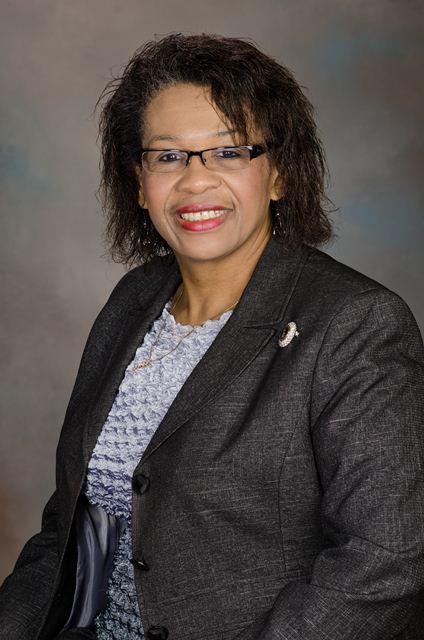
Total votes
4,438
all sessions
Attendance
100%
8 missed
Near the chamber average
With party
98%
of cast votes
Near the chamber average
Bipartisan score
1%
crosses aisle rarely
Near the chamber average
Sponsored
580
bills & resolutions
Near the chamber average
Committees
0
assignments
580 bills and resolutions
Sponsored bills
Total
580
Primary
88
Co-sponsor
492
This page
580
matching current filters
Introduced Aug 5, 2021
0 co-sponsors
Introduced Aug 5, 2021
0 co-sponsors
Introduced Aug 5, 2021
0 co-sponsors
Introduced Aug 5, 2021
0 co-sponsors
Probation, revocation, and suspension of sentence; limitations on sentence, technical violation.
Probation, revocation, and suspension of sentence; limitations. Limits the amount of active incarceration a court can impose as a result of a revocation hearing for a probation violation. The bill provides that if the court finds the basis of a violation of the terms and conditions of a suspended sentence or probation is that the defendant was convicted of a criminal offense or violated another condition other than a technical violation, the court may pronounce whatever sentence might have been originally imposed. The bill defines "technical violation" and provides specific limitations on the sentence a court may impose depending on whether the violation is a first, second, or third or subsequent technical violation. The bill also provides that a court may fix the period of probation for up to the statutory maximum period for which the defendant might originally have been sentenced to be imprisoned and any period of supervised probation shall not exceed five years from the release of the defendant from any active period of incarceration. The bill also provides that a court must measure any period of suspension of sentence from the date of entry of the original sentencing order.
Signed into law Apr 7, 2021
1 co-sponsor
COVID-19; DMAS shall deem testing, treatment, and vaccination to be emergency services.
Department of Medical Assistance Services; testing for, treatment of, and vaccination against COVID-19; emergency services. Directs the Department of Medical Assistance Services to, during a public health emergency related to COVID-19 declared by the United States Secretary of Health and Human Services, deem testing for, treatment of, and vaccination against COVID-19 to be emergency services for which payment may be made pursuant to federal law for certain aliens not lawfully admitted for permanent residence.
Signed into law Mar 31, 2021
1 co-sponsor
Absentee voting; procedural and process reforms, availability and accessibility reforms, penalty.
Absentee voting; procedural and process reforms; availability and accessibility reforms; penalty. Makes various reforms to absentee voting processes and procedures, including those related to availability and accessibility. The bill requires certain actions to be taken to process absentee ballots returned before the day of an election, including verifying the correct completion of the voter affirmation statement, and provides for an opportunity for an absentee voter to make corrections to the statement in certain circumstances. The bill requires the establishment of drop-off locations for the return of voted absentee ballots. Additionally, a central absentee voter precinct is required to be established in each locality; currently, establishment is optional. On the day of the election, officers of election are required to begin processing absentee ballots in the central absentee voter precincts prior to the close of polls, but no ballot vote counts are permitted to be transmitted outside of the central absentee voter precinct before the close of polls; a violation of such prohibition is a Class 1 misdemeanor. When reporting election results to the Department of Elections, the general registrars are required to report absentee ballots cast early in person separately from all other absentee ballots. Additionally, a voter who has applied for and received an absentee ballot may choose to instead vote at his polling place on election day, and such voter shall be entitled to cast a provisional ballot. The bill requires a ballot marking tool with screen reader assistive technology to be made available for absentee voters with a print disability. Restrictions on the availability of absentee voting for first-time voters who registered by mail are repealed. The bill contains technical amendments for organizational and readability purposes.
Signed into law Mar 31, 2021
1 co-sponsor
Higher educational institutions, public; admissions applications criminal history questions.
Public institutions of higher education; admissions applications; criminal history. Prohibits each public institution of higher education, with the exception of the Virginia Military Institute, from (i) utilizing an institution-specific admissions application that contains questions about the criminal history of the applicant or (ii) denying admission to any applicant on the basis of any criminal history information provided by the applicant on any third-party admissions application accepted by the institution. The bill permits each public institution of higher education to inquire into the criminal history of any individual who has been admitted to but has yet to enroll at the institution and withdraw an offer of admission to any individual whom the institution subsequently determines to have a criminal history that poses a threat to the institution's community. The bill has a delayed effective date of January 1, 2022.
Signed into law Mar 30, 2021
1 co-sponsor
Phase I or Phase II electric utilities; provision of broadband capacity.
Provision of broadband capacity by Phase I or Phase II electric utilities. Makes permanent the pilot program under which a Phase I or Phase II electric utility is permitted to petition the State Corporation Commission to provide broadband capacity to unserved areas of the Commonwealth. The bill expands the program to allow for the participation of municipalities and government-owned broadband authorities. The bill provides that investor-owned electric utilities may recover costs of and revenue generated from providing broadband capacity that serves as an electric grid transformation project in areas unserved by broadband, as defined in the bill. The bill also consolidates the State Corporation Commission petition approval process into one hearing.
Signed into law Mar 25, 2021
0 co-sponsors
Ask Maddy
·
AI policy assistant
Ask Maddy about Roslyn C. Tyler
Scope: virginia
Hi! I can help you understand Roslyn C. Tyler's legislative record. What would you like to know?
Try one of these
i
Maddy answers using official bill text and legislative records. Always verify before sharing.
Sources cited inline