Maddy summaryHR 2323, the Big Bend National Park Boundary Adjustment Act, would expand Big Bend National Park by adding approximately 6,100 acres of land. The Secretary of the Interior may acquire this land through donation or exchange (not eminent domain), using a specific map dated November 2022. Once acquired, the land becomes part of the park and is managed under existing laws. The map must be publicly available for inspection at National Park Service offices.

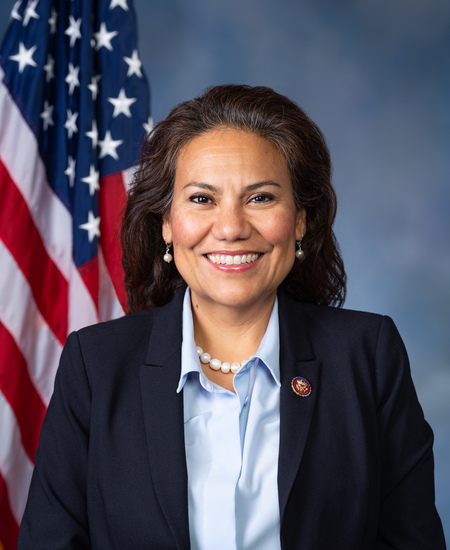
Rep. Veronica Escobar
Sponsored bills
Maddy summaryThe Responsible Data Center Siting Act of 2026 directs the Secretary of Energy to create and publish best practices for selecting locations for new data centers. These guidelines must evaluate how proposed sites affect electricity prices, water availability, air quality, local communities, national security, and regional economies. The Department of Energy is required to release these initial recommendations within one year of the bill's passage and update them at least every two years thereafter.
Maddy summaryThis House resolution marks the 25th anniversary of the September 11, 2001 terrorist attacks by formally honoring the memory of the nearly 3,000 victims and recognizing the sacrifices made by first responders, military personnel, and the passengers of United Airlines Flight 93. The bill acknowledges the ongoing health challenges faced by survivors and responders, highlighting the role of the World Trade Center Health Program in providing long-term medical support. It also credits charitable organizations and community groups that have continued to assist victims' families and veterans over the past two decades. Finally, the resolution urges the American public to observe the anniversary with ceremonies and reaffirms Congress's commitment to remembering the events and lessons of that day.
Maddy summaryThe DHS Community Consultation Act of 2026 requires the Department of Homeland Security to consult with local officials and community members before building or leasing any immigration detention facility. The bill mandates that the department assess potential impacts on local infrastructure, such as water, power, and roads, while holding public meetings and allowing a 60-day period for public comment. Additionally, it prohibits the construction of new facilities in municipalities that have officially banned them and forbids using military bases or converting non-residential structures like warehouses into detention centers. The legislation also requires coordination with local health authorities to create protocols for treating and containing contagious disease outbreaks within these facilities.
Maddy summaryThis House resolution formally recognizes August as Chicano/Chicana Heritage Month to celebrate the historical contributions of Mexican Americans to the United States. It highlights specific achievements in science, civil rights, labor, and arts, while acknowledging ongoing challenges such as discrimination and underrepresentation in public and private sectors. The bill encourages the observation of this month through appropriate events and activities but does not create new laws or funding mechanisms.
Maddy summaryThe Ratepayer Bill of Rights Act of 2026 requires large data centers to disclose their electricity and water usage while ensuring they pay for all infrastructure costs without shifting expenses to households, farms, or small businesses. The bill establishes ten specific rights for ratepayers, including protections against cost-shifting, guarantees of reliable water and power during emergencies, and requirements for independent assessments before new facilities are approved. It mandates that data centers post financial security and sign binding agreements to cover project-driven costs, with refunds required if any improper charges are passed on to the public. Enforcement is shared between federal agencies like the Federal Energy Regulatory Commission and the Environmental Protection Agency, while state and local governments retain authority over utility rates and land use.
Maddy summaryThis House resolution formally honors the life and legacy of the late Representative Kay Granger from Texas, recognizing her historic achievements in public service. The bill highlights her roles as the first woman elected mayor of Fort Worth, the first Republican woman to represent Texas in the U.S. House, and the first Republican woman to chair the House Committee on Appropriations. It also acknowledges her contributions to national defense, including her work on the F-35 fighter jet program and the naming of a Navy ship for Fort Worth. The resolution expresses sympathy to Granger's family and directs the Clerk of the House to send an official copy of the document to her loved ones.
Maddy summaryThe Protect American Values Act prohibits the use of federal funds to implement, administer, or enforce a specific Department of Homeland Security rule regarding the "Public Charge" ground of inadmissibility. This legislation directly affects immigrants and mixed-status families by preventing the government from using public benefits as a factor in determining eligibility for lawful permanent resident status. The bill includes a statement of congressional intent arguing that the targeted rule would restrict access to essential services like food, medical care, and housing, while also negatively impacting state and local economies. By cutting off funding for this specific policy, the act aims to maintain current immigration standards and prevent what Congress describes as an unauthorized reversal of long-standing law.
Maddy summaryThis resolution expresses support for designating February as Serbian American Heritage Month to honor the history and contributions of the Serbian American community. It recognizes that approximately one million Americans of Serbian ancestry have served in various fields, including the military, science, business, and the arts, while highlighting specific historical events like Operation Halyard. The measure urges the public to observe this month with ceremonies and educational programs that celebrate Serbian heritage and the enduring friendship between the United States and Serbia.
Maddy summaryThis bill establishes federal protections and funding to expand access to in vitro fertilization and intrauterine insemination for individuals, military service members, and veterans. It requires most private health plans, Medicaid programs, and Medicare to cover these fertility treatments without imposing higher cost-sharing than other medical services. Additionally, the legislation mandates that the Department of Defense and the Department of Veterans Affairs provide specific fertility preservation and treatment benefits to uniformed service members and eligible veterans. The bill also includes preemption clauses that override state laws restricting these procedures and prohibits discrimination based on marital status, sex, or sexual orientation in the provision of care.