

Mental illness, neurocognitive disorder, etc.; affirmative defense or reduced penalty.
Summary
Affirmative defense or reduced penalty for mental illness, neurocognitive disorder, or intellectual or developmental disability. Provides an affirmative defense to prosecution of a person for assault or assault and battery against certain specified persons for which the enhanced Class 6 felony and six-month mandatory minimum apply if such person proves, by a preponderance of the evidence, that at the time of the assault or assault and battery (i) the person's behaviors were a result of (a) mental illness or (b) a neurocognitive disorder, including dementia, or an intellectual disability or a developmental disability such as autism spectrum disorder, as defined in the most recent edition of the Diagnostic and Statistical Manual of Mental Disorders of the American Psychiatric Association, or (ii) the person met the criteria for issuance of an emergency custody order.The bill requires such person or his counsel to give notice in writing to the attorney for the Commonwealth at least 60 days prior to his trial in circuit court, or at least 14 days if the trial date is set within 21 days of his last court appearance, of his intention to present such evidence. Additionally, if such notice is not given, and the person proffers such evidence at his trial as a defense, then the court may in its discretion either allow the Commonwealth a continuance or, under appropriate circumstances, bar such person from presenting such evidence; any such continuance shall not be counted for speedy trial purposes pursuant to relevant law.Lastly, the bill provides that if such person does not prove that his behaviors were a result of his mental illness, intellectual disability, developmental disability, or neurocognitive disorder but the evidence establishes that his mental illness, intellectual disability, developmental disability, or neurocognitive disorder otherwise contributed to his behaviors, the finder of fact may find such person guilty of a Class 1 misdemeanor. The bill also provides that such affirmative defense shall not be construed to allow an affirmative defense for voluntary intoxication. This bill is identical to HB 246.
Bill status
vetoed
4 of 5 stages cleared
Introduction
Jan 2026
Committee Review
Feb 2026
Senate Passage
Feb 2026
House of Delegates Passage
Feb 2026
Vetoed
Apr 2026
Introduced Jan 13, 2026
Vetoed Apr 13, 2026
Maddy AI version diff · 2 comparisons
What changed between versions
Engrossed
→
Enrolled
·
4 edits
·
Feb 24, 2026
MODERATE
The bill transitioned from an 'Engrossed' version containing detailed substantive provisions to an 'Enrolled' version that is primarily a formal certification of the law's final passage. The Enrolled text includes the bill number, approval date, and page headers but omits the specific legal sections (Subsections D, E, F, G, H, and I) regarding assaults on school employees, healthcare providers, sports officials, and definitions found in the Engrossed version. This suggests the Enrolled version provided in the diff is incomplete or represents a placeholder.
Scope change
The scope of the provided Enrolled text is significantly reduced compared to the Engrossed text; it lacks the detailed legal provisions for specific protected classes of victims and definitions.
ENFORCEMENT
Removed specific provisions protecting school employees, healthcare providers, and sports officials from assault charges.
Removed the 'simple assault' exception clause that clarified what physical contact by school staff does not constitute an assault.
DEFINITION
Removed the legal definitions for terms such as 'disability', 'hospital', 'judge', and 'law-enforcement officer'.
TECHNICAL
Added formal Enrolled formatting elements including the session year, bill number (SB 335), and approval status.
Floor votes · Senate Feb 10, 2026 · House of Delegates Feb 23, 2026
How they voted
39–0
Passed
Total votes 39
Feb 10, 2026
D
Democratic20
100% Yea
R
Republican19
100% Yea
Vote distribution
All Yea
All Nay
Mixed
No data
Full legislative history
Actions timeline
Total actions
28
Key actions
9
Committee
4
Amendments
2
Apr 13, 2026
Vetoed
Governor's recommendation received by Senate
executive
Feb 24, 2026
Upper · Passed
Signed by President
upper
Feb 24, 2026
Lower · Passed
Signed by Speaker
lower
Feb 24, 2026
Upper · Passed
Bill text as passed Senate and House (SB335ER)
upper
Feb 23, 2026
Lower · Passed
Passed House (56-Y 39-N 0-A)
lower
Feb 18, 2026
Lower · Passed
Reported from Courts of Justice (15-Y 7-N)
lower
Feb 17, 2026
Committee
Referred to Committee for Courts of Justice
lower
Feb 12, 2026
Upper · Passed
Read third time and passed Senate (26-Y 14-N 0-A)
upper
Feb 11, 2026
Introduced
Engrossed by Senate as amended (Voice Vote)
upper
Feb 11, 2026
Upper · Passed
Courts of Justice Amendments agreed to
upper
Feb 10, 2026
Upper · Passed
Passed by for the day Block Vote (Voice Vote)
upper
Feb 9, 2026
Upper · Passed
Reported from Courts of Justice with amendments (10-Y 5-N)
upper
Jan 13, 2026
Committee
Referred to Committee for Courts of Justice
upper
1 primary · 0 co-sponsors
Sponsors
Role
Legislator
Party
State
District
P
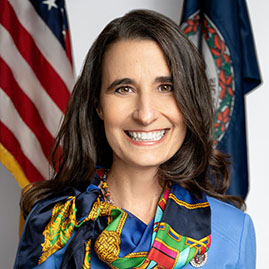
Jennifer Boysko
DDemocratic
Ask Maddy
·
AI policy assistant
Ask Maddy about SB 335
Scope: VA
Hi! I can help you understand SB 335. What would you like to know?
Try one of these
i
Maddy answers using official bill text and legislative records. Always verify before sharing.
Sources cited inline