

Regulatory reduction pilot program; Department of Planning and Budget to implement, report.
Summary
Directs the Department of Planning and Budget (the Department), under the supervision of the Secretary of Finance (the Secretary), to administer a three-year regulatory reduction pilot program aimed at reducing by 25 percent the regulations and regulatory requirements, as defined in the bill, of the Department of Professional and Occupational Regulation and the Department of Criminal Justice Services by July 1, 2021. The bill requires the Secretary to report annually to the Speaker of the House and the Chairman of the Senate Rules Committee no later than October 1, 2019, and October 1, 2020, on the progress of the regulatory reduction pilot program. The bill also requires the Secretary to report by August 15, 2021, to the Speaker of the House and the Chairman of the Senate Rules Committee (i) the progress toward identifying the 25 percent reduction goal, (ii) recommendations for expanding the program to other agencies, and (iii) any additional information the Secretary determines may be helpful to support the General Assembly's regulatory reduction and reform efforts. The bill provides that if, by October 1, 2021, the program has achieved less than a 25 percent total reduction in regulations and regulatory requirements across both pilot agencies, the Secretary shall report on the feasibility and effectiveness of implementing a 2-for-1 regulatory budget providing that for every one new regulatory requirement, two existing regulatory requirements of equivalent or greater burden must be streamlined, repealed, or replaced for a period not to exceed three years. Lastly, the bill directs all executive branch agencies subject to the Administrative Process Act (§ 2.2-4000 et seq.) to develop a baseline regulatory catalog and report such catalog data to the Department, which shall then track and report on the extent to which agencies comply with existing requirements to periodically review all regulations every four years. This bill is identical to
Bill status
passed
4 of 5 stages cleared
Introduction
Jan 2018
Committee Review
Feb 2018
House of Delegates Passage
Feb 2018
Senate Passage
Feb 2018
Governor
Introduced Jan 9, 2018
Last action Mar 14, 2018
Floor votes
How they voted
This bill passed the Senate by voice vote (no roll call recorded).
Full legislative history
Actions timeline
Total actions
21
Key actions
6
Committee
6
Mar 1, 2018
Legislature · Passed
Passed by temporarily
legislature
Feb 23, 2018
Legislature · Passed
Engrossed by Senate - committee substitute HB883S1
legislature
Feb 23, 2018
Legislature · Passed
Committee substitute agreed to 18107428D-S1
legislature
Feb 13, 2018
Committee
Referred to Committee on Finance
legislature
Feb 12, 2018
Legislature · Passed
Read third time and passed House (96-Y 3-N)
legislature
Feb 9, 2018
Legislature · Passed
Engrossed by House - committee substitute HB883H1
legislature
Feb 9, 2018
Legislature · Passed
Committee substitute agreed to 18106617D-H1
legislature
Jan 9, 2018
Committee
Referred to Committee on General Laws
legislature
Jan 9, 2018
Introduced
Prefiled and ordered printed; offered 01/10/18 18101707D
legislature
1 primary · 46 co-sponsors
Sponsors
Role
Legislator
Party
State
District
P

Mike Webert
RRepublican
Co

Benjamin L. Cline
RRepublican
Co

Bobby Orrock
RRepublican
Co

Brenda L. Pogge
RRepublican
Co

Buddy Fowler
RRepublican
Co

Charles D. Poindexter
RRepublican
Co
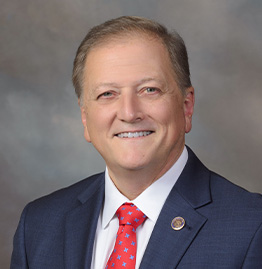
Chris Head
RRepublican
Co

Christopher E. Collins
RRepublican
Co

Christopher K. Peace
RRepublican
Co

Christopher P. Stolle
RRepublican
Co

Danny Marshall
RRepublican































Ask Maddy
·
AI policy assistant
Ask Maddy about HB 883
Scope: VA
Hi! I can help you understand HB 883. What would you like to know?
Try one of these
i
Maddy answers using official bill text and legislative records. Always verify before sharing.
Sources cited inline